Walls Don’t Work Anymore

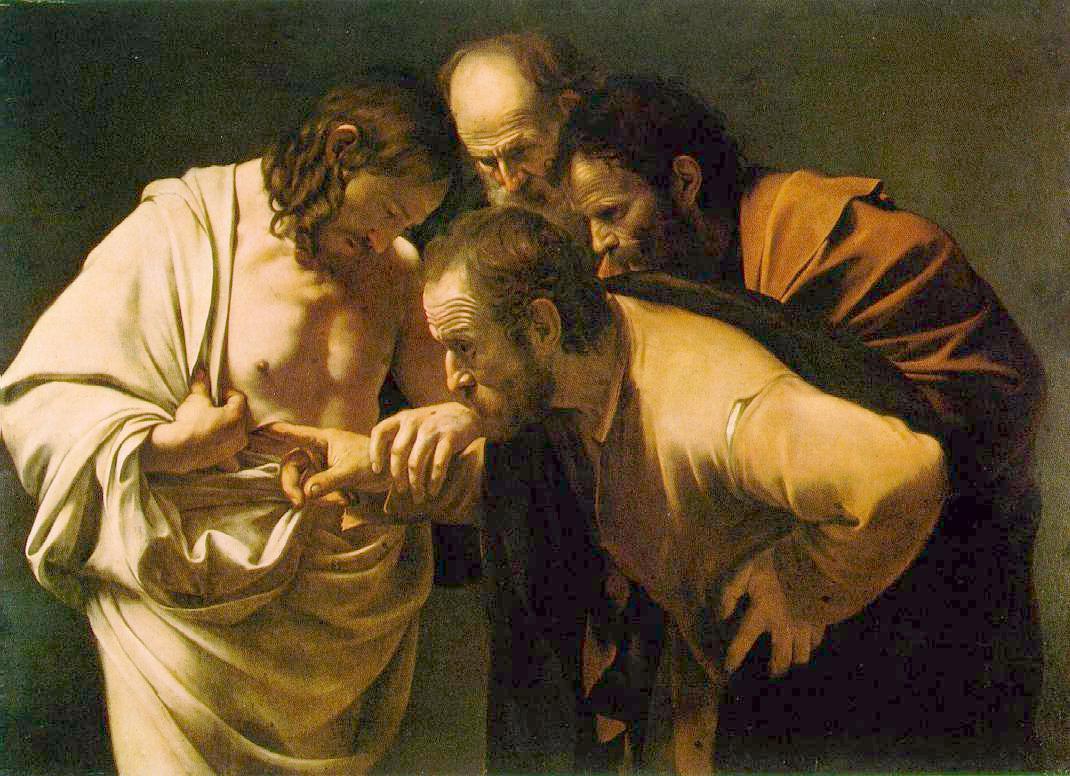
36 As they were talking about these things, Jesus himself stood among them, and said to them, “Peace to you!” 37 But they were startled and frightened and thought they saw a spirit. 

38 And he said to them, “Why are you troubled, and why do doubts arise in your hearts? 39 See my hands and my feet, that it is I myself. Touch me, and see. For a spirit does not have flesh and bones as you see that I have.” 

40 And when he had said this, he showed them his hands and his feet. 41 And while they still disbelieved for joy and were marveling, he said to them, “Have you anything here to eat?” 42 They gave him a piece of broiled fish, 43 and he took it and ate before them.

Luke 24:36-43, ESV

In the most thrilling moments of a story, there are instances when the true essence of the events becomes crystal clear. Luke’s narrative brilliantly captures that exhilarating sensation. Picture this: Jesus, triumphantly risen from the depths of death, enters the room with a burst of energy that electrifies everyone present. It must have been one of those extraordinary instances where words simply fall short, and experiencing it firsthand is the only way to truly grasp its profound impact.

“Frightened” and “terrified”–it seems it takes two words to describe this spooky experience. 

Everyone was terrified; they were convinced that Jesus must be a ghost. They all panicked and tried to run to the nearest exit, but then realized that the door was still locked!

Oh boy, Jesus must have had a good chuckle over this one! I mean, imagine being a human and seeing your disciples, all stooped and scared, trying to approach you like a bunch of timid puppies. It’s like trying to get a dog to come to you when it’s so terrified it’s peeing on the floor! I bet Jesus couldn’t help but smile and think, “What a hilarious sight!”

They slowly encircle Jesus and as they come, I have to believe He’s amused. He has survived a very brutal cross, and walked through hell. And, He has risen from the dead.

He is laughing from the pure joy of one who has endured the worst of a very real hell.

Jesus emerged unscathed on the opposite end, a testament to his invincibility. His arrival has undoubtedly filled him with undeniable joy, surrounded by beloved companions. In his triumphant resurrection, he defied all odds and accomplished the unimaginable, evoking a cascade of profound emotions, a mingling of laughter and tears.

I believe each of us has walls. 

Walls can provide a sense of security and protection, both physically and emotionally. People often feel the need for boundaries and walls to feel safe. This is similar to how disciples found safety in numbers and the walls around them. They were afraid, and so they hid themselves.

Jesus insists on penetrating our walls.  He’s overcoming much resistance and delusions. And then suddenly we come ‘face-to-face’ with the dead person who’s now alive. He is “The King of Kings and the Lord of Lords.

Behold, behold! Witness the magnificent display of unadulterated resurrection power—a force unparalleled in the vast expanse of the universe. Its brilliance eclipses the sun, its might surpasses that of the mightiest atomic bomb. Prepare to be astounded, for this power knows no bounds!

It’s funny, when Moses prostrated himself before the Lord’s glory, he changed.  Not only that, but he had to take precautions to cover his face when he returned to camp. These disciples however have just seen the glory of God first-hand.

As His disciples, we must be prepared for any eventuality.  Jesus can and will burst into our homes, and into our very lives.  Can you hear him laugh?  When he comes, nothing really is the same again.  He loves his disciples too much to leave them in a dark stuffy room.  They have work to do.

The resurrected Jesus is coming for you!

“Here I am! I stand at the door and knock. If you hear my voice and open the door, I will come in and eat with you, and you will eat with me.”

Revelation 3:20, NCV

alaskabibleteacher.com

The Whips of Jesus

John 2:14-17, NCV

 “In the Temple he found people selling cattle, sheep, and doves. He saw others sitting at tables, exchanging different kinds of money. 15 Jesus made a whip out of cords and forced all of them, both the sheep and cattle, to leave the Temple. He turned over the tables and scattered the money of those who were exchanging it. 16 Then he said to those who were selling pigeons, “Take these things out of here! Don’t make my Father’s house a place for buying and selling!”

17 When this happened, the followers remembered what was written in the Scriptures: “My strong love for your Temple completely controls me.”

He really did use a whip. The text tells us that Jesus carefully took some cords and made a whip by intertwining them. What can I say? I’m amazed at His response to what He saw happening in the Temple. Jesus saw deeply saddened Him to the point that there wasn’t anything else He could do.

It appears that there are three distinct whips in the N.T. that we should take into consideration.

  1. The one Jesus carefully braided to “cleanse the Temple.” (John 2:25.)
  2. The one used on Jesus’ back as part of our atonement. (Isaiah 53:4-6.)
  3. The one that believers experience in the ways God disciplines us as His children. (Heb. 12:6.)

All three are important to see. All three have their own meaning. The first one: The Temple is finally clean. The second one: He was punished for me. The third one: He intervenes in my life to make me a holy person.

The third whip is my focus here. He intends to sanctify us by correction. This discipline is the way Jesus separates us from our sin. We’re being disciplined in order to become holy people. Hebrews 12 explains the process.

“If ye endure chastening, God dealeth with you as with sons; for what son is he whom the father chasteneth not? But if ye be without chastisement, whereof all are partakers, then are ye bastards, and not sons.

Hebrews 12:7-8, KJV

God’s intention isn’t to inflict punishment upon us. His correction isn’t a way by which we make amends for our transgressions. It’s crucial to remember that Jesus has already taken upon Himself the full weight of our sins, fully satisfying any debt. He absorbed it all.

God, in His role as a loving father, corrects and guides us with deep affection.

It’s important to note that God’s methods of discipline do not involve any form of “spiritual child abuse” whatsoever. His love is extraordinarily good, it never wavers, never turns into something evil. He patiently works His will, using loving and healing hands.

“For the moment all discipline seems painful rather than pleasant, but later it yields the peaceful fruit of righteousness to those who have been trained by it.”

Hebrews 12:11, ESV

God has corrected me a 1000 times throughout my 40 years of following Him.

Not with a leather whip mind you, but a braided spiritual cord of correction. What He saw taking place in the marketplace of “me,” (my temple), brings Jesus grief and sorrow. I’m the temple of the Holy Spirit, and He fully intends to make me pure inside. Hebrews 12 tells me what to expect as a son. I need to be corrected.

It’s good to ponder this.

Isaiah 53:5, (context. 4-7)

Yes, a “whip” will be used, but cautiously, even though it may hurt us. Jesus will never intentionally correct you beyond what you can handle.

These three whips are vital, they educate us about the Lord’s efforts. They help us to comprehend and experience God’s workings. As much as we’re able, we must embrace them.

God’s corrections are our instructions; His lashes our lessons, and His scourges our schoolmasters.

     James H. Aughey

alaskabibleteacher.com

Instant Breakfast

“The message of the cross is foolish to those who are headed for destruction! But we who are being saved know it is the very power of God.”

1 Corinthians 1:18, NLT

Our salvation often comes like a sudden bolt of lightning. It happens very fast, a flash of true faith, and we move from darkness to glorious light in an instant. I am absolutely confident about this.

When someone genuinely believes in Jesus and in repentance seeks forgiveness, they receive everlasting life. It never ends. Our salvation occurs in the blink of an eye. It’s like a switch that gets flipped on.

But Peter and Paul clearly write that we are “being saved.” I believe that our salvation has three tenses:

I believe that our faith and transformation are also continuous processes, a lifetime of dedication and progress. It is important to see that following Christ is an ongoing journey. Additionally, it is essential to understand that accepting Christ as our Savior does not automatically result in an immediate ascent to heaven. We must “work out our salvation with fear and trembling.”

We prefer convenience. Microwaves, K-Mart shops, fast food, ATM machines, credit cards, and so on. We quickly grab our protein shake (or coffee?) and rush out the door to keep up with our day. Things become faster and more convenient. We practically demand it.

We want patience and we want it now!

Most people don’t like the idea of a daily (and slow) commitment. We want quick and easy solutions, but having faith doesn’t work like that. Even though we want to make progress quickly, becoming a follower of Jesus takes time. It’s called “discipleship.”

I’m sorry to be the bearer of bad news, but if you’re a true believer, you have a challenging journey ahead of you.

Here are Philippians 2:12 in four different translations.

  • Work out your own salvation with fear and trembling. (KJV, ESV)
  • Work hard to show the results of your salvation, obeying God with deep reverence and fear. (NLT)
  • Keep on working to complete your salvation with fear and trembling. (NCV)
  • Keep on working with fear and trembling to complete your salvation. (GNT)

Some believers will find a deeper understanding of a “discipleship effort” that’s necessary. Others may not be ready to accept it. But the writers of the New Testament epistles effectively communicate this idea of being on a journey.

“Instant Christianity tends to make the faith act deadly and so smothers the desire for spiritual advance. It fails to understand the true nature of the Christian life, which is not static but dynamic and expanding.

A.W. Tozer

alaskabibleteacher.com

Dancing in the Streets

I see a people dancing along a long, straight road. Their voices form a chorus of praise to the king who gave his life to set them free. 

Along the road there are lots of little stalls and shops. They are all arranged in such a way that the dancers can look inside and see all the thrilling goods and shining things for sale. The salesmen are also turned towards the throngs of people and have exciting offers: ”Take a thing now, pay later!” ”Have a look around!”, ”Come, satisfy and fulfill all your dreams!”.  Beautiful clothes of the latest fashion. Sparkling jewels. Delicious foods as far as the eye can see. But strange things were also for sale. High positions. Power. Glory. Bodies.

Entrances were made to walk into, but not to find one’s way out. The shelves in the shops lead you into alleys, backstreets and sidetracks. And there, people live in darkness.

Some people in the jubilant parade get curious and stop at the sight of something interesting. Others take a few steps further in. Still others try on different things and even start shopping, but some of them soon regret it all and find their way back to the parade. Because they have seen something far better than every tempting thing trying to get their attention.

They have their eyes fixed on the destination: the horizon far ahead, the shining bright sun with sunbeams shining on the road they are walking on. They know that it gives far more joy and deeper peace than anything the world has to offer. You can tell it by their looks!

Those still living in darkness now and then see the light in their faces and repent. Sometimes greedy salesmen can see their sincerity and are drawn to them. People are caught up by the whirl of happiness and leave all their possessions behind. Even those whose families want to stay on, still choose to leave. Some dancers have to endure mockery, beatings and persecution from those who remain, since they love darkness. But it rarely keeps the dancers from continuing. For the light carries them!

And it does not stop there. The people are not just dancing for themselves. The light that they are receiving wants to shine into the darkest backstreets. And so many dancers let themselves be led there. Once there, they share their plasters, their food and drink and their shoes with all those in need. They chant out stories of what they have seen and experienced and invite those listening to dance with them. Whenever someone joins them, they are met with rejoicing. And all around them beauty is bursting forth where beauty has not been seen before, life is born from what used to be dead and darkness is driven away by light. 

We all have terrible scars

The parade consists of all kinds of people: women and men, rich and poor. But they are all broken. They all have scars – some have many scars and others just a few scars and they long for the complete healing. Some are heavily burdened, while others have let go of their burdens along the way, received lighter clothing from above and so can dance more quickly and easily. But the most important thing is not how fast one can move but in what direction. If you try a move that has not been given to you, one which is too difficult or too fast, you are in danger of stumbling and falling.

But if you stay on the road, there is always strength to get up. Indeed, sometimes you need help, even a lot of help. Hands reach out, eyes see and ears listen. The wind caresses cheeks, opens lungs and breathes in new life. And when you raise your eyes once more, you can brush off the dirt.

Love is what most of all characterizes them. It sets their hearts on fire and encourages them to give their lives for each other.  It shapes them into one people under one and the same king, one family with one and the same Father, one temple for one and the same Spirit, one bride to one and the same Christ. 

————

Found this article that I thought would bless you. It’s such an encouragement. (I wish I’d written it.) 🙂

Cross-Eyed Christians

In the book of Genesis we find the story of Leah and her sister Rachel. Let’s start by saying two daughters of Laban have become Jacob’s wives. We must step into Genesis 29 to see more.

Jacob longs for Rachel. She is his “soul mate” and because he’s in love, but the customs and technicalities of the day somehow get by him. Because of this, he will have to deal with Laban’s subtle trickery, where his daughters get swapped, and we must sort out the customs of that day to really understand.

Let’s just say that Laban’s deception creates a huge crisis for everyone. 

Throughout his life deception has been Jacob’s besetting sin. But now he’s the recipient. When we see a deceiver like Jacob gets deceived, that can’t be all bad. Call it karma, kismet, fate; he deals with it. “As you sow, so will you reap.

Jacob is so in love with Rachel that he works for seven years for the right to marry her. This may be a bit outrageous. But we really must weigh these issues. I believe Jacob really is a monogamist at heart and he has no real love for Leah. 

He can only see that one girl that he is crazy about, his true love, Rachel.

But you know, it’s Leah that I tend to think about. Her own issues are unique. Genesis 29 explains it a bit cryptically,

“Leah’s eyes were weak, but Rachel was beautiful in form and appearance.” 

Genesis 29:17

You need to know that there is some confusion by commentators about the “weak eyes.” Others who look at the original Hebrew find the words to be vague. Some take it as she is very near-sighted, or even cross-eyed. Others think that this is a polite way of saying she really wasn’t pretty. I think I can gain from these different interpretations.

But to be honest, I think I might understand Leah.

She is wounded, and life requires that she live as unwanted. She is a woman of tragedy and broken hopes and dreams. She will always live as a reject. At best, she will always be a distant second, and perhaps scorned and neglected for this.

I conclude that Leah is the champion for the second best, those challenged by weakness.

Her life seems a long tragedy and very full of sadness. For the next 30-40 years she will always be a cast-off, someone who has been broken by life’s bitter vagaries. She’s a fellow struggler and a survivor.

Her sad life is similar to us who have to fight so hard over our own illness or handicaps. For some, addiction is an issue. We never choose this path. I believe darkness has many forms.

But I have no idea what her problem was.

I do know but she must’ve been challenged by this weakness. I understand this. My own life has been topsy turvy and a hard struggle at times. I survived a massive brain tumor and I have a paralyzed right arm. I have no balance and must use a cane. I can no longer drive.

For those who are confined to a wheelchair, or must use a cane, or who deal with a physical or mental illness, Leah should be our hero. For those who have been betrayed by addiction, or who have felt rejected through a bitter divorce, Leah speaks to us.

She is for every loser and for failures of all stripes. But through all of our setbacks and messes, we must realize that God does love us– even as we weep.

Our pain always has a purpose in God’s kingdom. Always.

“One of the main ways we move from abstract knowledge about God to a personal encounter with him as a living reality is through the furnace of affliction.”  


Tim Keeler

Trials Will Come, They’re Inevitable

“Count it all joy, my brothers, when you meet trials of various kinds, for you know that the testing of your faith produces steadfastness.”

James 1:2-3, ESV

“There is no circumstance, no trouble, no testing, that can ever touch me until, first of all, it has gone past God and past Christ, right through to me. If it has come that far, it has come with a great purpose.” 

 Alan Redpath

“All joy,” (verse 2) is a fantastic thought. It stresses a joy that becomes militant, something powerful and significant. “All joy,” surpasses “some joy” or even “occasional joy.” Instead it’s a joy that remains joy even when tired and weak. It will only shine brighter in the darkness.

Jewels, diamonds, and pearls are typically displayed on a black background.

This reveals their brilliance and value. In the same way darkness should only encourage us to be deliberately brighter than our surroundings. We must understand that we shine only because He makes us shine. There is a divine incandescence that awaits every believer who feels the need or desire for more of God.

God’s special nearness is available to each believer, especially those in the heat of the furnace. He is close to those who want Him, and there is nothing will stand in His way. The Lord cherishes and treasures the seeking heart. There is nothing that can detour the believer’s yearning after their Father. Your faith must be purified, and this is never optional.

Name your trial, then turn it to God in prayer.

Leave it alone and refuse to carry it no further. It’s now the Lord’s concern. Simply watch for the deliverance to come. When God sees your heart, He will lavish Himself out on you. He delights to see your faith becoming solid and real.

We never choose to suffer, rather we choose His will. We must do so whether we suffer or not.

Trust Him.

“God, who foresaw your tribulation, has specially armed you to go through it, not without pain but without stain.”

    C.S. Lewis

Will You Give It Up?

Today I’m thinking about the rich young ruler in Matthew 19:16-26. The passage is tragic and disturbing. These verses detail an encounter with Jesus by a man who couldn’t give up his wealth. He could not become a disciple.

“When the young man heard this he went away sorrowful, for he had great possessions.”

I would like to suggest something.

Perhaps riches aren’t the real point? Yes, I definitely believe that having wealth is inherently dangerous to wannabe disciples; it’s what this passage is all about. And it’s obvious that this man couldn’t give up his money to follow Jesus. But what if the issue for us isn’t about personal wealth; what if it’s envy, lust, selfishness or pride?

Sinful behavior of any kind effectively blocks the call and purpose of our lives.

No matter what it is. No matter what sin that stands in the way of true discipleship. Yes, it could be wealth. But it may be 1000 other sins (take your pick, there’s plenty). Hebrews 12 tells us that there is “the sin that so easily ensnares us.” Perhaps there is that one particular sin is one that traps us, over and over?

Jesus puts His hand on our lives, He calls us to love Him supremely. I like to think that loving Jesus is our energy source–He’s the nuclear core of our discipleship. His presence gives us the power to live and love. A sustained first love for Jesus propels us into the true reason of a disciple’s existence.

Perhaps it’s a daily surrender? Sin must be renounced every day. Jesus must always be the disciple’s first choice.

My most cherished sin would destroy me if it wasn’t for His grace and kindness.

Wealth, of course was this rich, young ruler’s sin. But don’t forget that there are many issues we could add. Lots of different sins that are getting in the way of being an actual follower. It’s a choice, and God’s power is always ready for you.

So who or what do we love most?

Whoever loves father or mother more than me is not worthy of me, and whoever loves son or daughter more than me is not worthy of me.”

Matthew 10:37, ESV

Organized Evil

“Finally, be strong in the Lord and in the strength of his might. 11 Put on the whole armor of God, that you may be able to stand against the schemes of the devil.” 

12 “For we do not wrestle against flesh and blood, but against the rulers, against the authorities, against the cosmic powers over this present darkness, against the spiritual forces of evil in the heavenly places.”

Ephesians 6:10-12, ESV

This is the last final doctrinal passage of the book of Ephesians. In it Paul tells us we must be very conscious of an ongoing battle which swirls around every person.

Understand, the war is hardly an elective. We can’t drop this, thinking it’s optional or non-compulsory. We might think it’s just an emphasis for some of our brothers and sisters who are more charismatic than us.

We were born for battle. Every one of us. No exceptions.

We look around and see those whose ‘reality’ is different than others. We see politics, psychology, biology, religion, entertainment or science. Ephesians 6 tells us what we’re up against. Humans have a terrible knack for being manipulated by evil.

Believe me, it’s all pretty frightening and dangerous.

We must wear the armor that God assigns to us.

Ephesians 6 declares that we’re in a world where every individual is now a battleground. This passage clearly tells us that the only place of safety is to be “strong” in God and to find that the only place of any safety is pressing into His presence. To survive we must push everything else aside to be into His very being. Intimacy always gives power.

But remember, everything above is only found in first-love intimacy. You must come to him humbly and holy, and sit before Him and learn and love. And that is a major step in true holiness. Not legalism, it’s love.

Is it a playground or a battleground?

Which is it? The passage stresses that there is an organized force of evil darkness arrayed against us. This passage unveils the government of wickedness. I’ve learned that without the humble closeness that vitalizes prayer and Bible reading, we will be spiritually destroyed. We desperately need protection.

Our only hope of spiritual survival is appropriating Jesus’ strength.

We must “step” into it. We become strong through being close to Him. He shields us from the spiritual corruption that swirls all around us. As we draw to Him we become truly mighty, and as we listen closely to the Holy Spirit, we’ll walk in true discipleship with Jesus.

You need to do this. I believe when you do come close you will hear Him speak–especially when you push past the powers of evil. You are born for battle.

You have the spiritual DNA to stand.

“The Christian life is a battle against Satan.”

 Zac Poonen

Is Jesus Your Best Friend, or a Doctrine?


“A rule I have had for years is: to treat the Lord Jesus Christ as a personal friend. His is not a creed, a mere doctrine, but it is He Himself we have.”

  ~D.L. Moody

Friendship with God is a liberating secret for the believer. It releases us from the terrible bondage of religion and ritual with all its negative connotations. Intimacy with our Lord will carry us beyond creed or doctrine to the place of true communion.

It’s not that the Law is bad, but in the intense light of God’s grace, it’s really a very poor substitute. We value legalism, and that is precisely what we believe when we bypass the relationship. Doctrine is a good servant, but a poor master.

Grace always overcomes legalism. Love truly surpasses rules.

As good evangelicals, we talk big about a “personal relationship.” That is indeed crucial. But few be the believers that walk in a daily friendship with their Savior. That is truly a tragedy. We come oh so close, but we misunderstand the depth of the Gospel.

As a teacher of God’s Word, I mourn over my students when they miss out on what is real and true. I’m afraid for them. I’m also scared that I may just be adding to their confusion. The issue can be seen in Paul’s concern for the church in Corinth.

“I no longer call you slaves, because a master doesn’t confide in his slaves. Now you are my friends since I have told you everything the Father told me.”

John 15:15, NLT

Friendship with Jesus will bring true guidance. He shares secrets and wisdom with his friends. We are brought into a true knowledge of the Kingdom through the relationship of friendship with the King. We are not slaves– or drones, slavishly serving out of slavish fear.

We’re now His friends! (Imagine that.)

Jesus wants to confide in us; sharing wisdom and truth hidden by time and sin. And his kingdom is chock full of great mysteries! He is looking to bring us into a willingness of daily communion. Only through intimacy with Jesus can we handle what He wants to teach us. (see Psalm 25:14; John 15:15.)

He will heal our wounds, and forgive all our darkest sins. He is truly our Savior as well as our friend.

But friendship comes with a price. It means we are now tethered to the Lord. That can get old, especially when I want to do my own thing. I will continually have to lay something down and choose to accept being tethered and follow Him.

But my soul now has a best friend. Or just maybe, Jesus has been my friend all along, and I just didn’t know it.


She Was the First!

“Jesus said to her, “Woman, why are you weeping? Whom are you seeking?” Supposing him to be the gardener, she said to him, “Sir, if you have carried him away, tell me where you have laid him, and I will take him away.” 

“Jesus said to her, “Mary.” She turned and said to him in Aramaic,“Rabboni!” (which means Teacher).”

John 20:14-15

Mary Magdalene would’ve been the last one I would have chosen to be the first witness. If it was me, I would have gone straight to Caiaphas, or gave Pilate a good scare–“I told you so.” He didn’t go to the Temple and to show off his resurrection power. He zapped no one.

It fascinates me, but Jesus didn’t show off his power. Instead Mary was chosen, the harlot, and the one who he cast out seven demons. Simple, humble Mary. The one whom he forgave. And he comes quietly, and gently to her.

He’s alive!

Brutally killed, taken off the cross and carefully laid in a tomb–but Jesus comes to life!

The most powerful testimony of truth of the Gospel rests here in the resurrection. Our faith hinges on this. If there is no resurrection, Jesus’ bones still lay in a tomb, and we are still dead in our sins. (1 Corinthians 15:17)

There is so much in this passage; the implications are enormous.

“What the world calls virtue is a name and a dream without Christ. The foundation of all human excellence must be laid deep in the blood of the Redeemer’s cross and in the power of his resurrection.”

     Frederick W. Robertson