The word “abide” is used ten times in the first ten verses of John 15.
The repetition of this should be obvious. Our discipleship must hang on that simple (yet profound) word. We are clearly called to “abide.” It’s a small word, and yet the thought it carries is deep and heartfelt. Jesus calls His disciples to rest and obey Him.
To abide means to “dwell,” “remain,” “be present,” and to “be connected.” Abiding addresses our posture and place. How connected are we to our source? Where are we in proximity to Christ? A disciple must ask these questions.
The issue is “sap.” Am I connected in such a way that His presence flows through me?
A branch must be attached in order to bear fruit. If, somehow, it isn’t connected, it dries up and needs to be cut off the vine. Many believers are in danger, they’re not producing fruit and they are not growing. Somehow they aren’t affixed to the Lord Jesus.
This doesn’t mean they have lost their salvation, it just means that their discipleship has little meaning. They have no purpose, the sap of Jesus becomes a trickle and fruit is never really produced. It is a sad and difficult place to be.
Often the real issue comes down to obedience/disobedience.
I must learn that “abide” is now my life, my sap, my fruitfulness.
“Abide in Me says Jesus. Cling to Me. Stick fast to Me. Live the life of close and intimate communion with Me. Get nearer to Me. Roll every burden on Me. Cast your whole weight on Me. Never let go your hold on Me for a moment. Be, as it were, rooted and planted in Me. Do this and I will never fail you. I will ever abide in you.”
Now they were bringing even infants to him that he might touch them. And when the disciples saw it, they rebuked them. 16 But Jesus called them to him, saying, “Let the children come to me, and do not hinder them, for to such belongs the kingdom of God. 17
“Truly, I say to you, whoever does not receive the kingdom of God like a child shall not enter it.”
Luke 18:15-17
Again we were wrong (like usual it seems). I guess that we were trying to maximize Jesus’ ministry. We meant well, but He needed organization. So that was now our “ministry.” We simply felt that Jesus’ time was our concern, and as His disciples we wanted Him to connect with those who really mattered.
The parents were bringing their children to be blessed by Jesus.
“It was the custom for mothers to bring their children to some distinguished Rabbi on the first birthday that he might bless them.”
Jesus made it clear that these children needed to be the focus of our ministry. Our efforts were not to be centered on adults, rather it was misguided thinking that we direct Jesus’ work to be focused and redirected. These little ones were in the way.
Up to now, Jesus’ work was for adults. Or so we thought.
There were lepers, demon-possessed, paralyzed, tax-collectors all waiting for His ministry. Somehow we overlooked the needs of little children. Again, we were wrong, misguided, and ignorant of the walk we were called to.
Trust me on this–we believed otherwise. Up to now, we assumed that maturity meant sophistication. It was all about right thinking and good theology–it was these things God was looking for. We assumed that being simple wasn’t quite what Jesus wanted from us. Rather we believed the opposite.
And sure enough, Jesus explained what we were missing.
Children were to become our focus. They were the ones who we were to emulate and esteem. The radical thing to us was understanding that these ‘little ones’ were that significant.
“Let these children alone. Don’t get between them and me. These children are the kingdom’s pride and joy. Mark this: Unless you accept God’s kingdom in the simplicity of a child, you’ll never get in.”
Luke 18:16-17, The Message
This was like a 2×4 across the head! It was nothing less than another radical thought from our Teacher. And trust me, this wasn’t easy, but Jesus was crystal clear. We dare not think otherwise, but believing this was against all we thought the Kingdom was.
Jesus explained that childlikeness was the only way we could enter His Kingdom.
Children were now to be our examples. Their simplicity was to be our guide. Their simple innocence was how we were to see ourselves. You have no idea how extreme this was to us.
This was the Kingdom of God’s doorway into true discipleship. We carried this lesson for the rest of our lives. It was something we passed on to our disciples.
“Part of the exquisite beauty of salvation is its simplicity. Any man, woman, or child can come to Christ with absolutely nothing to offer Him but simple faith-just as they are. Salvation requires nothing more than childlike faith–believing that Jesus Christ died for my sins and accepting His gift of Salvation.”
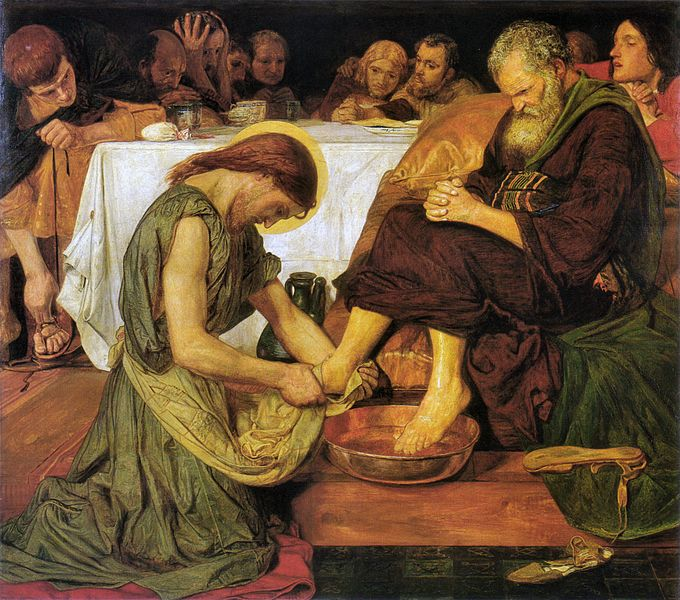
“He came to Simon Peter, who said to him, “Lord, do you wash my feet?” 7 Jesus answered him, “What I am doing you do not understand now, but afterward you will understand.”8 Peter said to him, “You shall never wash my feet.” Jesus answered him, “If I do not wash you, you have no share with me.”
John 13:6-8 (context vv. 3-17)
Chapter 13 always rocks my world. I visualize this, like a fly on-the-wall, watching it happen–and then I replay it over, and over in my mind. It always unravels me. Why does this have to happen? What does this passage tell me about Jesus, and his kingdom? (John 13).
Why can’t I just walk away from it, and leave it be?
Jesus made himself a slave, (or perhaps he was always a slave all along, and we just didn’t realize it?) Foot-washers were pretty much regarded as sub-human, mindless drones who mechanically performed a necessary duty. The lowest of the low, the very least of the least.
But Jesus took that role on himself, he laid aside his garments, and his Godhood. (They landed in a pile in the corner of the room). When he knelt down to scrub feet (making sure he got between the toes), it was deity serving man. This God/rabbi intentionally did this, not reluctantly or halfheartedly–but carefully.
He was their teacher.
Custom demanded he enjoy the prerogatives of that position. But he wouldn’t, and didn’t. He mustn’t. As I stress over this, I must conclude he really was their “teacher,” but not in the way I expect. What he was doing on his knees, was instructing them in the art of loving each other. He showed us a leader in action.
Real disciples function best when they wash between the toes.
There was a point in Jewish history when the people actually demanded that God would give them a king, instead of a judge (1 Samuel 8:5-9). God warned them that this wasn’t in his plans–but they insisted. They had to have one, everyone else did. We still must have celebrities, and then we wonder why they short circuit on us. Who can resist the privilege, and the limelight?
Peter of course was classic Peter.
It seems that whenever he resists, he gets rebuked. He makes it quite clear that Jesus will never wash feet–that Jesus will never use a basin or towel and serve him like this. It was outrageous. It didn’t fit in Peter’s personal theology. He had no room for Jesus the slave. Perhaps Peter knew that to follow meant he would have to do the same thing?
Jesus still washes feet.
He sits us down and takes off our shoes and socks, and scrubs us clean. And we hate it. But to be washed by him is a condition of our discipleship. Every follower must be clean, and he continues his work to this day. We sin daily, even as his own, and he cleans us up–and yet somehow that really bothers us.
“Does God ask us to do what is beneath us? This question will never trouble us again if we consider the Lord of heaven taking a towel and washing feet.
“Then God said to him in the dream, “Yes, I know that you have done this in the integrity of your heart, and it was I who kept you from sinning against me. Therefore I did not let you touch her.”
Genesis 20:6
This is called restraining grace, the doctrine that teaches that God intervenes to prevent sin from happening.
Both the pagan king Abimelech and the patriarch Abraham have problems. One wants to add Sarah to his harem (lust), and the other pretends that Sarah isn’t his wife, but his sister (cowardice).
The dream:
Abimelech goes to bed and has a “God dream.” The Lord threatens him with death for taking another man’s wife. King Abimelech protests and pleads for his life. (Dreams were significant in Genesis.)
God relents and to Abimelech’s credit the Lord understands that this was done from a clear conscience. It seems that Abraham’s spinelessness has given the wrong idea about Sarah. She isn’t his sister, but his wife!
There are some interesting issues here. Not only is the king prevented from sinning here, but we see the lengths God went to protect Abraham and Sarah’s marriage. They were to be the parents of the nation of Israel. God would see to that.
There are real consequences to our sin. We will reap what we sow (Galatians 6:7), but God’s grace protects the believer who desires to be Christ-like. He is a shield to the man who runs to Him.
Aren’t you glad that there are times when God kept you from sinning against Him?
It probably happens more than you realize. I’ve found that there is a still, small voice that speaks to the Spirit-filled believer. Sometimes we ignore it and sometimes we obey it, but it’s there. It’s meant to guide us.
Our conscience is the “sheriff” of our souls. It’s our compass.
It seems that little is said about conscience anymore, but it’s imperative that you recognize it. Conscience tells you whether something is right or wrong. It’s our guide and must be closely watched over. It can become seared and clouded–it can be defiled. But it also can be purified and made holy.
Our conscience knows this. It’s a spiritual fact.
“In Psalm 23:3, David tells us that the Lord leads His people “in paths of righteousness for his name’s sake.” If we belong to God and evidence this through our mortification of sin and holy living, then He will help protect us from falling. Do you feel as if you are having trouble loving Him and His will today? It may be because you are not practicing righteousness. Endeavor to live in holiness today and He will guard your way.”
“Truly, truly, I say to you, he who does not enter the sheepfold by the door but climbs in by another way, that man is a thief and a robber. 2 But he who enters by the door is the shepherd of the sheep. 3 To him the gatekeeper opens. The sheep hear his voice, and he calls his own sheep by name and leads them out. 4 When he has brought out all his own, he goes before them, and the sheep follow him, for they know his voice.5 A stranger they will not follow, but they will flee from him, for they do not know the voice of strangers.”
What joy can be found in the Shepherd’s care, and to hear his voice. Nothing really can match this wonder. We follow as he leads us. The voice is an integral part of this passage and the foundation of discipleship that is real.
Please understand: You really can’t walk with him unless you hear him. We belong to him. We’re his flock that he keeps and provides for.
And He knows our name!
That’s the intimacy found in these verses. We’re never forgotten and he will never overlook us. To think otherwise is slander and an attack on his present-day ministry. Jesus is our good shepherd. He always will be.
“Intimacy with God comes in whispers, not shouts.”
He sometimes whispers, and yet this world can’t hear him (or they refuse to). To be perfectly honest, my ‘busy-ness’ silences Him. I suppose that the real issue isn’t with Him, but with myself.
“And after the earthquake, there was a fire, but the Lord was not in the fire. And after the fire, there was the sound of a gentle whisper.”
1 Kings 19:12
He doesn’t speak through a windstorm, earthquake, or fire. He chooses to speak very quietly, and that’s a problem for me. In the original Hebrew, the word “whisper” can be translated as “calm, something gentle.” He speaks this way if only we shut up for a little while.
If we are to recognize God’s voice, we must belong to Him. We hear His voice best when we spend time in Bible study and quiet prayer. The more time we spend intimately with God and His Word, the easier it is to recognize His voice and His leading in our lives. He’s always speaking, and we’re seldom listening.
The flock hears the shepherd, and it’s that voice that breaks through our cluttered-up life. We can hear, and it’s that communication that encourages us to walk through life—one day at a time. Just today. That’s all you must do.
There are so many other voices. Please dear one, you must ignore them.
So many are speaking, and so many want us to hear and follow them. But in reality, they want us to leave the Shepherd and his flock behind. But we can’t allow this, we must learn to listen to him alone.
“A bruised reed he will not break, and a faintly burning wick he will not quench.”
Isaiah 42:3
Somehow, we can get ‘side-tracked’ in our thinking. We get confused and the enemy makes sure we don’t walk in the truth. At this present time, it does seem like some of the Church is nothing more than an exclusive club for the wonderful. It seems that those who attend are the ‘achievers,’ those who have somehow arrived at a certain acceptability.
They are there for social reasons–they eschew any real intimacy with Jesus.
For many of us, we are taught that we must have it all together; more or less complete and functioning at an acceptable level to follow Christ. We keep thinking if we work really hard then we just might arrive at a place of acceptable ‘perfection.’ This has become our religion now, this “gospel by achievement.”
But does Jesus agree? Is His Church made up of only ‘completed’ people, those who have it all together? Do we need to become accomplished before we are acceptable? Perhaps we need to find some answers. Perhaps we won’t like what we find.
After over 40 years of following Jesus (most of the time in ministry) I’m starting to realize that I’ve had much of it all wrong. I’ve read that Jesus receives the lame, the tax-collector, the leper and the whore. He deeply loves the unlovable, in spite of what the Church might say.
I believe that true grace is ‘foolish’ to man, and defies human attempts to explain it. Grace is the free, undeserved goodness and favor of God to mankind. We dare not doubt this.
“The Lord your God is in your midst, a mighty one who will save; he will rejoice over you with gladness; he will quiet you by his love; he will exult over you with loud singing.”
Zephaniah 3:17
God’s love is completely undeserved. It comes without preconditions. He loves us when we are terribly lost and fallen. It has no bounds or limitations. It is unconditional. Grace grabs us and takes us to a place we’ve only dreamed about. We’re irrevocably changed when we understand.
It is a relationship and not a religion. That’s not a cliché.
This ‘world-system’ desperately wants to confuse us. We discover that Satan detests our intimacy with the Lord Jesus. He marshals all of his demonic strength in order to obscure this truth. It’s funny, but Satan likes ‘religion.’ And he hates our nearness to Jesus. (2 Cor. 11:2-3).
All of us are seeking forgiveness, and yet somehow we think that God won’t accept us. Often we stop going to church, pray, or read His Word. We are slowly becoming hard, and it seems like we are slipping into some sort of a ‘spiritual daze’. Our spiritual malaise is starting to look like it’s permanent.
But Jesus is completely enthralled by your faith in Him!
He doesn’t pull away from the ‘sick’ and the weak. You must understand that intimacy is Jesus’ idea to ‘heal’ you. He draws us to a place of friendship with God. Intimacy with Jesus is God’s exclusive way of ‘turning us’ holy. That’s why Satan militates against “first love” faith.
There is a repentance in all of this.
We need to completely change our mind about our sinfulness. His cross and His blood are enough. But it’s genuine intimacy with Jesus that cures us, not keeping rules or having excellent doctrine. We will never be ‘good’ enough, but even in our sin we are deeply loved!
He knows it all, inside and out. He energizes those who get tired, and gives fresh strength to dropouts. For even young people tire and drop out, young folk in their prime stumble and fall. But those who wait upon God get fresh strength.
“They spread their wings and soar like eagles, They run and don’t get tired, they walk and don’t lag behind.”
“And Samuel said, “Has the LORD as great delight in burnt offerings and sacrifices, as in obeying the voice of the LORD? Behold, to obey is better than sacrifice, and to listen than the fat of rams.”
1 Samuel 15:22, ESV
In Hebrew, the word ‘shama’ has a powerful meaning which is hard to translate into English. The word actually means “listening and doing.” Shama is a word that combines both ideas into one. To hear and obey is one word to the Hebrews.
It’s all about activity that’s a result of hearing.
Here, the word shama means to allow the words to sink in, to provide understanding that requires a response—it’s about becoming obedient when you hear His voice. In Hebrew, hearing and doing are the same thing. Obedience to these laws is not about legalism or trying to earn God’s favor—it’s about love and active listening.
We desperately need “shama” as disciples of Jesus.
We must understand that listening to God is needed, but obedience is required. Shama tells us this. We can’t just hear Him without obeying. I believe that obedience becomes easy when we are listening to Him.
And that’s a good thing.
“The willingness to obey every word from God is critical to hearing God speak.”
I have wondered about this. It strikes me that there are two giants that David encountered in his walk with God. Granted, there are many other events and people that he experienced, obviously. But there are these two that stick out:
The Goliath showdown, and the Bathsheba fiasco.
These seem to be hinges or pivot points that would change the entire course of king David’s life, and his faith in God. They’re to be an encouragement and warning to us, as both are incredibly significant.
Goliath, 1 Samuel 17
This is a powerful chapter, for it reveals David’s spectacular faith in God. When the boy David killed Goliath it changed the entire future of Israel. One stone from his sling was all it took. Israel routed the Philistine army. David’s faith was the spark that made victory real.
David became a hero that day, and quickly ascended into Saul’s favor. It was both a military and a political development that Israel needed and king Saul welcomed it, the kingdom thrived. The boy David became the man of the hour, a national hero which everyone talked about.
I’d like to point out that David had already been anointed by Samuel to be the next king. This, combined with David’s celebrity status pushed king Saul over the edge–Saul developed a deep resentment that became insanity. David handled this adroitly, fleeing into the wilderness (with his faith) for years.
Bathsheba, 2 Samuel 11
At this point David is now king and is fighting the Ammonites. The Israelites were besieging Rabbah, the capital city of that country, and it seems like it’s an intense battle. But interestingly enough, David remained in Jerusalem. (And I can’t figure out why.) David can’t sleep so he paces the rooftop and it’s then things get crazy.
David spies Bathsheba who is cleansing herself from her monthly cycle. She is a very beautiful woman, and king David inquires about her. He lusts after her which results in him more or less raping her, commiting adultery and then murdering her husband. This is all very disturbing.
Bathsheba is the wife of Uriah, one of David’s mighty men of proven valor. He has him murdered after committing adultery with her.
(2 Sam. 11:14-15.)
When David had sex with Bathsheba it set in motion the ugliest chain of events imaginable. It seems that up to now David has taken the intiative of events, and then, after this great evil, his story shifts and for the rest of his life he becomes acted upon, a “victim.” He reacts, but doesn’t act anymore.
For the rest of his life he will struggle. All because of lust.
In 2 Samuel 12 David is confronted by a prophet for these sins. Samuel speaks with a parable that penetrates David’s heart. The king responds, “he shall restore the lamb fourfold, because he did this thing, and because he had no pity,” (v. 6). And interestingly enough, David would indeed pay fourfold. There would be four major incidents after this that he would now face.
Summary
David faced two “giants” in his walk with God. They were very different but both life altering. He killed Goliath but was not able to destroy his lust with Bathsheba.
Sometimes one “giant” is not enough. It would be nice if that was the case. David walked in victory for a period of time, but failed both himself, his family and his kingdom. Lust always is an act of the will, a deliberate decision that destroys all that it touches. David would be forgiven, but the damage was already done.
There would be dire consequences for everyone.
I believe that our giants were meant to be slaughtered. That is their function and purpose for the faithful believer. There can be no compromise. They’ll take different forms and will often approach you in peculiar ways. Paul tells us to wear God’s armor in Ephesians 6:11-18. I don’t think that protection should be taken off–you dare not only wear it only on special occasions.
Brother, sister–you must be covered all the time.
King David is a lesson for us. There is tremendous pain for us if we deliberately choose to compromise with the giants in our lives. Some of you already understand this; others will. I promise you.
“Many of us suffer from temptations from which we have no business to suffer.”
“Jesus said to them again, “Peace be with you. As the Father has sent me, I also send you.”22 After saying this, he breathed on them and said, “Receive the Holy Spirit. 23 If you forgive the sins of any, they are forgiven them; if you retain the sins of any, they are retained.”
John 20:21-23 (19-23)
This is the second “peace be with you” in this passage. So why the duplication of this peace proclamation? The disciples are sequestered and scared in the upper room (v. 19; and Luke 24:36. Having peace is being emphasized–the disciples were afraid of the Pharisees, but they were also undone by Jesus’ surprise visit.
Peace was definitely a precious commodity for them.
Jesus gives his disciples a mission to do, and they must be as ‘familiar’ with Jesus just as Jesus is with God. The disciples had followed him for three years–seeing incredible miracles, and hearing profound teaching, they’re ready, they just need power.
In track and field, there’s a relay race where a baton is passed from runner to runner, and maybe that’s how it’s working here? We see the same idea in John 17:18.
The baton has now been passed to the disciples.
The breath of the risen Jesus is necessary (and yes, he’s breathing.) What went down here, I don’t know exactly. But Jesus recognizes that his 12 followers will need this to do his work. Also, we might consider Adam in Genesis 2:7 where God’s breath brought him to life, which is pretty awesome when you think of the parallels.
The disciples were pretty much observers, but now they are to take up the ‘mantle’ of Jesus’ work. This is a definite duplication, which connects with the idea of one seed producing many others (John 12:24.) That’s how the Kingdom will come to people.
Verse 23 intrigues me. It seems that our life comes from the breath of Jesus. And it’s the Holy Spirit that gives both power and the authority that’s needed to function like Jesus. We now have the ability to pronounce forgiveness to the new believer, and yet that doesn’t seem a function of the Church today.
I wonder why this is so?
This entire passage is a real humdinger for Bible students. But it clearly declares the Churches new role as we follow in his footsteps. Disciples are to do exactly what Jesus does–with his breath and authority–filled with the Holy Spirit. We have a mission.
If we neglect these things we’re going to fall flat on our face.
“The work of Jesus for His disciples on resurrection Sunday gives an ongoing pattern for His work among His people. Jesus wants to continue this fourfold ministry of assurance, mission, the Holy Spirit and authority to His people today.”
6 He came to Simon Peter, who said to him, “Lord, do you wash my feet?” 7 Jesus answered him, “What I am doing you do not understand now, but afterward you will understand.” 8 Peter said to him, “You shall never wash my feet.” Jesus answered him, “If I do not wash you, you have no share with me.”
Chapter 13 always rocks my world. I visualize this, like a fly on the wall, watching it happen–and then I replay it over, and over in my mind. It always unravels me. Why does this have to happen? What does this passage tell me about Jesus and his kingdom? (John 13). Why can’t I just walk away from it, and leave it be?
Jesus made himself a slave on purpose.
Or perhaps he was always a slave all along, and we just didn’t realize it? Foot-washers were pretty much regarded as sub-human, mindless drones who mechanically performed a necessary duty. The lowest of the low, the very least of the least. (Today they’re the burger flippers and the pool cleaners.)
But Jesus took that role on himself, he laid aside his garments and his Godhood. (They landed in a pile in the corner of the room). When he knelt down to scrub feet (making sure he got between the toes), it was Deity serving man. This God/rabbi intentionally did this, not reluctantly or halfheartedly–but carefully. Brilliantly.
He was their teacher, and custom demanded he enjoys the prerogatives of that position. But he wouldn’t, and didn’t. He mustn’t. As I stress over this, I must conclude he really was their “teacher,” but not in the way I expect. What he was doing on his knees, was instructing them in the art of loving each other.
He showed us a real leader in action.
And isn’t making disciples all about loving (and washing) someone else more than ourselves?
We get things turned around sometimes–we think that spiritual authority is moving up when it’s all about going down. We elevate our pastors and elders, maybe subconsciously–and human nature lets it happen, and then we’re amazed why our leaders struggle so.
Leaders function best when they wash between the toes.
There was a point in Jewish history when the people actually demanded that God would give them a king, instead of a judge (1 Samuel 8:5-9). God warned them that this wasn’t in his plans–but they insisted.
They had to have one, everyone else did. We still must have celebrities, and then we wonder why they short-circuit on us. Who can resist the privilege, and the limelight of the platform?
The Church was never meant to operate like this.
That’s what Jesus said. Instead, it’s we who’ve turned it upside down. It’s we who insist on turning our pastors into minor celebrities. We assert that they take on the role of a “king” (albeit, a little one maybe). Perhaps leaders who stumble and fall do so because we want them to be front and center? Who can handle the privilege and the adulation? I know I can’t.
Peter was classic Peter.
It seems that whenever he resists, he gets rebuked. He makes it quite clear that Jesus will never wash feet–that Jesus will never use a basin or towel and serve him like this. It was outrageous. Unacceptable. It didn’t fit in Peter’s personal theology. He had no room for Jesus the slave. (Perhaps he knew that to follow meant he would have to do the same thing? IDK).
Jesus still washes His people. He has not changed.
He sits us down and takes off our shoes and socks, and scrubs us clean. And we hate it. But to be washed by him is a condition of our discipleship. Every follower must be clean, and he continues his work to this day. We sin daily, even as his own, and he cleans us up–and somehow that really bothers us.
The gifts of leadership are one way of washing feet. At least that’s what our leaders were designed to do. That’s Jesus’ way of doing things. But it seems we’ve adopted Peter’s attitude, and embraced the ‘pre-king’ thinking of Israel. We need our celebrities, we want our kings. We simply can’t imagine it any other way.
“The very first thing which needs to be said about Christian ministers of all kinds is that they are “under” people as their servants rather than “over” them. Jesus made this absolutely plain. The chief characteristic of Christian leaders, he insisted, is humility not authority, and gentleness not power.”























 Alaska Bible Teacher