We Serve, First of All

servant-king

“But it is not this way among you, but whoever wishes to become great among you shall be your servant.”

Mark 10:44

I admit that I’m processing something right now, and it isn’t easy.

I suppose its implications could turn everything ‘upside down,’ at least for me anyway. Some scientists have postulated that our planet is due for a complete magnetic switchover. This is when the north becomes south and vice versa. My issues at this moment are not quite that cosmic.

There are 7,000,000,000+ people now alive on this planet.

Sometimes I wonder if many of my issues come from not seeing this. It seems that there’s an intoxication of success when we become increasingly confused over ‘who’ we are. We think it’s about our efforts, our giftedness. Pride drives us, even among supposedly mature Christian believers.

3 “Don’t be selfish; don’t try to impress others. Be humble, thinking of others as better than yourselves. Don’t look out only for your own interests, but take an interest in others, too. You must have the same attitude that Christ Jesus had.”

Philippians 2

Jesus was not driven like we seem to be.

We, on the other hand, think we need to be assertive, (at least the Christian version of it) and push our way forward. However, Jesus’ message and teaching were all about emptying Himself of being God and becoming a servant of servants. This is the arresting fact we fail to consider–

Jesus did all of this while wearing a towel, not a crown.

John 13:3-5

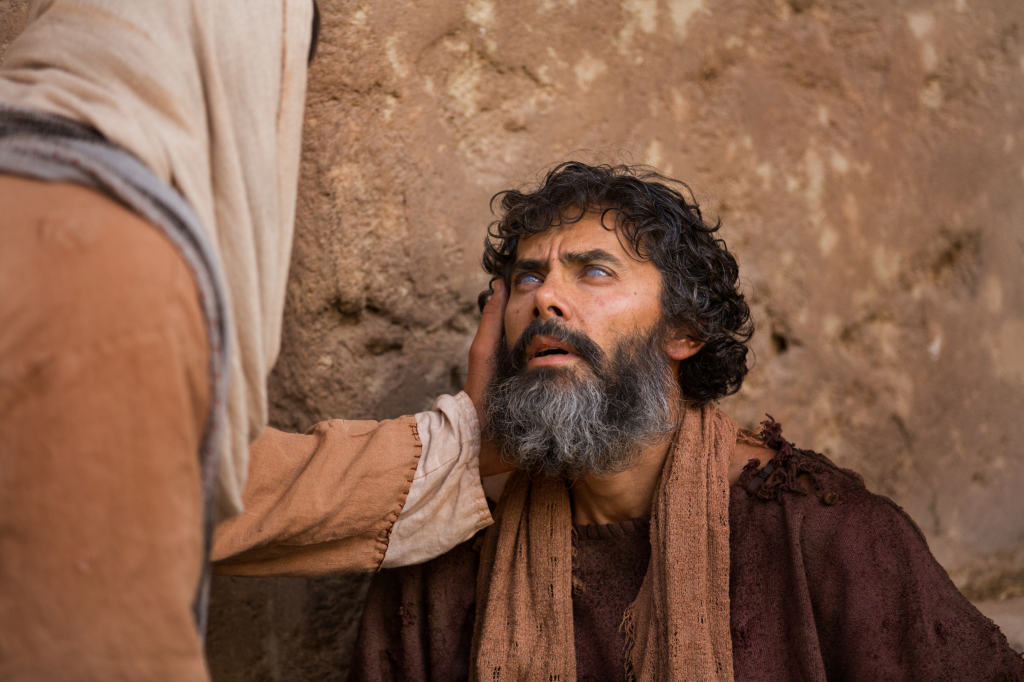
He could have done a ‘teaching’ on servanthood, or maybe direct a symposium on “slave theory” and I’m certain it would have been more than sufficient. But instead, Jesus put ‘skin on His words’ and actually got down on His knees to wash dirty feet. His disciples freaked out when they saw him do this. You and I, witnesses of this, would pretty much do the same.

It was something they could never unsee, nor ever forget.

6 “Though he was God,
    he did not think of equality with God
    as something to cling to.

Instead, he gave up his divine privileges;
    he took the humble position of a slave
    and was born as a human being.
When he appeared in human form,

 he humbled himself in obedience to God
   and died a criminal’s death on a cross.”

How can we not do this, and why is seeing Him serving like this so brain-flipping?

This is a hard question to ask, but to be perfectly honest, does our discipleship include emptying ourselves daily? Can we find peace and fulfillment by becoming an unknown? Is this what we’re missing in becoming Christlike? These are very hard questions.


“Humility is perfect quietness of heart, It is to expect nothing, to wonder at nothing that is done to me, to feel nothing done against me.”

“It is to be at rest when nobody praises me, and when I am blamed or despised. It is to have a blessed home in the Lord, where I can go in and shut the door, and kneel to my Father in secret, and am at peace as in a deep sea of calmness, when all around and above is trouble.”   

Andrew Murray

(All verses in this post are from Philippians 2, NLT, unless noted.)

alaskabibleteacher.com

The Church of the Burning Bush

— John Newton, author of “Amazing Grace
We all know a brother or sister who seems to be a target of an undue amount of suffering. It looks like they’re always in the furnace. All we can do really is to shake our heads and then give them double honor for their faith in God’s grace and providence.

Ministering to these sufferers can be a challenge.

What can we say to those who seem to be on “God’s anvil?” How can we bless those who are in pain?

Perhaps a simple word of calm encouragement is the most effective. In the midst of some awful difficulties, I once had a dear brother who gently and carefully quoted Philippians 1:6 to me over and over, whenever we met and whenever we parted:

 “And I am certain that God, who began the good work within you, will continue his work until it is finally finished on the day when Christ Jesus returns.”

Philippians 1:6

It was a precious thing that he did. I didn’t mind it all, as a matter of fact, I grew to like it. At first, I’ll admit it was strange, but my faith began to ‘mix’ with the Word and I began to believe it. It’s now my favorite verse in the Bible.

Fred refused to preach to me.

He had the maturity to see what God was doing and to make himself available to God on my behalf. Perhaps that patience he showed should be for us the method of choice? I look forward to seeing him someday, someway.

“We can rejoice, too, when we run into problems and trials, for we know that they help us develop endurance.”

Romans 5:3

A keyword in this verse is “rejoice.”

Much wisdom is needed in our ministry to disproportionate sufferers. We should have a fear of intruding on the work the Lord is doing. We must be patient and humble in this matter. There is no rushing God, after all, it’s His work. Most importantly we must be very much ‘present’ for our friend.

“But not only that! We even take pride in our problems, because we know that trouble produces endurance”

Romans 5:3

A “word” spoken out of place can cause even more heartache for the sufferer. Let’s be careful. At times it’s better not to say anything, and that’s alright. Job’s friends were best sitting in the ash heap, saying no word.  

“The Lord God gives me
the right words
    to encourage the weary.
Each morning he awakens me
    eager to learn his teaching.”

Isaiah 50:4, CEB

Trust Jesus to show you how to love, and serve those who seem to struggle so very much. Ask the Father to give you the right words–He will if you only ask.

Furnace People Understand

The Furnace

Isaiah 48:10

“Once we have come through the ‘furnace of humiliation,’ desperately, fearfully clinging to Christ for all He is worth, then we are fully equipped to march into somebody else’s furnace.”

You will not be able to handle the Kingdom of God unless you’re walking out of a life of brokenness and humility!

Furnace people will often recognize those without any real and tangible connection with God’s work. There are furnace promises, but many, without truly understanding will walk around in unreality. Often ‘they get religion.’ These are those who land on “the rocky soil.” They become ‘quasi-disciples’ who will do and say things that they really don’t really understand.

But furnace people have a connection to that which is honest and true. The Holy Spirit refuses to give up. These people can’t tolerate anything false or manipulative.  Their own hearts are being transformed by the fire, and it seems only then are qualified to minister God’s grace. Only furnace people can enter. You will know them by their scars.

The Church has a tremendous need for those who have withstood the furnace of humiliation.

After we endure its ugliness and its great evil, we’ll discover that we’re in an altogether different place than when we first started. The Church is waiting for those who went in and then come out on the other side.

Again, the furnace of affliction will have done its work.

I was thinking today about Joseph, and his ordeal, as found in the Book of Genesis chapters 37-50.  He was a rare kind of person. Perhaps, one in a thousand. You may emulate but never exceed his faith. His confidence in the Lord was true and came from his lousy circumstances.

Furnace people have the ability to function gracefully at this particular stage.

Furnace people are sovereignly brought to a place where they can minister the grace of God into desperate situations. We must convince ourselves, that furnace people have a gift.  They have been through the worst.  They may be battered and bruised.  But they still stand.  We must look to those who have become the gracious agents of a loving God.

Our brothers and sisters have carried the Word with wisdom and grace. They come to us, through the fire.

But will we receive them? I hope so.

My hope is that you will personally grasp what God has worked for you. That really is your truest calling.  The things good or bad, that have happened are part of how you’ll understand grace. He waits for you to respond.  Will you come to Him, through the grace you find in flames?

Frequently the most gracious people you’ll ever meet are those who endured God’s furnace.

Malachi 3:3

***

So What Happened to the Church in Ephesus?

God speaks to the Church of Ephesus:

But I have this against you, that you have abandoned the love you had at first. Remember therefore from where you have fallen; repent, and do the works you did at first. If not, I will come to you and remove your lampstand from its place, unless you repent.

“Anyone with ears to hear must listen to the Spirit and understand what he is saying to the churches.

Revelation 2:4-5, 7

I ministered full-time in San Francisco, preaching and teaching in a very difficult place for three years. The sin and degradation of that city were extremely difficult. But I suppose ministering in the city of Ephesus was also quite challenging. Like San Francisco, it was full of false idols, immorality, and much sinfulness. I encountered much of this. I’ve learned firsthand about evil powers in high places.

Paul knows what the Ephesians are up against, there is an organized evil in Ephesus that could very well destroy them. Paul is on his way to Jerusalem, and in order not to miss his boat, he requests that the elders of Ephesus meet him near his port. He has an urgent warning for them. He says “goodbye” with tears, and deep concern.

“So guard yourselves and God’s people. Feed and shepherd God’s flock—his church, purchased with his own blood—over which the Holy Spirit has appointed you as leaders. 29 I know that false teachers, like vicious wolves, will come in among you after I leave, not sparing the flock. 30 Even some men from your own group will rise up and distort the truth in order to draw a following. 

31 Watch out! Remember the three years I was with you—my constant watch and care over you night and day, and my many tears for you.’

Acts 20:28-31

Keep in mind that Paul lived in Ephesus. He taught the church daily and prayed often for them for three years. Also, Apollos (a tremendous evangelist) would become a disciple there. Also, Timothy based his ministry in Ephesus.

There seems to be a slow drift away from the first love for Jesus and slippage into an unacceptable doctrine. During my own time in ministry in San Francisco, there always seemed to be resistance there, constant spiritual pressure on any attempt to stay faithful and live in purity.

In Revelation 2 an angel speaks to the church in Ephesus. His assessment wasn’t kind but yet it was accurate.

A papyrus fragment from the book of Revelation chapter 2 written to the Ephesians by John the Apostle.

Maintaining the first love in this center of wickedness and depravity wasn’t easy.

Paul was in a Roman prison when he wrote to the Ephesians. He put pen to papyrus to write down and to show God’s purpose for them. He taught and preached, he knew that they must know the intentions of God for their lives.

In Acts 20 he states a warning to the elders of the church in Ephesus. They must be aware. And for the most, they stayed true, and yet they were missing a vital and critical truth. In Revelation 2 they are nailed and we must understand. They had somehow down the line they had lost their “first love.” This happens, regularly.

Jesus must be primary to the true walk of the real believer–this isn’t optional.

This is the critical definition of an authentic Christian. We must love Him first. The Ephesians had faithfully protected against heresy. But we discover good theology without real love isn’t acceptable.

We’re called to love Him first of all.

Living in a wicked world demands a love that exceeds the norm that isn’t acceptable to “polite society.” We must go on to love Him first. What we think we know isn’t going to be enough. We must love Him. Him!

Is Jesus our first love? And what does that really mean anyway?

You really must figure this out for yourself. But, the first step is humility.

His Love Persists, Psalm 136

Psalm 136

“Give thanks to the Lord, for he is good, for his steadfast love endures forever.”

Psalm 136:1, ESV

Repetition is when a single word or phrase is used multiple times in short succession for effect. It can help emphasize a point. This Psalm certainly does that.

Since this post is pretty much about repetition, I’m going to share some different versions that different translators have interpreted the last phrase of all 26 verses. Keep in mind the last phrase is used is repeating itself word for word in each translation.

Now here are seven different English translations of the end of every verse.

AMP: …for His lovingkindness (graciousness, mercy, compassion) endures forever.

NASB: …for His faithfulness is everlasting.

KJV: …for his mercy endureth for ever.

NCV: …His love continues forever.

CJB: …for his grace continues forever.

MSG: …His love never quits.

NET: …for his loyal love endures.

The word, translated in these different ways, is hesed” in Hebrew. It means a forever love, loyalty, faithfulness or kindness. It is something everlasting or eternal that’s based all on covenant. Yes, every translation is different, but the same.

I suppose this repeated phrase (26 times) may seem a bit redundant. I for one am prone to skip Psalms 136 because of that, I mean it seems boring. Just repeating this over and over I start to wonder if there’s something better to read.

But we dare not make this mistake.

If we respectfully dismantle this phrase we find it deals with seeing God as eternally steadfast. We are called to state out loud His love for us that never wavers or ends. A “steady” forever love that will not change, flicker, or diminish. It just goes on and on and on.

The phrase then moves even deeper than that. “Endures forever,” shapes the whole thought. You might say that these two words extend or amplify the complete verse and strengthen the entire Psalm.

O.K. Here’s another bone to chew on.

First, I need to point out that the first part of each verse states the unique circumstance that declares what exactly has been done. For instance notice the wonder and power of each verse. This is verse 15, for example,

“He overthrew Pharaoh and his host in the Red Sea, (the unique phrase)
    
for his steadfast love endures forever.”
(the repeated phrase)

The first part describes a miracle of deliverance from Egypt. The second is that same repeated phrase we find in all 26 verses. First the unique phrase, and but then comes the repeated one. But let’s add even more flavor. We must teach ourselves to remember. You must consider each event He has led you through to be a testimony to others.

You then must tell your children about your own personal experiences with God.

We forget these miracles unless we consciously recall what God has done. Miracles, healings, provisions, and His amazing grace. Never disremember these things. Bring them to mind, over and over again. You should never forget those “God-things.” They’re uniquely yours. He has done distinctive and tremendous things for you alone.

I guess the main point of this post is to emphasize to you to value those unique miracles that you’ve experienced in your own life.

In life it seems we remember what is important to us. What He has done for you is your own unique testimony. It’s yours, and yours alone. What you’ve experienced is completely your own testimony.

When we enter a forever kind of an endless eternity that each of us will have amazing stories to tell each other about God’s special touch, His miracles and all of the grace and forgiveness that He uniquely loved us with. We all will have our own unique and singular stories. What we share will be our evidence of His love.

That’s pretty amazing when you think about it.

“And they have conquered him by the blood of the Lamb and by the word of their testimony,”

Rev. 12:11, ESV

The Man on the Other Cross

Luke 23:39-43, ESV

The pain was incredible, but I know that deep down I deserved to die. But not like this. Never like this. I was almost out of my mind with fear. What they were about to do to me was terrifying.

You must understand that I was just a common thief. I had stolen a loaf of bread when I was eight years old and that’s how it all got started for me. It more or else got bigger and easier. I knew how to steal and I was quite good at it. I was Jacob, the master thief!

When I was finally caught, they had sentenced me to die.

I supposed it was inevitable. I fault no one but myself, I knew what I was getting into. As I dragged my beam up to Golgotha, it was really strange but I suddenly remembered a verse from the scripture and it really did unsettle me.

“Cursed is everyone who hangs on a tree.”

It’s a terrible thing to die this way. There were three of us, nailed to the wood and lifted up between heaven and earth. Jesus was nailed to the middle cross, not that it really mattered; all three of us were going to die today. Many hope for a simple and easy death, maybe in their sleep–but that’s not going to happen to us.

The third man could only mock, he was afraid, and I suppose he just echoed those Pharisees who didn’t really understand. But I knew better. I knew who this other man was, I had heard all the stories. Deep down I knew that this man on the center cross was the Messiah.

A crowd had gathered to watch us die. The Romans in their wonderful ingenuity had made a sign that they nailed above Jesus’ head, and it declared to everyone that Jesus was “the king of the Jews.” Even as he was dying, they found a way to malign him and to stir-up the crowd.

The other man being crucified continued to mock Jesus, and it infuriated me.

Why I defended him I don’t know for sure.

But I understood. He was being murdered out of envy and jealousy. He didn’t deserve to die like this, but the powers that be hated him, and who can confront these religious men without becoming a victim. Jesus had repeatedly crossed the line, so now they were now putting him to death. It seemed evil was really winning today.

I saw the soldiers throwing dice for Jesus’ clothes. He was now being mocked by them as well, even as he was dying on a brutal cross.

But all of a sudden it all made perfect sense, he really was the Messiah, and these bastards were killing him. Crucifixion was starting to work on me now. I began to choke on my words, and it was getting hard to breathe.

“Jesus… please remember me. When your Kingdom comes, please let me be a part of it.”

And as beaten as he was, he managed to turn and look directly at me. They had whipped and brutalized him, and yet he was still aware. His words were whispered now, but I understood. “I promise that today you will be with me in paradise.”

I was starting to spasm again, but the horror of death had left me. Some time had passed, and I could hear his breathing stop. But for the first time, I had peace. They used a spear on Jesus, but he was already dead.

The soldiers now came to the two of us, and they were carrying an ax to break our legs. It all had to do with the coming festival, and the Pharisees wanted us dead. When they swung that ax I knew pain that I could never describe. My own death came quickly after that.

I was suddenly standing in paradise, whole and complete.

Someone was standing before me. He was shining I remember, and I knew he was powerful; stronger, and he was more glorious than anyone I had ever met. It was crazy but somehow I knew that he was an angel and he had been sent to meet me. It’s funny, but I realized that somehow I really did belong. Me–a dirty rotten thief.

Jesus had promised me, he had pronounced me righteous, me of all people.

I suddenly had a joy that I could never explain. I really was a part of the Kingdom that was beyond anything I had ever known. And all I can really say about this was that I was privileged to die with him. That is all I could claim. I simply believed him and asked if somehow I could be part of his eternal rule.

I simply asked and you know what, He gave me everything.

And so, I’ll see you in heaven.

Cover Art: “Christ on the Cross between Two Thieves,” by Peter Paul Rubens

Are You Living in Awe?

“The heavens declare the glory of God,
    and the sky above proclaims his handiwork.”

Psalm 19:1

“Earth’s crammed with heaven, And every common bush afire with God; But only he who sees, takes off his shoes, The rest sit round it and pluck blackberries.”

Elizabeth Barrett Browning

In some odd way, our lives seem to be always getting interrupted by God, and if we’re alert, it can happen a lot. We have a built in need to see the invisible, and the work of the Creator. Our night sky here in Alaska is pretty much unreal. I see stars that others can’t, and the northern lights here are remarkable.

But probably the most incredible night skies were in Mexico while camping. I remember laying on the beach seeing the Milky Way on full display. It seemed there were  more stars than ever before. It was the work of God’s hands.

It was completely overwhelming.

I started to tremble and shake. I got up and ran to our tent. I simply couldn’t handle the incredible universe without some kind of a buffer. I was completely undone and reduced to a quivering speck of dust. I tried to tell my wife what had just happened but I couldn’t. I was too scrambled inside. I couldn’t speak. I couldn’t explain what just happened.

Years later I came to understand that I experienced was called awe.

It was something much more common a few generations ago. There’s a kind of existential crisis which we side-step in these more modern times. We rarely contemplate the night sky, mostly because we can’t see it. It’s called light pollution. Our man-made lights make it impossible to see God’s stars.

We seldom, if ever, have seen “fire in a bush.”MINOLTA DIGITAL CAMERA

It seems we have traded our awareness of an authentically Almighty God, and in turn, we get to pick all blackberries we can haul. We reason it out and feel we have made a better bargain. But when we diminish the created world, we shouldn’t be surprised if we find that we have become spiritual paupers.

Maybe we should start to see those things that are invisible to our naked eye?

Each of us has the opportunity right now to see the spiritual world that swirls around us. Why should we wait for heaven to see these things? Ask our Father to reveal His glory now in this present moment. Learn to see that which can’t be seen, but by faith.

  “When I look at your heavens, the work of your fingers,
    the moon and the stars, which you have set in place,
what is man that you are mindful of him,
    and the son of man that you care for him?”

Psalms 8:3-4

Judas Iscariot Speaks to Us

My name is Judas Iscariot, and I betrayed Jesus. It really had nothing to do with avarice or greed. The money was fine, don’t get me wrong, but that isn’t why I turned him in to the authorities. I simply did what they couldn’t. I wanted to force Jesus’ hand, and then he had to drive the Romans out of our country. I was mistaken, I see that now.

Jesus loved each of us, including me. But I didn’t see it at the time.

When he knelt to wash my feet, I was deeply disturbed. When he stripped down to his underwear, I admit I had some serious doubts. Behaving like a common slave wasn’t really in my thinking. It would take extra work to shape him, and to deaden such strange behavior. But it would be worth it in the end, if only Jesus would cooperate.

In my mind I knew that Jesus only needed the right moment to become the next ruler of Israel. That was his destiny, and I was going to help him bring it to pass. I knew that God had called me–this was my purpose. I would be the kingmaker, and Jesus would certainly reward me.

Some have said that Satan lived inside me. But I hardly noticed.

Instead, I was filled with excitement. Finally, the other disciples would come to my side, and together we could make it happen. Enough kneeling, no more groveling–we were going to rule Israel and end the wicked Roman occupation. I truly believed this. He was our Messiah, our deliverer.

The tricky part was to convince Jesus, even if I had to manipulate him if necessary, in order to take control of the situation.

He had to see the opportunity that was waiting for him. He was already immensely popular among the people. We could quite easily turn all of this enthusiasm into a full-blown insurrection. But we obviously needed him to lead us, and I could help him find his way. I knew we could do it.

I believed that this was God’s will for me.

My plan was simple–after I met with the Pharisees, I’d lead them to the garden where Jesus was staying. They insisted on an armed escort, just in case there was trouble among the disciples. I suppose that was prudent, my part in all of this was simply to give Jesus a kiss on the cheek, to signify that he was the one to the soldiers.

I assumed he would resist and fight. I was very wrong.

Nothing went as planned. Jesus didn’t take charge, and he certainly didn’t overthrow the government. As a matter of fact, you could say that the opposite happened; he was silent and refused to answer most of their questions. I did hear him say, “My kingdom is not of this world.” I should have listened.

I realized way too late, that I had shed innocent blood.

I went back to the priests who hired me, and I insisted they take back the silver. They refused. I threw the bag at their feet and left the temple. Ugly thoughts now filled my mind, and I knew without a doubt that I was completely lost.

alaskabibleteacher.com

The Forbidden First Stone

“They kept demanding an answer, so he stood up again and said, “All right, but let the one who has never sinned throw the first stone!”

(John 8:7, NLT)

“None knows the weight of another’s burden.”

-George Herbert

As believers, we must discern motives and false doctrine. We’re to be constantly aware of people and issues that swirl around us–of this, there is no doubt, we mustn’t be ignorant. This is a healthy “discernment.” But we must learn that having discernment isn’t a way that passes out a ‘guilty’ penalty. We are ‘seeing’ things these things–not to pass judgment, but that we might pray clearly and earnestly, and grow into His love for the weak.

But to pass out a guilty sentence is God’s exclusive jurisdiction.

It’s far beyond our ‘pay grade.’ He is the final judge in everything. He judges justly and lovingly. He alone knows and understands everything very clearly. We don’t.

And yet how foolish we are. Do we really have the ability to pronounce a penalty to someone else? Could it be when we decide to throw rocks at certain people we’re in terrible danger of forfeiting our own salvation? “But if you do not forgive others their sins, your Father will not forgive your sins.” (Matt. 6:15.)

We discern, not to pass judgment, but to pray more clearly and effectively. What you see or sense is for the prayer closet, not before a judge’s bench.

(If you have a ‘rock’ in your hand, you are in definite danger.)

“Don’t judge others, or you will be judged. You will be judged in the same way that you judge others, and the amount you give to others will be given to you.

We really don’t have a problem with worldly people. We understand that they are lost in their sins, terribly wrapped up in their own personal darkness, and that should definitely disturb us. We must point to the Blood of Christ that forgives us. We share the good news of true repentance and faith. His Spirit teaches us to be witnesses of His love to everyone we meet.

But in light of this, isn’t strange that almost all of our judgment is somehow directed at other believers! Why?! For some strange reason, it ‘seems,’ we think that we must pronounce guilt and (by doing so) we declare our own “holy” attitude to our place in the Body. In a weird sense, we think we have the supreme calling to condemn someone else’ walk, and by doing so exalt our own!

“The life of faith is a struggle enough in a broken world without us complicating it for other believers.”

–Jake Colsen

It just may come as a shock to some, but it’s extremely difficult to throw stones at someone when we are busy “washing” their feet.

“The nature and end of judgment or sentence must be corrective, never vindictive; it is always for healing, and never for destruction.”

–John Owen

Perhaps when we judge others, we reveal that we don’t understand what ‘real’ discipleship with Jesus is? Somehow it seems, we really aren’t quite grasping the immensity of His grace on guilty people? Do we really understand His profound love for the fallen? “God so loved the World…” Have we had any idea how patient He is with us? Do we doubt His ability to correct others? (These are awfully hard questions.)

“Judge not lest you be judged.” (Jesus’ words really do scare me sometimes.)

Certainly, I intend to confront the darkness. “You are the light, a city set on a hill!” I am His salt and light and I do shine into this dark night. But that is His doing, not mine. I do not generate light on my own. The Bible declares me as ‘self-righteous’ when I try. I am a broken person, who is just starting to understand the scope of my own brokenness and weaknesses. I’m starting to realize I’m not in a position to judge someone else. I’m not quite healed myself yet and I must not think I can point to someone else as being worse than me.

Quite simply, I can’t throw ‘rocks’ at other believers anymore.

I can no longer pass out any condemnation from my own limited understanding. My chief concern right now is to be a humble, earnest Christian who is always ready to forgive those who, in their awful sin and confusion, are hurting others. I’m beginning to see that my calling is to be; a simple servant to my brothers and sisters, nothing more, and nothing less.

Only His Fire

Isaiah 33:14

Perhaps we can become too casual in our intimacy with God? Becoming close is obviously needed, but it must be done with certain precautions. (Bear with me as I try to explain.)

He asks for us to see Him with an awareness of His holiness. It’s important to Him, and it is vital for us. We must honor Him as the One who is supremely holy. But seeing that we can walk with God in a new way.

Hebrews 12:29, ESV

The closer we come, the more significant our response. I believe the Holy Spirit carefully monitors us to see what we will do after we confront the reality of Him. He insists that we should honor Him as ‘holy.’ He passionately desires and requests that we do what is appropriate and honorable as we meet Him.

Giving Jesus honor is critical to all we say or do.

It should be the first thought of every man or woman who presses in to know Him. Honoring Him as holy is not regarded as an option to be debated or brought out for consideration. It is essential to follow Him faithfully.

He is like a tiger whom we have grabbed by the tail, we have but a few options. One is to release our hold and face the consequences. The second is too hold on to Him with all our strength. He loves those who make the second choice. Grab hold of the Lord Jesus, and hang on for dear life!

He is dangerous, but in a good way. Intimacy is important, but so is having a healthy fear of Him.

We should anticipate Him coming and disrupting our Sunday services. Perhaps we need our ushers to hand-out ropes and life-jackets before the service starts? We should expect Him to explode in our congregations in a whirlwind of holy love. He wants us to anticipate His presence.

In Isaiah 33:14 there is something that is needful and mandatory for us to understand about our Father. Often we’ll discover that entering and abiding in His presence requires us to honor His holiness. When we do so, we find we will trigger a response from the Lord, which will it turn be a true blessing to our own souls.

Major Ian Thomas