Hagah, To Meditate

Psalm 1:2

Meditation has gotten a bad rap among some Christians, largely due to a connection with Eastern mysticism. This is really unfortunate for it has a critical place in the development of your discipleship. I believe it’s vital (and maybe even mandatory?)

Hagah is the Hebrew word for ‘meditation’ and it fascinates me.

It literally means to “moan, growl, utter, muse, or mutter.” Some have suggested that it contains the idea of ‘rumination,’ like a cow who chews a cud. The grass goes in, and it’s regurgitated several times, extracting every bit of nutrients and vitamins.

Hagah, or to meditate is the way we assimilate God’s Word into our lives. It’s critical that we do this in our walk as disciples that belong to Jesus.

Joshua 1:8, ESV

It’s an interesting command isn’t it? Joshua’s ministry is to lead God’s people and requires his deep connection to God’s promises. He needs to hagah God’s words, to purposefully think about them over and over and over.

It’s interesting to me that when Joshua meditates and carefully responds to the Word then he will receive success in his life and ministry. The word ‘success’ means “wisdom, comprehension, insight with prosperity.” I need that desperately.

And if Joshua needed to do this, might not we?

Start small and simple. There are over 8,000 promises in the Bible–pick one and ruminate on it. Hagah on the Word and try to extract the spiritual nutrients that it contains. You will grow, bless others, and walk in victory, defeating your enemy.

“The amount of time we spend with Jesus – meditating on His Word and His majesty, seeking His face – establishes our fruitfulness in the kingdom.”

    Charles Stanley

Bryan Lowe

alaskabibleteacher.com

Restoration of Peter

15 “When they had finished breakfast, Jesus said to Simon Peter, “Simon, son of John, do you love me more than these?” He said to him, “Yes, Lord; you know that I love you.” He said to him, “Feed my lambs.” 

16 He said to him a second time, “Simon, son of John, do you love me?” He said to him, “Yes, Lord; you know that I love you.” He said to him, “Tend my sheep.” 17 He said to him the third time,” 

“Simon, son of John, do you love me?” Peter was grieved because he said to him the third time, “Do you love me?” and he said to him, “Lord, you know everything; you know that I love you.” Jesus said to him, “Feed my sheep.'”

John 21:15-17, (context vv. 15-19)

Peter’s denial was public one, and it was important that his restoration be public as well. It may come as a shock, but Peter needed to do this–even though it was a grief to him (verse 17.) He needed to do this to heal properly. It was also a clear testimony to the others that he was completely restored.

Repeatedly in this passage, love gets linked to service.

(Can you see this, it’s important that you do.) The Lord asks Peter if he really loved him, and most likely it was a solemn affair, not something trivial or casual. The word used is ἀγαπάω, “agape”–this is the type of love that God has for people. It’s an all-powerful love, one that gives 110%.

The third time the word for love is different though, the word used is φιλέω, “philo”–this is a type of love that a man has for others, a brotherly kind of love. Something good, but not quite agape love.

Each time Jesus uses agape to Peter, Peter responds with philo.

Peter responds, but he’s fixated on the brotherly type of love. I don’t mean to be confusing here, but every time Jesus uses agape to Peter, Peter responds with philo. It’s as if Peter is struggling with loving Jesus wholeheartedly. Perhaps Peter was ashamed of his denial. But to his credit he was honest.

Service is now connected to agape love.

Love can’t be seen unless it has a physical aspect. Love can’t be abstract, a vague feeling, or a hazy concept–it has to be seen by others. Jesus’ sheep (and lambs) must be fed, and watched over. This is now Peter’s call to ministry.

This is Jesus’ ministry as well.

Apparently there is plenty of this kind of work to go around! Isaiah prophesied about Jesus’ work in Isa. 40:11. This now becomes Peter’s work as well.

“He will tend his flock like a shepherd;
he will gather the lambs in his arms;
he will carry them in his bosom,
and gently lead those that are with young.”

Whether or not Peter was the first “pope” is debatable. But it’s clear that Jesus focused on Peter. And isn’t it just like him to turn our failings into victories. Peter’s denial was now his ministry to others. It dealt with the pride issue, which disrupts true ministry to His flock.

“And I will give you shepherds after my own heart, who will feed you with knowledge and understanding.”

Jeremiah 3:15

God uses broken things. It takes broken soil to produce a crop, broken clouds to give rain, broken grain to give bread, broken bread to give strength. It is the broken alabaster box that gives forth perfume. It is Peter, weeping bitterly, who returns to greater power than ever.

  Vance Havner

Lazarus: In His Own Words

John 11:33-44

When Jesus saw her weeping, and the Jews who had come with her also weeping, he was deeply moved in his spirit and greatly troubled. 34 And he said, “Where have you laid him?” They said to him, “Lord, come and see.” 35 Jesus wept. 36 So the Jews said, “See how he loved him!”  

Jesus Raises Lazarus

38 Then Jesus, deeply moved again, came to the tomb. It was a cave, and a stone lay against it. 39 Jesus said, “Take away the stone.” Martha, the sister of the dead man, said to him, “Lord, by this time there will be an odor, for he has been dead four days.” 40 Jesus said to her, “Did I not tell you that if you believed you would see the glory of God?” 

 So they took away the stone. And Jesus lifted up his eyes and said, “Father, I thank you that you have heard me. 42 I knew that you always hear me, but I said this on account of the people standing around, that they may believe that you sent me.” 43 When he had said these things, he cried out with a loud voice, “Lazarus, come out.” 44 The man who had died came out, his hands and feet bound with linen strips, and his face wrapped with a cloth.

Jesus said to them, “Unbind him, and let him go.”

My name is Lazarus and I was a special “friend” of Jesus. We liked being with each other, and my sisters Mary and Martha also enjoyed fellowshipping with Him. Whenever He passed through Bethany, Jesus always had an open invitation to visit.

What’s it like to be dead? Many ask me this, and I suppose they want to understand, and I don’t blame them. To me, it seemed like a very deep sleep–but I didn’t dream. Those who look for any special insight, will not find it from me. And yet, I am His witness. He has incredible power over death.

I heard Him call my name.

It pierced through everything with an authority I’d never heard before. I had been laid in my tomb for 4 days and my physical body had begun to putrefy. When they rolled the stone away the terrible smell of death lay heavy in the air.

I was tightly bound in cotton wraps and sticky spices had been applied to my body. Mary and Martha had objected to Jesus’ attempt. As I looked back I realize that their actions were justified. After all, who can give life when one is very much dead. And not only dead but well on the way on to decay. The smell wafted from my tomb.

I had heard His shout, and it was then death was reversed.

My heart and brain began to work again. When I came to I found that I was lying on a stone table and tightly wrapped in the clothes of the dead. I managed to sit up, and I shuffled toward the light that had entered the tomb by the stone that covered the door.

When Jesus saw me I believe that He was laughing. He gave the command to the shocked bystanders, He commanded them to unwrap me. I suppose that then I realized I was now in the land of the living. I can’t explain what had happened, But my grave clothes were unwrapped.

There were many that day that became believers.

Many had attested that I was most certainly dead, after all, they had attended my funeral. Some had observed that I had been slathered in the sticky ointment–fragrant spices. And a few were witnesses to see the stone rolled in place.

There were some who simply didn’t (or wouldn’t) believe.

There were the Pharisees and the Sadducees who wanted me dead hoping to nullify my witness and my resurrection from the dead. I had become an embarrassment to them, a constant reminder that Jesus had defeated death.

Their hatred of Jesus’ ministry was only strengthened. My own resurrection proved His authority and power over even death. I was a walking and breathing miracle that they refused to accept. It got so bad that the religious leaders wanted to kill me because so many believed in my resurrection. I was a living witness to many.

Yes, I know that I’ll die again. But I’m not afraid anymore.

“He alone can believe in immortality who feels the resurrection in him already.

Frederick W. Robertson

alaskabibleteacher.com

Art: blogspot.com. Scripture: Christian Standard Bible, Holman Publishers; The Message, Eugene Peterson

For I’m a Sinful Man

Luke 5:4-8, ESV

Man, could He teach. Jesus sat in my boat speaking to the crowd–His words had the ring of truth–authoritative. I had never in my life encountered anyone like Him. His teaching was masterful and it pierced through the religious rhetoric we grew up with.

But it just wasn’t words. My mother-in-law had a terrible fever, and Jesus had healed her. He had also healed many others as we watched. Never had a man done this, it was unprecedented. And now this very same Jesus was sitting in my boat.

He directed us to go out and fish again.

You must know that we had already fished during the night away, and had caught nothing. Sometimes that happens. But Jesus was asking us to make another try. Fishing during the day just wasn’t done and I suppose I wasn’t thrilled about working again.

We rowed out some distance and threw out our nets. I expected nothing. Suddenly, without warning, the nets began to fill with fish–big, beautiful fish! We scooped out as fast as we could, and our boat began to sink. There were so many and they kept coming. I shouted out to the other boat. We needed help.

Soon both of our boats had taken all they could possibly handle.

I was completely overwhelmed, and I turned around to see Jesus in a new light. He was more than a powerful man–He was the Lord and the Messiah! I instantly knew and believed. It was then I collapsed at His feet. I spoke that which was in my heart.

“Depart from me, for I am a sinful man, O Lord.”

Life was about to change for Peter. Radically. I believe that it was at this point that his discipleship began. As he knelt there on the slimy fish he was told that he was going to become a “fisher of men.” That moment of brokenness would become a moment of real strength for him. I suppose that this is how it works.

Peter would commit a multitude of sins–he fell woefully short on several different occasions, and yet Jesus would forgive him over and over. At the end Peter would end up denying the Lord three times, and yet he repented.

Peter is an example of God’s grace and mercy.

God uses broken things. It takes broken soil to produce a crop, broken clouds to give rain, broken grain to give bread, broken bread to give strength. It is the broken alabaster box that gives forth perfume. It is Peter, weeping bitterly, who returns to greater power than ever.

     Vance Havner

alaskabibleteacher.com

Your Plow is Waiting

“No one who puts his hand to the plow and looks back is fit for the kingdom of God.”

Luke 9:62 (context, vv. 57-62)

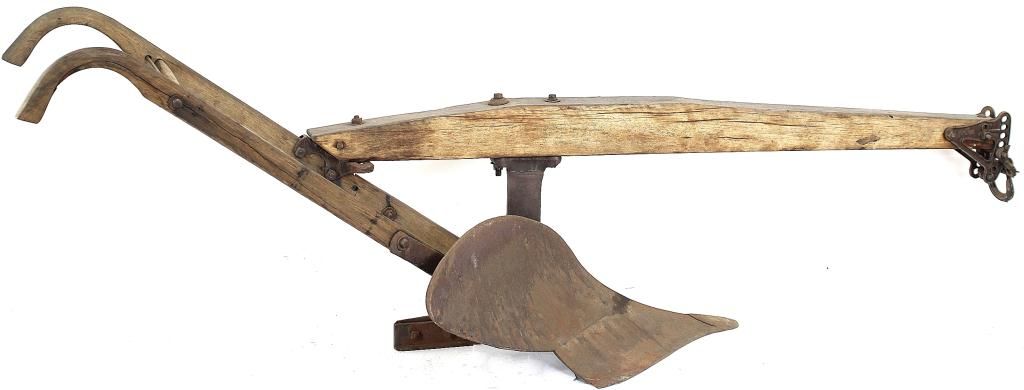
Every disciple has his plow. Sometimes it’ll be obvious, everyone sees it; other times it’ll be buried deep inside, and no one knows. A plow is a perfect word to describe exactly what the Holy Spirit is doing–and its descriptive of the determination of a disciple who is slowly learning how to follow.

When you’re trying to grow-up you’ll grasp this foundational lesson. You have to be single-minded and really focused to stay moving ahead. You cannot look behind at what has been done. You can’t turn around to admire your work, rather we look at the tree that is keeping us lined up with Jesus.

You will sweat and get tired. Your full effort is needed to keep the plow in the hard earth. You aren’t pushing, the oxen is pulling, but you’re the one who weighs it down while keeping your furrow relatively straight. It’s harder than it looks. (Thank God for the modern tractor.)

In case the plowman starts to look back, his plow line would become crooked. If that happens, the field he is plowing will not yield a full harvest. A good plowman has learned he must hold on. In following Jesus, we are to keep our eyes on Him, and never let our minds and hearts wander away. (Hebrews 12:1-2.)

“To keep our hand on the plow while wiping away the tears–THAT is Christianity.”

-Watchman Nee

To follow means looking and moving forward. We must understand this–it’s the very essence of walking a path. We’re walking out the journey. Sometimes we feel Jesus’ joy as His follower, but occasionally we won’t. We’re learning to understand it more and more. But no matter what, we keep putting heel-to-toe. We are followers after all.

Jesus lived this; He steadfastly set His face to go to Jerusalem (Luke 9:51).

“To learn strong faith is to endure great trials. I have learned my faith by standing firm amid severe testings.”

-George Mueller

Rediscovering the Feet of Jesus

A terrific study is finding the people who fell at Jesus’ feet. Tucked in the Gospels you’ll find stories of those who despair. You’ll also see them come to Jesus in brokenness and humility, without any other recourse. I call these the “people of the feet.”

They came to Jesus because they had no hope otherwise. They were people who were hopeless and wretched, they had long ago run out of options. They came to Jesus, falling down in front of Him. They were all people of the feet.

They were men and women who were truly desperate.

Now when Mary came to where Jesus was and saw him, she fell at his feet, saying to him, “Lord, if you had been here, my brother would not have died.”

John 11:32

One of the classic scenes in the Gospels is when Mary meets Jesus after her brother’s death. She doesn’t understand Jesus’ delay, Lazarus has been very ill and Jesus could have healed him. She is grieving and confused. But she only has one posture and one place in her heart to be– at the feet!

There are some common characteristics that feet-finders have:

  • A great need that can’t be met without His touch
  • To understand one’s true condition–humility, brokenness
  • To beg for a healing, for self or family
  • To honor Jesus as the Messiah
  • To be more receptive to His teaching, to understand Him
  • To become a witness to others (although it does seem secondary)

The following 3 verses are just a small selection of those who fell at Jesus feet.

“And great crowds came to him, bringing with them the lame, the blind, the crippled, the mute, and many others, and they put them at his feet, and he healed them.”

Matthew 15:30

“But immediately a woman whose little daughter had an unclean spirit heard of him and came and fell down at his feet.“

Mark 7:25

“Then people went out to see what had happened, and they came to Jesus and found the man from whom the demons had gone, sitting at the feet of Jesus, clothed and in his right mind.”

Luke 8:35

But there are several other instances where people came to sit at Jesus’ feet:

  • Mark 5:22-23, Jairus, a leader in the local synagogue
  • Luke 7:37-38, a sorrowing mother for her daughter
  • Luke 8:41, also Jairus
  • Luke 10:39, Mary, when Jesus was teaching
  • John 11:32, Mary, meeting Jesus entering Bethany
  • John 12:3, Mary, with her perfume
  • Revelation 1:17, John to express what he was seeing (also 19:10)

In every case we find people consciously coming and kneeling at the feet of the Lord Jesus. It was a deliberate action that came from their hearts. Each had a terrible need, and each was without hope.

It’s the end of religion if you’re a feet-finder. No more facades, no more treadmills. Instead your heart forever changes.

Formality and religious politeness are jettisoned. Brokenness and true humility takes their place. A foot-finder is no longer operating on spiritual niceties. Religion is comfortable, noble, and respectable, but it cannot heal or change people deeply.

Feet-finders know that they need Jesus desperately and will go to any length just to be touched by Him. They defy what is conventional and proper. They are not what we call respectable. You can find them at the feet of Jesus. They are feet-finders. Foot-finders weep, kneel, beg, shout. Too many tears and maybe some snot.

Hardly decent to religious people.

Are you really that desperate yet? Have you seen your need, and do you realize how lost you would be without His healing touch?

Often when I do pray, I sometimes think of the woman who was unclean. She speaks to me about approaching Jesus. I see myself in a crushing crowd of people, and I’m reaching out just to touch the hem of His robe. I know only Jesus can stop my own uncleanness. (Matthew 9.)

I’m convinced only Jesus can make me clean and whole.

I’ve tried to be holy and acceptable to Him. But I felt like a juggler, trying to keep my balls in the air all at the same time, and I could never pull it off. So I tried again and again. I was the unofficial master of religious effort.

But I found my rightful place at His feet. It’s where I belong. I love Him.

I’m not ashamed to be found kneeling.

Why, God Why?

Job 7:20, 13:24, 9:29, 24:1, 10:18

Job’s profound suffering is one of the most extreme in all of human history. He is essentially a godly man who loses everything (except his faith). Job must pick up the pieces after “catastrophic ” sudden pain and total loss.

Only the brutality of the cross of Jesus eclipsed the suffering of Job.

Job is being tested with dark horrors. Will he “curse God and die” as his wife suggests? Will he cave in to the final four “friends” and accept their twisted theology? (I guess that you have to read chapters 38-39 to find out).

The Book of Job has been regarded as inaccessible and archaic by many.

Unfortunately, many believe this assessment and look elsewhere for comfort. I would agree that Job is a challenging book, but so is Macbeth or Plato. There are plenty of easier books to read; but if we choose to avoid Job, our faith will always be deficient. We will miss something vital.

Job is less an explanation and more a revelation of suffering. “Why” questions go unanswered. “Who” questions matter. I suppose this seems unfair to Job. It certainly seems so to me, but straight answers in a fallen world won’t get any traction at all.

One more thing. The Book of Job is about “twisted” theology. Job’s friends “toe-the-party-line” of theology that is logical. But don’t be mislead by their pronouncements, for they seem reasonable but they are all very much flawed.

I always find it strangely amusing when some quote Eliphaz or one of the other “friends” to encourage or comfort a suffering saint. They totally miss the point of the book. We desperately want to give out good counsel but we really don’t understand.

“If I have the gift of prophecy and can fathom all mysteries and all knowledge, and if I have a faith that can move mountains, but do not have love, I am nothing.” 1 Cor. 13:2

You can’t split your theology from love and get away with it. Something toxic happens if you try.

When you read “Job’s friends” you must remember that. These are lessons it takes a long time to learn. Unless the Holy Spirit tutors you, be very slow to speak. (Job’s friends were at their best at the beginning when they said nothing at all.)

The broken believer, hobbled by chronic illness, has much to learn from Job. He is like “the poster child” for those afflicted. My own illnesses are always an issue of course, but God is fully in control. He brings beauty out of the ashes. He has been more than gracious.

“To bestow on them a crown of beauty
instead of ashes,
the oil of joy
instead of mourning,
and a garment of praise
instead of a spirit of despair.
They will be called oaks of righteousness,
a planting of the Lord
for the display of his splendor.”
Isaiah 61:3

Boasting for Dummies


“Let not the wise man boast in his wisdom, let not the mighty man boast in his might, let not the rich man boast in his riches,”

“but let him who boasts boast in this, that he understands and knows me, that I am the Lord who practices steadfast love, justice, and righteousness in the earth. For in these things I delight, declares the Lord.”

Jeremiah 9:23-24

There is bad boasting (v.23), and good boasting (v.24). When I think of someone who brags it’s almost always in a negative sense. 

Boasting is one way pride becomes visible, it’s the way we exaggerate or embellish our identity. We magnify ourselves, amplifying our achievements beyond what is reality. We must understand that all it really is is arrogance on display.

There is no room for braggarts in the Church.

You cannot sanctify boasting. It is pride that we vocalize and use to influence. We want to change another person’s perspective of you. We desperately want others to admire and think better of us. Some have postulated that it really is nothing more than masking insecurity. I think they’re right.

The Word differentiates between good and bad boasting.

The book of Jeremiah (9:23-24) does precisely that. It explains that what is worldly: wisdom, strength, money– is the wrong way of seeking recognition and importance. God’s people are to declare (brag) that they are in an intimate relationship with God.

We understand, we know that we have a loving connection with the Lord. We learn we can brag about Him.

I encourage you to become aware of how you conduct yourself in front of others. We seldom think of ourselves realistically. For many of us our lives are so intertwined with the false that we struggle with what is true.

God resists pride. (James 4:6.)

Jeremiah tells us we can choose to be different. We can swivel from the negative to the positive. We must quit exalting any attainment we have and instead boast that we now know God.

No longer do we strut, but now we choose to kneel.

“Humility is to make a right estimate of one’s self.” 

Charles Spurgeon


The Holy Club

John 8:31

Being a disciple of Jesus is serious business. We’re learning to walk in His footsteps, and we do this through God’s grace and mercy. It takes discipline, and that can be hard. In 1729 a group of Christian believers started meeting at Oxford University with the intention of becoming more accountable in their walk.

They became known as the “Holy Club.”

Here are 22 questions they asked themselves in their private times with Jesus.

  1. Am I consciously or unconsciously creating the impression that I am better than I really am? In other words, am I a hypocrite?
  2. Am I honest in all my acts and words, or do I exaggerate?
  3. Do I confidentially pass on to another what was told to me in confidence?
  4. Can I be trusted?
  5. Am I a slave to dress, friends, work, or habits?
  6. Am I self-conscious, self-pitying, or self-justifying?
  7. Did the Bible live in me today?
  8. Do I give it time to speak to me everyday?
  9. Am I enjoying prayer?
  10. When did I last speak to someone else about my faith?
  11. Do I pray about the money I spend?
  12. Do I get to bed on time and get up on time?
  13. Do I disobey God in anything?
  14. Do I insist upon doing something about which my conscience is uneasy?
  15. Am I defeated in any part of my life?
  16. Am I jealous, impure, critical, irritable, touchy, or distrustful?
  17. How do I spend my spare time?
  18. Am I proud?
  19. Do I thank God that I am not as other people, especially as the Pharisees who despised the publican?
  20. Is there anyone whom I fear, dislike, disown, criticize, hold a resentment toward or disregard? If so, what am I doing about it?
  21. Do I grumble or complain constantly?
  22. Is Christ real to me?

“We have suffered from the preaching of cheap grace. Grace is free, but it is not cheap. People will take anything that is free, but they are not interested in discipleship. They will take Christ as Savior but not as Lord.”

    Vance Havner

I sincerely hope that this blesses you.

Loving His Throne

“A Christian is not a person who believes in his head the teachings of the Bible. Satan believes in his head the teachings of the Bible! A Christian is a person who has died with Christ, whose stiff neck has been broken, whose brazen forehead has been shattered, whose stony heart has been crushed, whose pride has been slain, and whose life is now mastered by Jesus Christ.” 

-John Piper

Philippians 3:20, MSG

It seems to me that the purpose of our life is not to find our freedom. It’s really meant to find our Master.


But the idea of being a slave to anyone is repugnant. We chafe at this, and yet man was never meant to be separated from the Lordship of Jesus. We’re instructed repeatedly with the New Testament idea that “our life is not our own”  Over and over God proclaims Himself as the King.


That troubles us somewhat.

Not so much when life is fairly good, granted, but in those hard moments when a decision must be made between enjoying the titillating “lusts of the flesh,” or accepting the fruits of the Spirit. This is one of those “lordship moments.” They come and go, and they show us exactly who we are.


If you’re really going to be authentic–a legitimate and real disciple, then you must determine who is going to be in charge, and this isn’t one of those casual decisions. Your decision must become a settled issue.


You must securely fix the throne in your heart and spirit.

The thief on the cross knew salvation, he was promised an eternity with God simply by faith. But I submit to you that he had put himself under the Lordship of Jesus, simply by recognizing the sign, “the King of the Jews.” I believe he saw and understood its implications. Jesus was King! He knew and understood.


This is a very hard word for some, but so many of our personal issues hinge on this.


I know this first-hand. It is a monumental struggle. You must admit to not only having Jesus as your Savior, but you also must put your life under His total Lordship.  You need to pick up your cross daily in order to follow.  You need to learn how to kneel.


I’ve chosen a depiction of Jesus on His throne to open up this post–it’s done on purpose, even if it’s an artist’s take.  I simply want you to understand the supreme call He has on your life. Here’s Bob Dylan, and he nails this idea down:


But you’re gonna have to serve somebody, yes indeed
You’re gonna have to serve somebody
Well, it may be the devil or it may be the Lord
But you’re gonna have to serve somebody


You must learn, here and now, how to kneel before the Sovereign King