Incarnation Truth

“The central miracle asserted by Christians is the incarnation. They say that God became man.”

C.S. Lewis

Incarnation, the central Christian doctrine that God became flesh, that God assumed a human nature and became a man in the form of Jesus Christ, the Son of God and the second person of the Trinity.

Christ was completely God and fully man at the same time. This teaching is clear and I really can’t wrap my mind around it. Becoming man did not diminish God–if anything it was an addition and not a subtraction.

Now it’s true that Jesus voluntary set aside all of the perogatives of being God; He chose to lay His deity aside. Please think this verse through–let it sink into your hearts.

Have a blessed Christmas. Know deep down that He has come for you, He holds you and cares for you. He will never ever leave you!

When God Became a Man

“The central miracle asserted by Christians is the incarnation. They say that God became man.”

C.S. Lewis

Incarnation, the central Christian doctrine that God became flesh, that God assumed a human nature and became a man in the form of Jesus Christ, the Son of God and the second person of the Trinity.

Christ was completely God and fully man at the same time. This teaching is clear and I honestly can’t wrap my mind around it. Becoming man did not diminish God–if anything it was an addition and not a subtraction.

Now it’s true that Jesus voluntary set aside all of the prerogative of being God–He chose to lay His deity aside. Please think these verses through–let them sink deeply into your hearts. It really is an awesome passage.

Philippians 2:6-8, ESV

Have a blessed Christmas. Know deep down that He has come for you, He holds you and cares for you. He will never, ever leave you!

Never, ever.

alaskabibleteacher.com

He Came for Us!

by Pastor David Taylor

“The central miracle asserted by Christians is the incarnation. They say that God became man.” 

CS Lewis

One of my favorite places to fish in Alaska is Kodiak Island, where I tried to catch silver salmon with some friends. Just as we were setting up camp, the sun disappeared, and the temperature dropped quickly. While we struggled with our tents, the wind joined in. Then, it started pouring rain—like someone dumped a bucket of water on us! I woke up at midnight to strong winds flattening my tent, making me wonder if fishing Kodiak was really worth it. 😁

But in the morning, the storm had moved on. The sky transformed into something gold! The sun shone brightly, making the world come alive. The night gracefully stepped aside, allowing the darkness to fade away and make room for a new, vibrant day.

I realized then that’s the way of Christmas. 

We have an Advent hope. The light doesn’t negotiate with darkness; there’s no struggle. The darkness retreats when the light arrives. Plain and simple.

Advent hope seems slow, but honestly, it’s unstoppable.

When Jesus came into the world, nothing could stop Him. His birth is recognized during Advent. His arrival was predicted in the scriptures. Jesus came to take away our sins and offer us eternal life.

The Bible teaches us that Jesus is God in the flesh, fully divine and fully man, who came to save us from our sin. This is basic Christianity.

One: The Word Who Always Was, (vv. 1-2)

“In the beginning” reminds us of Genesis, where God created everything (Genesis 1:1). Through the Spirit, he shows that he has taken an important step towards us with the arrival of Jesus. He is dedicated to saving us.

God created us to know and enjoy him (Gen 3:8). We must understand that sin entered the world and screwed everything up. Jesus came to sacrifice Himself to secure our salvation, restoring his image in those who trust him. 

Jesus Christ restores all that we lost because of our sin.

In the beginning was the Word. The Word did not come into existence in Mary’s womb but He always was. The Word is eternal. Before it all began, he was there, and he was coming for us.

The phrase “the word was also with God” indicates that the Word is from God but is closely connected to Him (Mk 6:3; 11:4; 2 Cor 5:8; 1 John 1:2). The Word is also God and represents the eternal Son of God, who is both with God and is God. He is the Word and the Son, distinct yet unified with God.

Two: The Word Who is the Creator, (v. 3)

Everything we see was made through Jesus, and nothing exists without him (see Col 1:16-17). The Old Testament says that God created the heavens and the earth, while the New Testament shows that the Word is the true Creator. This highlights Christ’s key role in creation and his divine nature. Both Testaments emphasize the relationship between God the Father and Jesus, confirming that all existence is intentional and meaningful. 

Recognizing Jesus as the Creator enhances our understanding of his authority, showing us that all things were created through him and find their purpose in him.

Three: The Word Who is the Light, (vs. 4-5). 

We must understand that we’re born spiritually dead and blind. But that can change.

Jesus is the light and every one of us is spiritually blind to truth and beauty and glory (John 17:24). Jesus overcomes our darkness and now gives life. Jesus does for us what we cannot do for ourselves. His love is seeking us.

The word, the gospel, brings forth life and light so that we are born again, literally born from above, and so we see (John 3:3). The light shines into our darkness and the darkness leaves us.

Christmas Discipleship

Our walk with Jesus should be strengthened by Christmas. Sometimes we might shelf our discipleship during the holidays. This can be something we’re not even aware that we’re doing. But I definitely believe that our discipleship needs Christmas. This isn’t really an option.

Maybe our faith should actually be intensified by the grandeur and splendor of Christmas?

After all, when we mull over this tremendous mystery of the incarnation our faith and praise can only grow. To think that God Himself came for us like He did is pretty potent stuff. God became a helpless baby, and needed breast milk and a change of diapers. That should rattle us if we really understand.

“The Almighty appeared on earth as a helpless human baby, needing to be fed and changed and taught to talk like any other child. The more you think about it, the more staggering it gets. Nothing in fiction is so fantastic as this truth of the Incarnation.”

J.I. Packer

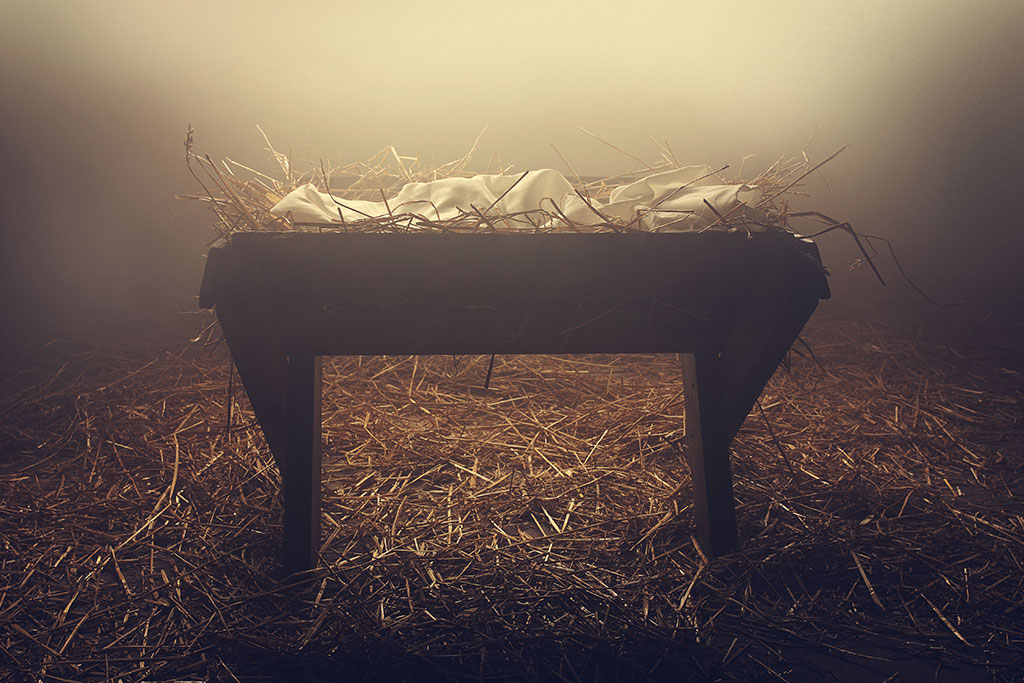
Prayer is one of the best ways I know to incorporate this. I imagine that the Holy Spirit is pretty active right now as many believers meditate on what really happened in that manger in Bethlehem.

A CHRISTMAS PRAYER

Dear Father, it’s Christmas time again. Help me this year to season the celebration with reason. Teach me to plan with my family. May I avoid the clutter that dims my vision and burdens my time.

Keep me mindful of my budget. and help me to remember that a gift selected with love tugs forever at the heartstrings. Forgive me for past extravagance.

Remind me to decorate in good taste, treasuring all of the past blending it with the new, but holding steadfast to reason. Keep me, dear Father, from strain lest I stray from all thy teachings.

Guide me to the light of Christmas. Help me keep a candle’s flame of that light as a constant reminder of my goal . . . eternity.

I pray for thy love and help, in the name of thy beloved Son whose birthday we are observing.

Amen.


– Author Unknown


His Love Persists, Psalm 136

Psalm 136

“Give thanks to the Lord, for he is good, for his steadfast love endures forever.”

Psalm 136:1, ESV

Repetition is when a single word or phrase is used multiple times in short succession for effect. It can help emphasize a point. This Psalm certainly does that.

Since this post is pretty much about repetition, I’m going to share some different versions that different translators have interpreted the last phrase of all 26 verses. Keep in mind the last phrase is used is repeating itself word for word in each translation.

Now here are seven different English translations of the end of every verse.

AMP: …for His lovingkindness (graciousness, mercy, compassion) endures forever.

NASB: …for His faithfulness is everlasting.

KJV: …for his mercy endureth for ever.

NCV: …His love continues forever.

CJB: …for his grace continues forever.

MSG: …His love never quits.

NET: …for his loyal love endures.

The word, translated in these different ways, is hesed” in Hebrew. It means a forever love, loyalty, faithfulness or kindness. It is something everlasting or eternal that’s based all on covenant. Yes, every translation is different, but the same.

I suppose this repeated phrase (26 times) may seem a bit redundant. I for one am prone to skip Psalms 136 because of that, I mean it seems boring. Just repeating this over and over I start to wonder if there’s something better to read.

But we dare not make this mistake.

If we respectfully dismantle this phrase we find it deals with seeing God as eternally steadfast. We are called to state out loud His love for us that never wavers or ends. A “steady” forever love that will not change, flicker, or diminish. It just goes on and on and on.

The phrase then moves even deeper than that. “Endures forever,” shapes the whole thought. You might say that these two words extend or amplify the complete verse and strengthen the entire Psalm.

O.K. Here’s another bone to chew on.

First, I need to point out that the first part of each verse states the unique circumstance that declares what exactly has been done. For instance notice the wonder and power of each verse. This is verse 15, for example,

“He overthrew Pharaoh and his host in the Red Sea, (the unique phrase)
    
for his steadfast love endures forever.”
(the repeated phrase)

The first part describes a miracle of deliverance from Egypt. The second is that same repeated phrase we find in all 26 verses. First the unique phrase, and but then comes the repeated one. But let’s add even more flavor. We must teach ourselves to remember. You must consider each event He has led you through to be a testimony to others.

You then must tell your children about your own personal experiences with God.

We forget these miracles unless we consciously recall what God has done. Miracles, healings, provisions, and His amazing grace. Never disremember these things. Bring them to mind, over and over again. You should never forget those “God-things.” They’re uniquely yours. He has done distinctive and tremendous things for you alone.

I guess the main point of this post is to emphasize to you to value those unique miracles that you’ve experienced in your own life.

In life it seems we remember what is important to us. What He has done for you is your own unique testimony. It’s yours, and yours alone. What you’ve experienced is completely your own testimony.

When we enter a forever kind of an endless eternity that each of us will have amazing stories to tell each other about God’s special touch, His miracles and all of the grace and forgiveness that He uniquely loved us with. We all will have our own unique and singular stories. What we share will be our evidence of His love.

That’s pretty amazing when you think about it.

“And they have conquered him by the blood of the Lamb and by the word of their testimony,”

Rev. 12:11, ESV

Learning How to Dance

Do the Dance-- For Him

“And David was dancing before the Lord with all his might, and David was wearing a linen ephod.”

2 Samuel 6:13-15

“The most valuable thing the Psalms do for me is to express the same delight in God which made David dance.”

     C.S. Lewis

It seems I’m the world’s worst and the clumsiest of all.  And since my brain surgery, it has gotten even worse. I fall several times every month.  I need to use a cane now.  (And if you look up “klutz” in the dictionary you’ll see my picture, lol.) 😃

When I start to dance, you had better head for higher ground! 

Even so, I do love the idea of dancing, but I’m like Bozo, the circus clown, only wearing roller skates!  I lurch from side-to-side and I’m always on the verge of falling on someone’s lap, which is a real hoot!

But there is just one dance that I am waiting for.

It’s the dance I’ll have with my Savior.  There will be a day, in a place and time where He will call me home and He himself will teach me how to dance.  I know it’ll be incredible, and it’s a day that I anticipate, and honestly, I hope it comes soon. (He’s finally going to heal me!)

But to really dance you must first liberate your heart. 

You must cancel out all self-consciousness.  If you are self-aware, you will never enter into the joy and wonder of the true dance.  You will be a perpetual wallflower, living only on the edges.  And, you will be very sad.

It seems you must dance in your heart before you can ever dance with your feet.

I desperately would like to dance. And when I see Him clearly on that day, I’ll have no cane to slow me down. I will be as graceful, and to be perfectly honest, I won’t be watching you, (I’m sorry). I will see only Jesus. And I believe that my heart will beat for Him exclusively.

Jesus shed His blood for me.

I belong to Him. He forgave all my sin and has given me eternal life. Knowing this fills me with such joy that my feet won’t stand still. He redeems me, and is this not a cause for a dance, or two, or maybe three? Maybe eternity will be filled with more joy than we ever dreamed possible?

Some of you have been damaged–mashed up in the grinding gears of life’s hard issues. It’s hard to dance. I understand.

But I also know that your life can be astonishingly full of grace– you have endured so much, and yet Jesus intends to occupy your thoughts and vision with real hope. As His disciple, you’ll discover your special dance. And when you finally see Him, your heart will finally be free to spin and twirl.

He after all is the Lord of the dance.

“Young women and young men, together with the elderly, will celebrate and dance because I will comfort them and turn their sorrow into happiness.”

Jeremiah 31:13
 
alaskabibleteacher.com

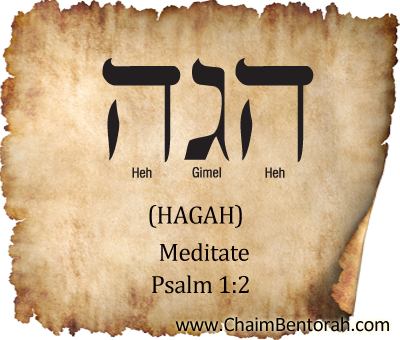
Hagah, To Meditate

Psalm 1:2

Meditation has gotten a bad rap among some Christians, largely due to a connection with Eastern mysticism. This is really unfortunate for it has a critical place in the development of your discipleship. I believe it’s vital (and maybe even mandatory?)

Hagah is the Hebrew word for ‘meditation’ and it fascinates me.

It literally means to “moan, growl, utter, muse, or mutter.” Some have suggested that it contains the idea of ‘rumination,’ like a cow who chews a cud. The grass goes in, and it’s regurgitated several times, extracting every bit of nutrients and vitamins.

Hagah, or to meditate is the way we assimilate God’s Word into our lives. It’s critical that we do this in our walk as disciples that belong to Jesus.

Joshua 1:8, ESV

It’s an interesting command isn’t it? Joshua’s ministry is to lead God’s people and requires his deep connection to God’s promises. He needs to hagah God’s words, to purposefully think about them over and over and over.

It’s interesting to me that when Joshua meditates and carefully responds to the Word then he will receive success in his life and ministry. The word ‘success’ means “wisdom, comprehension, insight with prosperity.” I need that desperately.

And if Joshua needed to do this, might not we?

Start small and simple. There are over 8,000 promises in the Bible–pick one and ruminate on it. Hagah on the Word and try to extract the spiritual nutrients that it contains. You will grow, bless others, and walk in victory, defeating your enemy.

“The amount of time we spend with Jesus – meditating on His Word and His majesty, seeking His face – establishes our fruitfulness in the kingdom.”

    Charles Stanley

Bryan Lowe

alaskabibleteacher.com

God’s Night Shift, Psalm 134:1-3

A song of ascents.

“Now bless the Lord,
all you servants of the Lord
who stand in the Lord’s house at night!
Lift up your hands in the holy place
and bless the Lord!

 May the Lord,
Maker of heaven and earth,
bless you from Zion.

Psalm 134:1-3

Not every Levite labored during the day. The night shift continued their work. Granted, no sacrifices were offered, but the “night priests” stood to protect the Ark, gather wood, and keep the incense burning and cleaned up the blood. But most importantly they must worship and pray for Israel.

“Servants of the Lord” is a phrase that resonates in my heart. Those words are both a comfort and a responsibility and that seems to open this passage up. We’ve got a Master, and we serve Him only. And I know and believe that worship was the main responsibility of the night watch!

“Christians believe that true worship is the highest and noblest activity of which man, by the grace of God, is capable.”

-John Stott

Worship is the central work of the disciple, it’s what we’re called to do. Evangelism, missions, and preaching are fine. But prayer and intercession must be the heartbeat of each believer. It’s the holy calling of the Church. When does the church service end? Never!

The service really gets going Monday through Saturday!

In this short Psalm, (just 3 verses!) we’re introduced to a group of Levites who are working the night shift. What they do is hidden–it’s not seen by others. They keep the fires stoked, gather wood, and patrol the walls. But more importantly, they stand and worship and intercede for Jerusalem.

No real recognition is given, and the spotlight is rarely shined on them.

They serve at night, vitally essential but seldom seen. And yet they intercede for the nation. They “bless” the Lord and the people of God. That’s their place and position. They must do this. Israel must be blessed. These night shift workers insist on it!

The church needs nursery workers and Sunday school teachers. So many are working behind the scenes. Often the deacons and elders of a church are rarely seen and seldom acknowledged. So much is concealed. Their work is a hidden one. But the Father sees.

In a church, someone has to clean the bathrooms and take out the garbage, and others will make coffee or shovel snow. They vacuum and straightened the chairs. They are the ones who collect the mail and prepare the overheads. There’s always something to do. And it’s a hidden work carried out with no one watching. No one, but God.

“It is good to give thanks to the Lord,
    to sing praises to your name, O Most High;
to declare your steadfast love in the morning,
    and your faithfulness by night,

Psalm 92:1-2

Serving at night can be a challenge, not all can lead worship or preach the sermon on Sunday morning. Those called to do those tasks serve in the day. But those who serve the Lord at night also labor, and sometimes that hiddenness behind the scenes has its own special challenges.

This may come as a surprise, but it takes as much of the Spirit to work the night shift as it does to stand behind the podium and preach the Word. I believe that this is true! These hidden ones carry out much of the ministry of the Church. Few notice, but God Himself sees them.

“They [Levites] are exhorted to fill the night with prayer and watchfulness and to let their hearts go up in blessing to Jehovah. The voice of praise should echo through the silent night and float over the sleeping city.”

Alexander MacLaren

alaskabibleteacher.com

Why this Waste?

 “A woman approached him with an alabaster jar of very expensive perfume. She poured it on his head as he was reclining at the table. When the disciples saw it, they were indignant. “Why this waste?” they asked. “This might have been sold for a great deal and given to the poor.”

Matthew 26:7-9

Is it possible we’re missing something here?

Just previously Jesus warned His disciples that He was about to be crucified. Apparently, they didn’t understand. And immediately after that, the Pharisees and elders begin to get serious about putting Him to death. The word “plot” is used. At this point, things have gotten deadly.

Jesus is at the home of Simon the leper; he’s eating and drinking. Simon is a little-known character with a common name; perhaps he’s a man whom Jesus had healed? (He and his home would’ve been unclean if his disease was present.)

In comes a woman carrying an alabaster jar that was only used for holding perfume of the highest quality. John 12 tells us that this was Mary, the sister of Martha (remember that story)?

She carries an alabaster perfume which was extremely expensive, worth almost a year’s wages. What she’s about to do is extravagant, the neck of the bottle is broken and Mary begins to pour it on the feet of Jesus.

The cost of the poured-out perfume is exorbitant.

Immediately the disciples object. This seems to be the first time that they agree that what she was doing was totally out of line. They can’t believe what she’s doing is okay. All they can see is something too extravagant, and far too lavish.

They considered the cost–it’s almost a year’s wages. “Why was this perfume wasted?” That’s a logical analysis. “The oil could’ve been sold!” It would have helped a lot of poor people who could have really used it. The book of John amplifies all of this:

“But Judas Iscariot, one of his disciples (he who was about to betray him), said, “Why was this ointment not sold for three hundred denarii and given to the poor?” He said this, not because he cared about the poor, but because he was a thief, and having charge of the moneybag he used to help himself to what was put into it.”

John 12:4-6

If we try to think this through we just might agree with them. That’s a lot of money, and it’s such a waste. (You might as well have dumped it down the drain, Mary.)

A week from this “Jesus-Mary-anointing,” the Lord would be whipped, and struggle through the streets of Jerusalem carrying an obscenely heavy cross. Jesus would then be stripped of His clothing and then be crucified. Some have suggested that the scent of the perfumed oil would still be present. Perhaps He could smell that oil as He suffered and died?

It’s interesting what small things can do.

“It is in the process of being worshiped that God communicates His presence to men.”

   C.S. Lewis

“For God no cost is too high. Anything can be sacrificed if only we may please Him. Let us daily learn to be obedient children.”

    Watchman Nee

The Five Crowns

In the New Testament crowns are given to certain believers. They’re more than a reward, they’re recognition of a Christian’s life and character. Keep in mind that each one given is pure grace. They are not rewards that we earn, but recognition of God’s blessing. We can do nothing unless He gives us His grace. You must understand this.

We find that there are five. But understand, these are not given as recompense or compensation. A crown is never earned, and it’s never given as an achievement for exceptional behavior. All are received by His grace and kindness. (And, we’re not in any competition on who can receive the most.)

Here’s a list which I hope is complete.

  • the Victor’s Crown
  • the Crown of Rejoicing
  • the Crown of Righteousness
  • the Crown of Life
  • the Crown of Glory 

The Victor’s Crown, which is also called the Martyr’s Crown. We can read it in James 1:12 and also in Revelation 2:10. The Church of Smyrna is promised by Jesus, Do not fear what you are about to suffer…the devil is about to throw some of you into prison…Be faithful unto death, and I will give you the crown of life.”

The Crown of Rejoicing, is described in 1 Thessalonians 2:19 and in Philippians 4:1. This crown is given to those dedicated to evangelism or the mission field. Paul receives this crown for his work with the Thessalonians. “Therefore, my brothers, whom I love and long for, my joy and crown, stand firm thus in the Lord, my beloved.”

The Crown of Righteousness, this is given to believers who steadfastly look for Jesus’ Second Coming. It seems it’s also given to those who seek after an intimacy with Jesus. We can read of this in 2 Timothy 4:8. “There is laid up for me the crown of righteousness, which the Lord, the righteous judge, will award to me on that day, and not only to me but also to all who have loved his appearing.”

The Crown of Life, this is given to those who have laid aside all the things this world offers and are committed to a life that is eternal. “Everyone who competes in the games goes into strict training. “They do it to get a crown that will not last, but we do it to get a crown that will last forever.” (1 Cor. 9:25.)

The Crown of Glory, given to the pastoral servants who have prayed and served the Church, “And when the chief Shepherd appears, you will receive the unfading crown of glory.” According to 1 Peter 5:2-4 this crown is given to those who have served the flock faithfully as His shepherds and teachers.

These five crowns are freely given, by grace, to each who deserves them. In each and every case it’s Jesus who coronates each believer. We’ll watch and we’ll agree with His decision. We will not vote to see who is worthy but we will understand His gracious wisdom of that person’s trials and challenges.

None of these crowns will not be worn very long. There will not be any reason to show them off to other believers, “Look at me, I’m wearing two, how many crowns are you wearing?” No. Rather, in love, we return each crown to Him who gave it to us.

A crown is temporary and is given back to Him who loved us so much. 

“The twenty-four elders fall down before him who is seated on the throne and worship him who lives forever and ever. They cast their crowns before the throne, saying,

“Worthy are you, our Lord and God,
    to receive glory and honor and power,
for you created all things,
    and by your will they existed and were created.”

Revelation 4:10-12

Willian Tiptaft