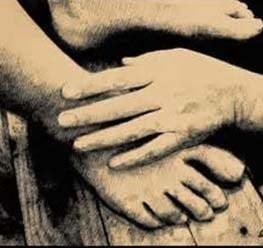
Meet Martha, Her Story

Luke 10:38-41

“While Jesus and his followers were traveling, Jesus went into a town. A woman named Martha let Jesus stay at her house. 39 Martha had a sister named Mary, who was sitting at Jesus’ feet and listening to him teach. 40 But Martha was busy with all the work to be done. She went in and said, “Lord, don’t you care that my sister has left me alone to do all the work? Tell her to help me.”

41 “But the Lord answered her, “Martha, Martha, you are worried and upset about many things. 

42 Only one thing is important. Mary has chosen the better thing, and it will never be taken away from her.”

My name is Martha and I’m a friend of Jesus. My home was one of His favorite places to stay–a refuge for Him whose life was so busy. I joyfully opened my house for Him and His disciples. When Jesus came I went all out, I wanted the best for His followers and that meant there were always things to do. Is that really a bad thing?

The kitchen was getting crazy–lamb, cucumbers, figs, and so on. Roasting and slicing, I had bread in the oven. All of this was requiring constant attention, and I remember not being able to keep up.

I wanted things to be perfect for Jesus.

I took occasional peeks at He who was teaching in my living room. I just brought in some bowls of figs and raisins as an appetizer and found my sister Mary sitting with the men listening to Jesus and asking questions. It was that which started to get a little ticked off.

I was getting really mad at my sister.

There was so much to do and I realized I had to have her help. And the more I thought of Mary the more frustrated I got. I suspect she didn’t understand the work that need to be done. I suppose her priorities were messed up–she simply didn’t understand her role as a hostess, and to sit with the men like she was doing was wrong.

Mary didn’t understand her place.

I admit I was having issues with my sister. I had brought out another bowl of figs and that’s when I gently interrupted the Lord’s teaching. I wanted Him to tell Mary that her place was with me in the kitchen. He could correct her and I knew she would listen. “Tell her to help me.”

Instead, it was Jesus who corrected me. I still remember Jesus’ words. I wasn’t expecting this.

“Martha, Martha, you are worried and upset about many things.”

Was I really that transparent? He understood, but rather than encouraging me I had become another lesson to everyone present. I realize now that the real issue was with my attitude, and not the work. Yes, I was bothered and upset and I know that it’s those things that were the problem.

Only one thing is important. Mary has chosen the better thing, and it will never be taken away from her.”

I suddenly knew that He was right. Jesus was in my home, and all I did was get angry. I thought my work would please Him and after all, wasn’t that important? Didn’t He “deserve” my best efforts?

My younger sister Mary was being praised. She was my example and now I was being gently rebuked. I realized that all I was doing, all my work, was not what Jesus wanted from me. The problem was my own heart—-it wasn’t Mary, it was me!

I had taken my eyes off of Jesus and was immersed in my service to Him.

I had become critical and resentful of Mary, and I had forgotten that my place was at Jesus’ feet, listening and learning. That’s what Jesus wanted from me, and somehow I had forgotten that.

I decided then, the work could wait, my real place was with Jesus.

Martha’s frustration is typical of those who diligently serve with good intent, but forget to also sit at Jesus’ feet. “The Martha spirit says, if the work is done, is not that all? The Mary spirit asks whether Jesus is well pleased or not? All must be done in his name and by his Spirit, or nothing is done.”

C.H. Spurgeon

My Facebook page is here.

Rediscovering the Feet of Jesus

A terrific study is finding the people who fell at Jesus’ feet. Tucked in the Gospels you’ll find stories of those who despair. You’ll also see them come to Jesus in brokenness and humility, without any other recourse. I call these the “people of the feet.”

They came to Jesus because they had no hope otherwise. They were people who were hopeless and wretched, they had long ago run out of options. They came to Jesus, falling down in front of Him. They were all people of the feet.

They were men and women who were truly desperate.

Now when Mary came to where Jesus was and saw him, she fell at his feet, saying to him, “Lord, if you had been here, my brother would not have died.”

John 11:32

One of the classic scenes in the Gospels is when Mary meets Jesus after her brother’s death. She doesn’t understand Jesus’ delay, Lazarus has been very ill and Jesus could have healed him. She is grieving and confused. But she only has one posture and one place in her heart to be– at the feet!

There are some common characteristics that feet-finders have:

  • A great need that can’t be met without His touch
  • To understand one’s true condition–humility, brokenness
  • To beg for a healing, for self or family
  • To honor Jesus as the Messiah
  • To be more receptive to His teaching, to understand Him
  • To become a witness to others (although it does seem secondary)

The following 3 verses are just a small selection of those who fell at Jesus feet.

“And great crowds came to him, bringing with them the lame, the blind, the crippled, the mute, and many others, and they put them at his feet, and he healed them.”

Matthew 15:30

“But immediately a woman whose little daughter had an unclean spirit heard of him and came and fell down at his feet.“

Mark 7:25

“Then people went out to see what had happened, and they came to Jesus and found the man from whom the demons had gone, sitting at the feet of Jesus, clothed and in his right mind.”

Luke 8:35

But there are several other instances where people came to sit at Jesus’ feet:

  • Mark 5:22-23, Jairus, a leader in the local synagogue
  • Luke 7:37-38, a sorrowing mother for her daughter
  • Luke 8:41, also Jairus
  • Luke 10:39, Mary, when Jesus was teaching
  • John 11:32, Mary, meeting Jesus entering Bethany
  • John 12:3, Mary, with her perfume
  • Revelation 1:17, John to express what he was seeing (also 19:10)

In every case we find people consciously coming and kneeling at the feet of the Lord Jesus. It was a deliberate action that came from their hearts. Each had a terrible need, and each was without hope.

It’s the end of religion if you’re a feet-finder. No more facades, no more treadmills. Instead your heart forever changes.

Formality and religious politeness are jettisoned. Brokenness and true humility takes their place. A foot-finder is no longer operating on spiritual niceties. Religion is comfortable, noble, and respectable, but it cannot heal or change people deeply.

Feet-finders know that they need Jesus desperately and will go to any length just to be touched by Him. They defy what is conventional and proper. They are not what we call respectable. You can find them at the feet of Jesus. They are feet-finders. Foot-finders weep, kneel, beg, shout. Too many tears and maybe some snot.

Hardly decent to religious people.

Are you really that desperate yet? Have you seen your need, and do you realize how lost you would be without His healing touch?

Often when I do pray, I sometimes think of the woman who was unclean. She speaks to me about approaching Jesus. I see myself in a crushing crowd of people, and I’m reaching out just to touch the hem of His robe. I know only Jesus can stop my own uncleanness. (Matthew 9.)

I’m convinced only Jesus can make me clean and whole.

I’ve tried to be holy and acceptable to Him. But I felt like a juggler, trying to keep my balls in the air all at the same time, and I could never pull it off. So I tried again and again. I was the unofficial master of religious effort.

But I found my rightful place at His feet. It’s where I belong. I love Him.

I’m not ashamed to be found kneeling.

Why this Waste?

 “A woman approached him with an alabaster jar of very expensive perfume. She poured it on his head as he was reclining at the table. When the disciples saw it, they were indignant. “Why this waste?” they asked. “This might have been sold for a great deal and given to the poor.”

Matthew 26:7-9

Is it possible we’re missing something here?

Just previously Jesus warned His disciples that He was about to be crucified. Apparently, they didn’t understand. And immediately after that, the Pharisees and elders begin to get serious about putting Him to death. The word “plot” is used. At this point, things have gotten deadly.

Jesus is at the home of Simon the leper; he’s eating and drinking. Simon is a little-known character with a common name; perhaps he’s a man whom Jesus had healed? (He and his home would’ve been unclean if his disease was present.)

In comes a woman carrying an alabaster jar that was only used for holding perfume of the highest quality. John 12 tells us that this was Mary, the sister of Martha (remember that story)?

She carries an alabaster perfume which was extremely expensive, worth almost a year’s wages. What she’s about to do is extravagant, the neck of the bottle is broken and Mary begins to pour it on the feet of Jesus.

The cost of the poured-out perfume is exorbitant.

Immediately the disciples object. This seems to be the first time that they agree that what she was doing was totally out of line. They can’t believe what she’s doing is okay. All they can see is something too extravagant, and far too lavish.

They considered the cost–it’s almost a year’s wages. “Why was this perfume wasted?” That’s a logical analysis. “The oil could’ve been sold!” It would have helped a lot of poor people who could have really used it. The book of John amplifies all of this:

“But Judas Iscariot, one of his disciples (he who was about to betray him), said, “Why was this ointment not sold for three hundred denarii and given to the poor?” He said this, not because he cared about the poor, but because he was a thief, and having charge of the moneybag he used to help himself to what was put into it.”

John 12:4-6

If we try to think this through we just might agree with them. That’s a lot of money, and it’s such a waste. (You might as well have dumped it down the drain, Mary.)

A week from this “Jesus-Mary-anointing,” the Lord would be whipped, and struggle through the streets of Jerusalem carrying an obscenely heavy cross. Jesus would then be stripped of His clothing and then be crucified. Some have suggested that the scent of the perfumed oil would still be present. Perhaps He could smell that oil as He suffered and died?

It’s interesting what small things can do.

“It is in the process of being worshiped that God communicates His presence to men.”

   C.S. Lewis

“For God no cost is too high. Anything can be sacrificed if only we may please Him. Let us daily learn to be obedient children.”

    Watchman Nee

She Was the First!

“Jesus said to her, “Woman, why are you weeping? Whom are you seeking?” Supposing him to be the gardener, she said to him, “Sir, if you have carried him away, tell me where you have laid him, and I will take him away.” 

“Jesus said to her, “Mary.” She turned and said to him in Aramaic,“Rabboni!” (which means Teacher).”

John 20:14-15

Mary Magdalene would’ve been the last one I would have chosen to be the first witness. If it was me, I would have gone straight to Caiaphas, or gave Pilate a good scare–“I told you so.” He didn’t go to the Temple and to show off his resurrection power. He zapped no one.

It fascinates me, but Jesus didn’t show off his power. Instead Mary was chosen, the harlot, and the one who he cast out seven demons. Simple, humble Mary. The one whom he forgave. And he comes quietly, and gently to her.

He’s alive!

Brutally killed, taken off the cross and carefully laid in a tomb–but Jesus comes to life!

The most powerful testimony of truth of the Gospel rests here in the resurrection. Our faith hinges on this. If there is no resurrection, Jesus’ bones still lay in a tomb, and we are still dead in our sins. (1 Corinthians 15:17)

There is so much in this passage; the implications are enormous.

“What the world calls virtue is a name and a dream without Christ. The foundation of all human excellence must be laid deep in the blood of the Redeemer’s cross and in the power of his resurrection.”

     Frederick W. Robertson

Trying to Make Sense of the Incarnation

“The central miracle asserted by Christians is the incarnation. They say that God became man.”

C.S. Lewis

Incarnation, the central Christian doctrine that God became flesh, that God assumed a human nature and became a man in the form of Jesus Christ, the Son of God and the second person of the Trinity.

Now it’s true that Jesus voluntarily set aside all of the prerogatives of being God; He made the choice to lay His deity aside. Please think this verse through–let it sink into your hearts. It should be a mystery to you. It is to me.

“Though he was God,
    he did not think of equality with God
    as something to cling to.
Instead, he gave up his divine privileges;
    he took the humble position of a slave
    and was born as a human being.
When he appeared in human form,
    he humbled himself in obedience to God
    and died a criminal’s death on a cross.”

Philippians 2:6-8

God, Himself decided to make the manger His home. The woman who carried the baby in her womb was created by Him (that should rattle your teeth)!

When we see the implications of all of this–we can only worship, just like the shepherds did. We can only gift Him, just like the wise men. The Christmas story itself becomes our example of acknowledging what He’s done. We are now the worshippers and givers.

All of this is a profound miracle, and can only be accepted by a simple faith, a “Christmas faith.” There is so much I need to learn about all of this, but that’s alright.

Have a blessed Christmas dear one. Know deep down that He has come for you, He holds you and cares for you. He will never ever leave you!

Photo by Pixabay on Pexels.com


Simeon, In His Own Words

Luke 2:25-35

There was a man in Jerusalem whose name was Simeon. This man was righteous and devout, looking forward to Israel’s consolation, and the Holy Spirit was on him. 26 It had been revealed to him by the Holy Spirit that he would not see death before he saw the Lord’s Messiah. 27 Guided by the Spirit, he entered the temple. When the parents brought in the child Jesus to perform for him what was customary under the law, 28 Simeon took him up in his arms, praised God, and said,

29 Now, Master,
you can dismiss your servant in peace,
as you promised.
30 For my eyes have seen your salvation.
31 You have prepared it
in the presence of all peoples—
32 a light for revelation to the Gentiles
and glory to your people Israel.

His father and mother were amazed at what was being said about him. 34 Then Simeon blessed them and told his mother Mary, “Indeed, this child is destined to cause the fall and rise of many in Israel and to be a sign that will be opposed— 35 and a sword will pierce your own soul—that the thoughts of many hearts may be revealed.”

Yes, there were rumors. The priest Zechariah had declared that his son would become the Messiah’s forerunner. And apparently, angels had visited shepherds in their fields. Each encounter had come exactly how it was foretold.

I’m convinced that the Holy Spirit led me there that day.

I have no doubt that He was guiding me to the Temple. God had promised me that I would see with my own eyes the coming Messiah. This One would be salvation and be a light to the Gentiles which would bring glory and honor to the Jewish nation.

If these were of God, there needed to be collaborating witnesses that would foretell His work. One or two might be a mere coincidence, but three were a definite declaration. Plus I knew that my own eyes would see Him face-to-face.

To be perfectly honest, I really didn’t know what I expected to see. But I knew God’s heart, and I wanted to do His will. Some might say I was a devout believer in Israel’s prophetic purpose. I knew and believed that.

I had God’s promise that I would see Him.

Something or someone was prompting me to the Temple. I guess I had a divine appointment to keep. God had given me His promise, and I knew I was where I was supposed to be. It seemed like I was always on the lookout for that fulfillment.

It was then I saw the Child.

His parents stood out like something fluorescent. It seemed as if they were color in a black-and-white world, and they held the baby who was going to change the world. When I saw them I knew that everything had fallen into place. I saw the promise and He had come to save the world.

I took Jesus and held Him in my arms.

I was holding the Savior! This baby was to save the entire world from their sins. The Law required me to dedicate Him to God. Who can say what that means? I was to devote Him to God’s purpose and plan. Who had this honor, and who can say that this was their privilege? I had been chosen to insert Him into the purposes of God.

Who can say that?

When I laid my hands on Him it was like touching lightning. I spoke the blessing, but I understood that there was something more. I looked at His mother and spoke. It was both a blessing and a warning. I understood what God wanted to say, and it was a word that Israel’s hope would also have a sting that His mother needed to understand.

When I left the three of them in the Temple courts I began to grasp the reality of it all. I spoke God’s heart to His mother Mary. She had to know and understand who this Child really was. For me my task was complete.

I had spoken, and now it was time to leave.

“In the last days the mountain of the Lord’s Temple
    will be the highest of all mountains.
It will be raised higher than the hills.
    There will be a steady stream of people from all nations going there.”

Isaiah 2:2

Art: “Simeon holding Jesus,” by Andrey Shishkin, painted in 2012, Oil on canvas © Andrey Shishkin. Verses used: Christian Standard Bible