When a Believer Limps

Crutches at the Table

“David asked, “Is there no one still left of the house of Saul to whom I can show God’s kindness?” Ziba answered the king, “There is still a son of Jonathan; he is crippled in both feet.”‘ 

 2 Samuel 9:3, NIV 

This crippled man was named Mephibosheth.  He was injured by the actions of a nurse;  she dropped him as she was trying to escape the palace (2 Sam. 4:4).  It was not of Mephibosheth’s doing, but someone else made a mistake, and it totally and irrevocably changed his life.

He would always be disabled.

If you haul out your old musty commentaries, you’ll find that Mephibosheth’s name means, “shame.” Perhaps a casual ‘disdain’ would be how people treated him. But David was a different sort of king (as kings go), and he elevates Mephibosheth to the feasting table.

King David wants to include him!

Interesting. I believe that there are a great many people like Mephibosheth.  They’ve been injured by someone else’s stumbling.  It seems we pass these things on to each other.  And the lameness we inflict may not be physical.  It may be spiritual or emotional.  Sometimes we injure others without knowing what we have really done to them.

Jesus made some powerful statements about people who injure others.  

Some of the most vicious and evil woundings that are done are usually on a moral or spiritual level.  People can heal physically over time, but the wounds of the spirit are incredibly devastating.  When someone harms us on this level it can completely undo us, for a lifetime. (And perhaps, maybe forever).

We are capable of much evil.  We affect others in ways we don’t understand.  We need to seek God’s grace right now; we cannot allow ourselves the luxury of diminishing or minimizing what we have done. A vital point to consider: We cannot go on crippling others without injuring ourselves.

Wounded people wound. But healed people can often become healers themselves.

We can read of King David’s truly majestic treatment of Mephibosheth in 2 Samuel 9. He actively blessed him, and perhaps that is the proactive action we ought to take. We must make the effort– to bless others.

As a king, this was a very minor incident. Hardly worth recording in the lofty affairs of state. But as a man–to restore Mephibosheth, was definitely one of his greatest decisions. Kindness and gentleness should always be a key part of someone who is in authority, especially over others.

There’s another concept here– we discover something that is profoundly true about us in Paul’s letter to the Church in Ephesus.  It’s here, in 1:5, that we see that God our Father, acts like David, and receives Mephibosheth; just like God receives us to Himself. We find that we’re adopted, loved, and held, and we get a prime place at the table!

We may use crutches, but we walk by faith. And that may be the greatest lesson in this portion of scripture–and the most profound experience we can have as believers.

Ephesians 1:5, NLT

alaskabibleteacher.com

Daniel, the Lion Tamer

Daniel 6:22-23, ESV

I am rather frustrated with myself. I confess I haven’t read Daniel in years, and I’ve chosen to rectify this. Lately I’ve busted through this book and discovered some wonderful stuff. I guess chapter 6 has become my favorite.

A couple of things stick out.

Daniel was an incredibly faithful man, praying three times a day. He was true-hearted who served each king with the gifts God had given him. I like him a lot.

Daniel became the king’s favorite, the Hebrew word used means “prominent or esteemed.” He was the greatest and best there was to be found. You could say that he was the finest man in the kingdom.

Daniel knew how to lead and direct others. We read that he oversaw 120 chief overseers. I suspect he knew a thing or two about good leadership. Daniel understood his work, and it seems that he instinctively knew what good government required.

But Daniel was a victim of jealousy. A concerted effort, carefully planned and directed was meant to destroy him. Although the leaders of this rebellion could find nothing to accuse him of, they resorted to trap him because he prayed to God. Faithfully and consistently.

Their plot worked. These officials, through their twisting and manipulation of the legal code, were able to sentence Daniel to death. It seems being fed to hungry lions was the penalty for “breaking the law.”

Sometimes we must choose to serve God, even if it means breaking men’s laws.

Acts 5:29

Daniel was over 90 years old when he was thrown to the lions. Even in his advanced years he kept up serving God. The passage declares that he had “an excellent spirit.”

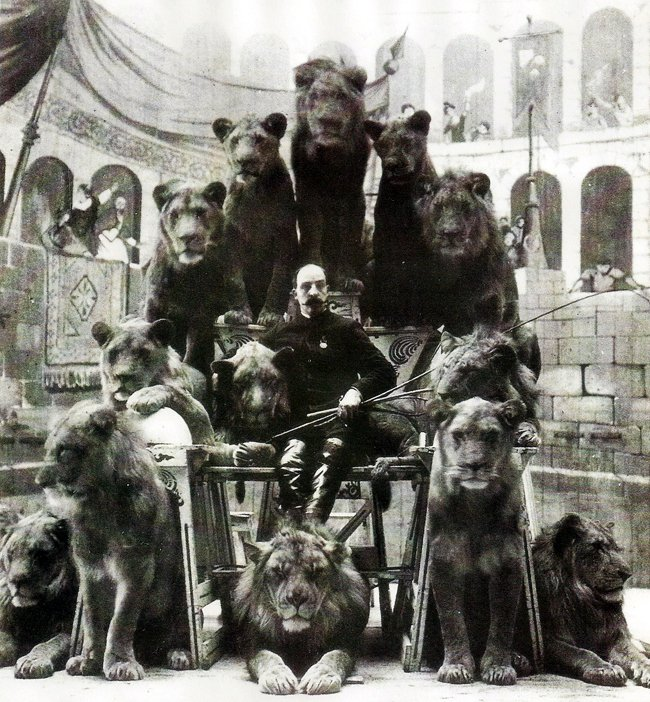
The lions, (several I assume), were not at all interested in devouring Daniel. King Darius however was incredibly distraught over Daniel’s execution, but it seems he was forced into it. The passage tells us that the king was so distressed that he couldn’t sleep that night.

Undoubtedly, Daniel slept far better then Darius.

To be faithful to the Lord God may require us to sleep with lions, but we can be assured of the Holy Spirit’s presence with us even then. A verse in Hebrews suggests “faith” protects us from the strong jaws of the enemy. Daniel understood.

Hebrews 11:33

But yet, sometimes even the faithful will be eaten.

Sometimes the lions will devour believers. But we must trust and believe no matter what happens. Hebrews goes on to show us the extremity of the faithful. Read Hebrews 11:35-38 and you’ll understand what I mean. Being faithful can be very difficult. Bad things often happen.

*****

     Thomas Watson

alaskabibleteacher.com

Being a Friend of the King


“A Christian is not a person who believes in his head the teachings of the Bible. Satan believes in his head the teachings of the Bible! A Christian is a person who has died with Christ, whose stiff neck has been broken, whose brazen forehead has been shattered, whose stony heart has been crushed, whose pride has been slain, and whose life is now mastered by Jesus Christ.”

–John Piper

No longer do I call you servants, for a servant does not know what his master is doing; but I have called you friends, for all things that I heard from My Father I have made known to you.”

John 15:15

It seems that the purpose of life is not to find our freedom. It’s really meant to find our Master.

Yes, the idea of being a slave to anyone is repugnant. We chafe at this, and yet man was never meant to be separated from the Lordship of Jesus. We’re instructed repeatedly with the New Testament idea that “our life is not our own”  Over and over God proclaims Himself as the King.

That troubles us somewhat.

Not so much when life is fairly good, granted, but in those hard moments when a decision must be made between enjoying the titillating “lusts of the flesh,” or accepting the fruits of the Spirit. This is one of those “lordship moments.” They come and go, and they show us exactly who we are.

If you’re really going to be authentic–a legitimate and real disciple, then you must determine who is going to be in charge, and this isn’t one of those casual decisions. Your decision must become a settled issue.

You must securely fix it in your heart.

The thief on the cross knew salvation, he was promised an eternity with God simply by faith. But I submit to you that he put himself under the Lordship of Jesus. He recognized the sign, “the King of the Jews.” I believe he saw and understood its implications. Jesus was King! He realized he was in the presence of royalty.

This is a very hard word for some, but so many of our personal issues hang on this.

I know this first-hand. It’s a monumental struggle at times. You must admit to not only having Jesus as your Savior, but you also must put your life under His total Lordship.  You need to pick up your cross daily in order to follow. 

We need to learn how to kneel.

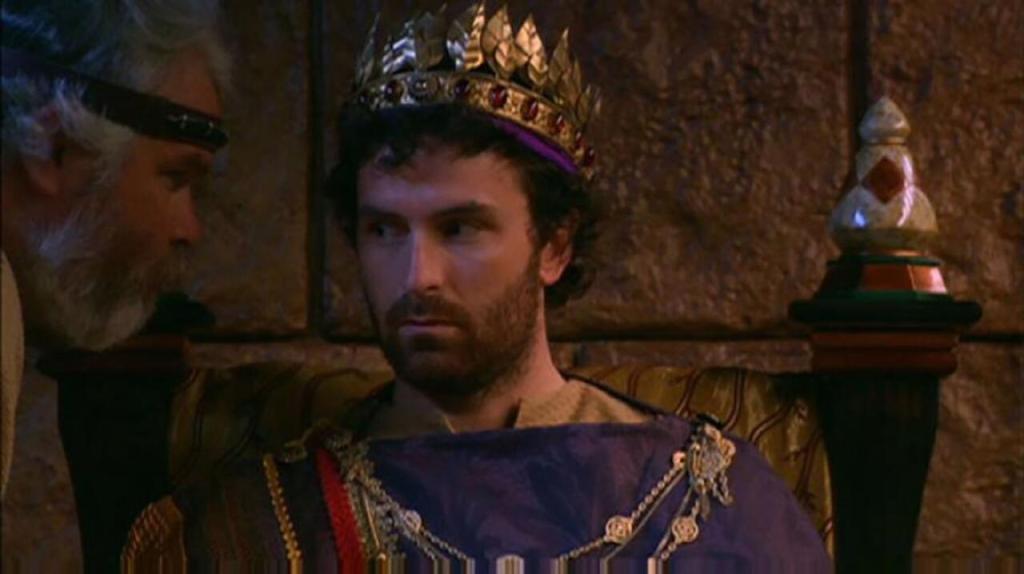
I’ve chosen a crown to open up this post–it’s done on purpose.  I simply want you to understand the supreme call He has on your life. Here’s Bob Dylan, and he nails this idea down:

You must learn here and now how to kneel before the Sovereign King

AlaskaBibleTeacher.com

Pulling the King’s Carriage

A message for younger Christians going into ministry.

“Before God can commit a ministry into a person’s hands they must submit themselves to the discipline of the Lord letting Him truly be the Lord of their entire lives. We have long since dealt with the question of open sin but now God is dealing with the inward rebellion of our own wills.” 

by Bill Britton

On a dirt road in the middle of a wide field stood a beautiful carriage, something on the order of a stagecoach but all edged in gold and with beautiful carvings. It was pulled by six large chestnut horses: two in the lead, two in the middle, and two in the rear. But they were not moving, they were not pulling the carriage, and I wondered why. Then I saw the driver underneath the carriage on the ground on his back just behind the last two horses’ heels working on something between the front wheels of the carriage. I thought, “My, he is in a dangerous place; for if one of those horses kicked or stepped back, they could kill him, or if they decided to go forward, or got frightened somehow, they would pull the carriage right over him.”

But he didn’t seem afraid for he knew that those horses were disciplined and would not move till he told them to move. The horses were not stamping their feet nor acting restless, and though there were bells on their feet, the bells were not tinkling. There were pom-poms on their harness over their heads but the pom-poms were not moving. They were simply standing still and quiet waiting for the voice of the Master.

THERE WERE TWO YOUNG COLTS IN THE FIELD 

As I watched the harnessed horses I noticed two young colts coming out of the open field and they approached the carriage and seemed to say to the horses: “Come and play with us, we have many fine games, we will race with you, come catch us.” And with that, the colts kicked up their heels flicked their tails, and raced across the open field. But when they looked back and saw the horses were not following they were puzzled. They knew nothing of the harnesses and could not understand why the horses did not want to play. So they called to them: “Why do you not race with us? Are you tired? Are you too weak? Do you not have the strength to run? You are much too solemn, you need more joy in life.” But the horses answered not a word nor did they stamp their feet or toss their heads. But they stood, quiet and still, waiting for the voice of the Master. 

Again the colts called to them: “Why do you stand so in the hot sun? Come over here in the shade of this nice tree. See how green the grass is? You must be hungry, come and feed with us, it is so green and so good. You look thirsty, come drink of one of our many streams of cool clear water.” But the horses answered them not so much as a glance but stood still waiting for the command to go forward with the King.

COLTS IN THE MASTER’S CORRAL 

And then the scene changed and I saw lariat nooses fall around the necks of the two colts and they were led off to the Master’s corral for training and discipline. How sad they were as the lovely green fields disappeared and they were put into the confinement of the corral with its brown dirt and high fence. The colts ran from fence to fence seeking freedom but found that they were confined to this place of training. And then the Trainer began to work on them with His whip and His bridle. What a death for those who had been all their lives accustomed to such freedom!

They could not understand the reason for this torture, this terrible discipline. What crime had they done to deserve this? Little did they know of the responsibility that was to be theirs when they had submitted to the discipline, learned to perfectly obey the Master, and finished their training. All they knew was that this processing was the most horrible thing they had ever known.

BUT YOU MUST UNDERSTAND THERE WAS SUBMISSION AND REBELLION 

One of the colts rebelled under the training and said, “This is not for me. I like my freedom, my green hills, my flowing streams of fresh water. I will not take any more of this confinement, this terrible training.” So he found a way out jumped the fence and ran happily back to the meadows of grass. I was astonished that the Master let him go and went not after him. But He devoted His attention to the remaining colt. This colt though he had the same opportunity to escape decided to submit his own will and learn the ways of the Master.

The training got harder than ever but he was rapidly learning more and more how to obey the slightest wish of the Master and to respond to even the quietness of His voice. And I saw that had there been no training, no testing, there would have been neither submission nor rebellion from either of the colts. For in the field they did not have the choice to rebel or submit, they were sinless in their innocence. But when brought to the place of testing and training and discipline, then was made manifest the obedience of one and the rebellion of the other. And though it seemed safer not to come to the place of discipline because of the risk of being found rebellious, I saw that without this there could be no sharing of His glory, no Sonship.

INTO GOD’S HARNESS 

Finally, this period of training was over. Was he now rewarded with his freedom and sent back to the fields? Oh no. But a greater confinement than ever now took place as a harness dropped about his shoulders. Now he found there was not even the freedom to run about the small corral for in the harness he could only move where and when his Master spoke. And unless the Master spoke he stood still.


alaskabibleteacher.com

For more of these and other messages: Bill Britton P.O. Box 707 Springfield, Missouri 65801-0707.  This is a faith ministry, made possible by members of the Body of Christ. Not copyrighted, may be translated or reprinted without further permission. All messages are free as the Lord provides

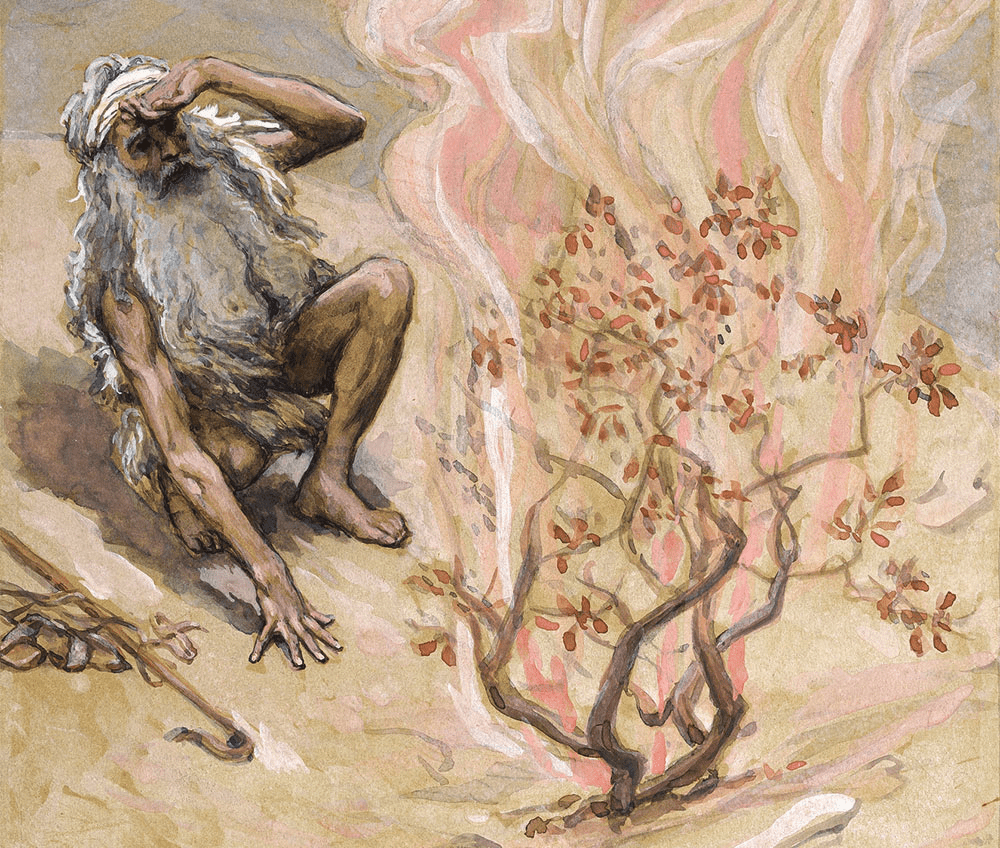
A Burning Bush, or Blackberries?

“Earth’s crammed with heaven, And every common bush afire with God; But only he who sees, takes off his shoes, The rest sit round it and pluck blackberries.”

Elizabeth Barrett Browning

In some odd way, our lives seem to be always getting interrupted by God. And it can happen a lot. We need to see the invisible. When we can, it can be quite amazing. Our night sky here in Alaska is wonderful. If it’s clear out, it’s amazing what you can see.

Probably the most phenomenal night skies were in Mexico though, while camping on the beach. As I lay there I looked and the Milky Way was on full display. It really was as good as it could be. It seemed there were 10x more stars than ever before.

Once as I gazed up, a weird sort of fear gripped me, it was almost a panic.

I started to tremble and shake. I got up and ran to our tent. I just couldn’t handle the incredible universe with no buffer. I was completely undone and reduced to a quivering speck of dust. I tried to tell my wife Lynn what had just happened to me, but I couldn’t. I was too scrambled. I couldn’t speak.

MINOLTA DIGITAL CAMERA

Reflecting on this, I now realize I had experienced “awe.” It was something much more common a few generations ago. There is a kind of existential crisis which we side-step in these more modern times. We rarely contemplate the night sky. We seldom, if ever, have seen fire in a bush.

It seems we have traded our awareness of a truly Almighty God, and in turn, we get to pick all blackberries we can haul.

We reason it out, and we feel that we have made a better bargain. But when we extricate this from our souls, don’t be surprised if we suddenly find that we have become spiritual paupers.

Maybe we should learn to see through things; each of us has the opportunity now to see the spiritual world that swirls around us. Why wait for heaven? Ask our Father to reveal His glory now in this present moment. Learn to see that which can’t be seen, but by faith.

“The heavens declare the glory of God, and the skies announce what his hands have made.”

Psalms 19:1, NCV

alaskabibleteacher.com