Serving God at Night


A song for going up to worship.

“Behold, bless ye the Lord, all ye servants of the Lord, who by night stand in the house of the Lord.

Lift up your hands in the sanctuary, and bless the Lord!

The Lord who made heaven and earth bless thee out of Zion!”

Psalm 134

This remarkable Psalm is part of an elite group known as “the Psalms of Ascent.” There are 15 Psalms (120-134) sung as the congregation of Israel went up the steps of the temple in Jerusalem. They would sing each in “rounds” with each other.

As you can well imagine, this made the ascent slow, but meaningful. As you read the three verses of 134, I get a picture of worshipers turning back and blessing the Levites. This takes place at the very end of the day. The Levites, and other godly ones who lived in the Temple, (remember Anna and Simeon, in Luke 2?)

They were the support staff for the priests.

I have some general thoughts about this Psalm:

V.1, “Behold, bless ye the Lord, all ye servants of the Lord, who by night stand in the house of the Lord.”

The first significant thought is “Lord” mentioned three times. The word is the recognition of someone’s status and standing. We call Him Lord, because He is that (and more). The second has to deal with the Levitical “night shift.”

They served and guarded the Temple during the wee hours of the night.

They probably cleaned, stacked wood, sharpened knives and maintained the Holy Place with its needs. There was no real glory working the night shift. There were no people to serve. The crowds were for the day shift. (Here’s a weird thought– think “Disneyland at 2:00 a.m.”) There was also a contingent of non-Levite people ministering to the Lord as well. They had no duties, and only the priests could serve through their work.

The Levites working at night were not ‘second best.’ At least, not in the eyes of the Holy Spirit. They were integral in both presence and service to the Lord. To despise them is to reveal one’s ignorance. They definitely mattered.

V. 2 “Lift up your hands in the sanctuary, and bless the Lord!

I’ve worked nights before. It’s a real adjustment. You never feel like you’ve had enough sleep, and it is really hard to be positive and cheerful.  I could get pretty grouchy at times. But an exhortation is given, a shout and a blessing as the crowds leave. “Raise up your hands– and praise Him!” It is as the work, although necessary, would be secondary. The worship however, was primary. We need to hear that.

Each of these three verses of this Psalm contain the word “blessing!”

V. 3, “The Lord who made heaven and earth bless thee out of Zion!”

To be blessed (literally, made “lucky”) by our Creator and Lord is pretty profound. As a kid who read a lot, I think of ‘fairy dust.’ I know better now, but to be blessed by God is deeply significant. To summarize, I believe this Psalm is speaking of those in the church who are doing “hidden service.” No one sees them really.

They go about there duties quietly, and purposefully. The only recognition is from God– who sees all. I must encourage you to keep on. There are many more than you think who see your hidden ministry to the Father. You are His ‘night shift.’ You’re seen by few, but Him. He knows what you do.

“There are many of us that are willing to do great things for the Lord, but few of us are willing to do little things.”

     D.L. Moody

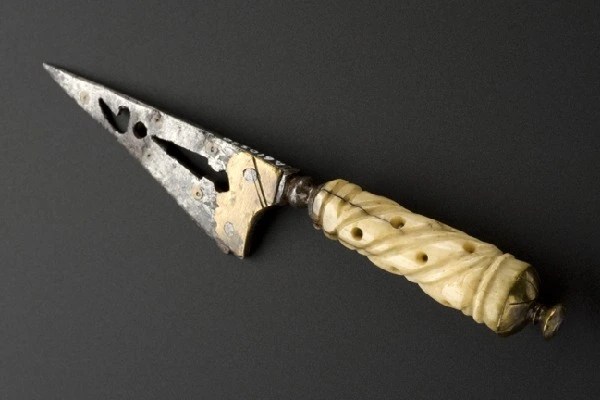
If You Really Want to Worship, Use a Knife

In Biblical hermeneutics, the ‘Law of First Mention‘ is used. Essentially it means that the first time a word or a concept is mentioned should go on to determine the way it needs to be understood throughout scripture. It is a guiding principle more than anything, but a good one at that. Genesis, being the first book, is a blessed repository for many of these ‘first mentions.’

In Genesis 22, we have the story of Abraham and Isaac on Mt. Moriah.

Abraham has tied up his son on an altar to offer him as a sacrifice in obedience to God’s direction (v. 2). This is faith being tested to the ultimate extreme. And Abraham shows us how to enter in.

“Then on the third day Abraham lifted his eyes and saw the place afar off. And Abraham said to his young men, “Stay here with the donkey; the lad and I will go yonder and worship, and we will come back to you.”

Genesis 22:4-5

This is the first time that  the word “worship” is used in the Bible.

It sets the singular tone for all the scriptures on this subject. I guess what is interesting is there were no musical instruments involved. There was just these needful things:

  • stones,
  • wood,
  • rope,
  • fire,
  • a knife,
  • and Isaac, (the would-be ‘lamb.’)

When the Hebrew word for ‘worship’ was used for the first time; it is interlaced with the idea of an incredible sacrifice. Abraham is the first ‘worship leader’ and he has no guitar. No piano, or drums either. No musical instruments whatsoever. No overhead lyrics to speak of.

Just a handmade altar, and a knife.

In the end, Abraham raises that knife, and then suddenly, to the relief of us all, he is stopped. His faith has withstood the test, and he has truly ‘worshiped.’

But the Angel of the Lord called to him from heaven and said, “Abraham, Abraham!” So he said, “Here I am.” And He said, “Do not lay your hand on the lad, or do anything to him; for now I know that you fear God, since you have not withheld your son, your only son, from Me.”

Gen. 22:11-12

Principle One: There really can’t be worship without sacrifice.

Recovering this truth concerning worship would be beneficial. It seems we delegate ‘worship’ to a select few who are talented and gifted. We probably don’t do this deliberately, but sometimes we feel it makes a better presentation. We all want to look good, even Christians. (Perhaps this is more substantial than we know.)

Principle Two: The first worshiper didn’t use a guitar, but a knife.

This difference keeps the idea of sacrifice in its definition. There isn’t worship without sacrifice. The knife thrust that he was ready to wield wasn’t backed up by drums or piano. Yet Abraham understood worship every step to Moriah with the knife in his belt.

“The Scriptures include or allude to just about every approach to worship there is: organized, spontaneous, public, private, simple, complex, ornate or plain. Yet there is no comment anywhere about any one way being preferred over another. Rather, it is the spiritual condition of the worshiper that determines whether or not God is at work.”  

Harold Best

So, brothers and sisters, because of God’s mercies, I encourage you to present your bodies as a living sacrifice that is holy and pleasing to God. This is your appropriate priestly service.”

Romans 12:1

Ultimately, we must realize our sacrifice is the Lamb of God. It’s His blood on God’s altar for our sins. As believers, our faith firmly rests in this spiritual fact.

We of all people have cause to really worship.

The Great Escape

Hidden in the Old Testament is the idea of the Cities of Refuge. They have incredible meaning for us today.

They speak profoundly to our situation and bring real hope to those who struggle. Six places of safety were given to protect those who accidentally killed another person— maybe an ax head flew and hit someone, and they died as a result.

God told Joshua to establish cities of protection where one could be safe from an avenger. There were six of them, three on the east side of the Jordan river, and three on the west. The cities covered Israel; each was spread out intentionally so they were always close.

That city became a place of asylum for those guilty of manslaughter.

As believers, we know that we’ve committed crimes against God and other people. The burden we carry threatens to undo us. Satan (and his minions) want to destroy us—and honestly, we deserve it. We are essentially spiritual ‘criminals’ who have hurt others and damaged ourselves in the process.

Outside the city, we’re vulnerable—but inside those walls we find safety.

Those who have killed others are protected. If we venture outside, we find our adversary who is waiting. Scripture tells us that we must stay cloistered there until the current high priest dies. Upon his death, we’re released and may leave the city walls.

For broken believers, the whole concept rings true.

The text speaks for itself, and there is spiritual logic in all of this. We see parallels here that speak to our condition. We’ve messed up big time. We also carry issues that the enemy can attack. Depression, bipolar, trauma, and even thoughts of committing suicide— can be a fundamental part of our lives.

I must tell you that safety is found only in the Savior.

Finding God and abiding in him is our place of safety. His walls protect us, Jesus is our high priest, who never dies; that means we need to stay with him, permanently. I like Hebrews 6:18, LB:

“Now all those who flee to him to save them can take new courage when they hear such assurances from God; now they can know without a doubt that he will give them the salvation he has promised them.”

For us especially, we often have problems with the doctrine of assurance of salvation. Our enemy works overtime to accuse us (Rev.12:10). We’re his targets and the lies of many demons assault us. We can, at times, wonder if we’re really saved. We wonder if we are really forgiven, and we doubt our salvation. Satan’s efforts can be constant and crippling.

I encourage you to think this over and pray about this.

Numbers 35 is a good place to start. That chapter is pretty clear. Look also at Exodus 21:13-14; Joshua 20:1-6; Deuteronomy 19:2-13.

Trials Will Come, They’re Inevitable

“Count it all joy, my brothers, when you meet trials of various kinds, for you know that the testing of your faith produces steadfastness.”

James 1:2-3, ESV

“There is no circumstance, no trouble, no testing, that can ever touch me until, first of all, it has gone past God and past Christ, right through to me. If it has come that far, it has come with a great purpose.” 

 Alan Redpath

“All joy,” (verse 2) is a fantastic thought. It stresses a joy that becomes militant, something powerful and significant. “All joy,” surpasses “some joy” or even “occasional joy.” Instead it’s a joy that remains joy even when tired and weak. It will only shine brighter in the darkness.

Jewels, diamonds, and pearls are typically displayed on a black background.

This reveals their brilliance and value. In the same way darkness should only encourage us to be deliberately brighter than our surroundings. We must understand that we shine only because He makes us shine. There is a divine incandescence that awaits every believer who feels the need or desire for more of God.

God’s special nearness is available to each believer, especially those in the heat of the furnace. He is close to those who want Him, and there is nothing will stand in His way. The Lord cherishes and treasures the seeking heart. There is nothing that can detour the believer’s yearning after their Father. Your faith must be purified, and this is never optional.

Name your trial, then turn it to God in prayer.

Leave it alone and refuse to carry it no further. It’s now the Lord’s concern. Simply watch for the deliverance to come. When God sees your heart, He will lavish Himself out on you. He delights to see your faith becoming solid and real.

We never choose to suffer, rather we choose His will. We must do so whether we suffer or not.

Trust Him.

“God, who foresaw your tribulation, has specially armed you to go through it, not without pain but without stain.”

    C.S. Lewis