Maker of the Universe

The Maker of the universe
As Man, for man was made a curse.
The claims of law which He had made,
Unto the uttermost He paid.

2

His holy fingers made the bough
Which grew the thorns that crowned His brow.
The nails that pierced His hands were mined
In secret places He designed.

3

He made the forest whence there sprung
The tree on which His body hung.
He died upon a cross of wood,
Yet made the hill on which it stood.

4

The sky that darkened o’er His head
By Him above the earth was spread.
The sun that hid from Him its face
By His decree was poised in space.

5

The spear which spilled His precious blood
Was tempered in the fires of God.
The grave in which His form was laid,
Was hewn in rocks His hands had made.

6

The throne on which He now appears
Was His from everlasting years.
But a new glory crowns His brow.
And every knee to Him shall bow.

“The Maker of the Universe,” lyrics by Phil Keaggy, 1986

Am I Ignitable?


“Who makes His angels spirits and His ministers a flame of fire.”

Hebrews 1:7

Jim Elliot was a Christian missionary martyred by the Auca Indians of Ecuador in 1956. He was just 29 years old. This quote was found in a journal he kept, and it was found after his death. There’s much here to process.

He makes His ministers a flame of fire.” Am I ignitable? God deliver me from the dread asbestos of ‘other things.’ Saturate me with the oil of the Spirit that I may be aflame. But flame is transient, often short lived. Canst thou bear this, my soul – short life? … Make me thy fuel, Flame of God.”

Jim Elliot, “Shadow of the Almighty”

A wonderful and intense quote. Passionate. Maybe we should dismantle it and consider what he was trying to say. There are some great insights to be found here.

First, he writes of asking God to be saturated with the oil of the Spirit. Jim Elliot wants to be set on fire with his life, heart, and spirit becoming the fuel.

Second, he writes of “dread asbestos.” Almost 2000 degrees F is needed to melt this down. Now regarded as a carcinogen but because it’s basically fireproof it was used often. For the person walking by faith it illustrates the power of sin.

Third, he writes about the brevity and shortness of his life and his need to live in the bright light of eternity.

O.K. Let’s switch metaphors.

The ponderosa pine needs fire to propagate. Their seeds are fire-activated.

Fire activates the cone that holds the seeds. Looking we see a tight little bundle which is covered in resin. To germinate they must be burned. Fire melts the exterior and the pine cone and releases the seed; and actually they can lay dormant for several years just waiting for the heat.

The believer needs heat to grow.

I don’t think there is any other way. The Word and the Spirit, combined with the heat of the circumstances we face, creates a blaze that is often seen by others. The furnace is God’s way to bring lasting change to His people. I wish it were different.

“They said to each other, “Did not our hearts burn within us while he talked to us on the road, while he opened to us the Scriptures?”’

Walking with Jesus to Emmaus, Luke 24:32

“Who among us shall dwell with the devouring fire? Who among us shall dwell with everlasting burnings?”

Isaiah 33:14

Sharp Knife Worship

In biblical hermeneutics, the “Law of First Mention” states that the initial occurrence of a word or concept in scripture determines its subsequent understanding. Obviously the book of Genesis is a main source of these initial mentions.

In Genesis 22, we have the story of Abraham and Isaac on Mt. Moriah.

Abraham has tied his son on an altar to offer him as a sacrifice in obedience to God’s direction (v. 2). His faith is tested to the ultimate extreme. Abraham shows us how to enter into real worship.

Genesis 22:4-5

This is the first time in scripture the word “worship” is used.

It sets the singular tone for all the scriptures on this subject. I guess what’s really interesting is that there are no musical instruments involved. There were just these needful things:

  • stones
  • wood
  • rope
  • fire
  • a knife
  • and Isaac, (the would be ‘lamb.’)

When the Hebrew word for ‘worship’ was used for the first time, it was infused with the idea of a sacrifice. Abraham is the first ‘worship leader’ and he has no guitar. No piano, or drums either. No musical instruments whatsoever. No amplifier, no overhead lyrics to speak of.

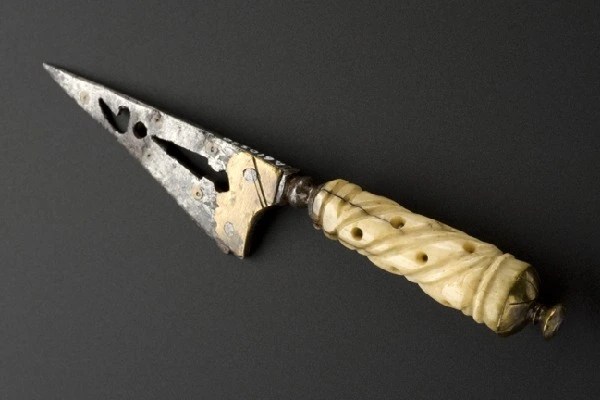
Just a handmade altar, and a very sharp knife.

In the end, as Abraham raises that knife, and he is suddenly stopped, (to the relief of us all). His faith has withstood the test, and he has genuinely ‘worshiped.’

Gen. 22:11-12

Principle One:

There really can’t be worship without sacrifice.

Sometimes we think that only talented and gifted people should lead worship, and maybe they should. But in reality, we all must worship, regardless of our talents or skills. Let’s remember that worship isn’t about impressing others, but it’s about expressing our devotion and commitment to God. But in the long run, there needs to be a sacrifice of some sort. It may be something small, but it’s always dear.

Principle Two:

The first worshiper didn’t use a guitar, but a knife.

This difference keeps the idea of sacrifice in its definition. I truly believe that there can’t be real worship without sacrifice. The knife thrust he was ready to use wasn’t backed up by drums or piano. Yet Abraham understood worship every step he took to Mt. Moriah with the knife in his belt.

Jesus is my Isaac, my sacrifice. He died so I now live.

We must realize our sacrifice is the Lamb of God. It’s His blood on God’s altar for our sin. As believers, our faith firmly rests in this spiritual fact. It’s a sacrifice, and He did it for us. We of all people have cause to really worship.

    John Piper

If You Really Want to Worship, Use a Knife

In Biblical hermeneutics, the ‘Law of First Mention‘ is used. Essentially it means that the first time a word or a concept is mentioned should go on to determine the way it needs to be understood throughout scripture. It is a guiding principle more than anything, but a good one at that. Genesis, being the first book, is a blessed repository for many of these ‘first mentions.’

In Genesis 22, we have the story of Abraham and Isaac on Mt. Moriah.

Abraham has tied up his son on an altar to offer him as a sacrifice in obedience to God’s direction (v. 2). This is faith being tested to the ultimate extreme. And Abraham shows us how to enter in.

“Then on the third day Abraham lifted his eyes and saw the place afar off. And Abraham said to his young men, “Stay here with the donkey; the lad and I will go yonder and worship, and we will come back to you.”

Genesis 22:4-5

This is the first time that  the word “worship” is used in the Bible.

It sets the singular tone for all the scriptures on this subject. I guess what is interesting is there were no musical instruments involved. There was just these needful things:

  • stones,
  • wood,
  • rope,
  • fire,
  • a knife,
  • and Isaac, (the would-be ‘lamb.’)

When the Hebrew word for ‘worship’ was used for the first time; it is interlaced with the idea of an incredible sacrifice. Abraham is the first ‘worship leader’ and he has no guitar. No piano, or drums either. No musical instruments whatsoever. No overhead lyrics to speak of.

Just a handmade altar, and a knife.

In the end, Abraham raises that knife, and then suddenly, to the relief of us all, he is stopped. His faith has withstood the test, and he has truly ‘worshiped.’

But the Angel of the Lord called to him from heaven and said, “Abraham, Abraham!” So he said, “Here I am.” And He said, “Do not lay your hand on the lad, or do anything to him; for now I know that you fear God, since you have not withheld your son, your only son, from Me.”

Gen. 22:11-12

Principle One: There really can’t be worship without sacrifice.

Recovering this truth concerning worship would be beneficial. It seems we delegate ‘worship’ to a select few who are talented and gifted. We probably don’t do this deliberately, but sometimes we feel it makes a better presentation. We all want to look good, even Christians. (Perhaps this is more substantial than we know.)

Principle Two: The first worshiper didn’t use a guitar, but a knife.

This difference keeps the idea of sacrifice in its definition. There isn’t worship without sacrifice. The knife thrust that he was ready to wield wasn’t backed up by drums or piano. Yet Abraham understood worship every step to Moriah with the knife in his belt.

“The Scriptures include or allude to just about every approach to worship there is: organized, spontaneous, public, private, simple, complex, ornate or plain. Yet there is no comment anywhere about any one way being preferred over another. Rather, it is the spiritual condition of the worshiper that determines whether or not God is at work.”  

Harold Best

So, brothers and sisters, because of God’s mercies, I encourage you to present your bodies as a living sacrifice that is holy and pleasing to God. This is your appropriate priestly service.”

Romans 12:1

Ultimately, we must realize our sacrifice is the Lamb of God. It’s His blood on God’s altar for our sins. As believers, our faith firmly rests in this spiritual fact.

We of all people have cause to really worship.

Only Two Pennies

Mark 12:41-44

41-44 Sitting across from the offering box, he was observing how the crowd tossed money in for the collection. Many of the rich were making large contributions. One poor widow came up and put in two small coins—a measly two cents. Jesus called his disciples over and said, “The truth is that this poor widow gave more to the collection than all the others put together.”

All the others gave what they’ll never miss; she gave extravagantly what she couldn’t afford—she gave her all.”

It wasn’t much but it’s all I had. Some might laugh–but truthfully, I really wasn’t giving just my money, I was giving my heart. That’s really all I had, simply my heart.

When my husband died, I was left with very little. What I did have I hid in a hole in the wall, but I was concerned, money was going out and nothing was coming in. Often I sat on my stool and stared at that hole, and I was frightened. There is nothing to live on. What was I going to do?

You must understand. No one was going to help me.

I got up one morning to pull out the leather sack, all that was there were two pennies. That’s it. Two very small pennies, and that’s all I had to live on! I knew that this day would come, but it seemed to come so soon. I was afraid of what was going to happen to me, a widow that had nothing.

There were six stone receptacles placed in strategic spots, where people could tithe as the Law required of every Jew. Occasionally there was a procession: trumpets blowing and bright banners waving. Another rich man announced to everyone that he was coming to contribute to the Temple.

Jesus was watching closely to all of this.

Suddenly an old woman came to give, and there were no trumpets, no fanfare. She simply came to give what she had–two very small copper pennies. Just two pennies. Most would laugh I suppose. After all, the rich were dropping in thousands of silver.

Jesus turned to His disciples. They sat and listened carefully to what He had to say:

“Truly, I say to you, this poor widow has put in more than all those who are contributing to the offering box.”

They gasped as they struggled to understand the Teacher. It seemed idiotic, but Jesus often said many outrageous things. You could see their minds working to grip this. It made absolutely no sense to their carnal minds.

“They all contributed out of their abundance, but she out of her poverty has put in everything she had, all she had to live on.”

The twelve were dumbfounded.

When I gave, I gave my heart. I had nothing, but you have to understand, a strange peace came over me. I rejoiced to give to God and His work. Yes, I now had nothing–nothing but the grace and care of God. Maybe I was a fool. Maybe I was stark raving mad. But I knew what I wanted to do. When I threw in my two pennies, I threw myself into the heart and care of God.

What was going to happen next? I really don’t know, but we will find out, won’t we?

“Don’t be afraid, you tiny flock! Your Father plans to give you the kingdom. Sell your possessions and give the money away. Get yourselves purses that never grow old, inexhaustible treasure in Heaven, where no thief can ever reach it, or moth ruin it. For wherever your treasure is, you may be certain that your heart will be there too!”

Luke 12:33, Phillips

Art: Coin Week; verses used are from The Message, a translation of Eugene Peterson