O Lord, my heart is not lifted up; my eyes are not raised too high; I do not occupy myself with things too great and too marvelous for me. 2 But I have calmed and quieted my soul, like a weaned child with its mother; like a weaned child is my soul within me.
Psalm 131:1-2, ESV
To be humble [Hebrew, anavah] means that we recognize our boundaries. We will not advance by stepping beyond what God has ordained for us. We learn to be content with the present. Humility is not thinking less of yourself, but thinking of yourself less. It puts others first.
In Psalm 131 we begin the walk into “anavah.” We’re brought by God into a place where we understand who we really are. Our lives are not characterized by self-promotion, but rather serving God and advancing others before ourselves.
The image is one of being a weaned child resting on a mother’s chest. We have no agenda, there is nothing that we must do, but just relax on Him.
Seeing a weaned baby is one who no longer needs its mother’s milk. There’s no fussing or grasping for nourishment, rather he’s simply content to rest in his mother’s warm embrace.
To practice true humility, or the Hebrew word “anavah,” it is to renounce ambition in all its insidious forms. As Jesus’ disciples we follow Him with our cross. That cross puts the end of our old life. And we die daily. And it is obvious to all.
“And since I, your Lord and Teacher, have washed your feet, you ought to wash each other’s feet. I have given you an example to follow. Do as I have done to you.”
“We had long known the Lord without realizing that meekness and lowliness of heart should be the distinguishing feature of the disciple.”
“But when some of the Jewish religious leaders saw him eating with these men of ill repute, they said to his disciples, “How can he stand it, to eat with such scum?”
Mark 2:16
There are four different types of people listed in Mark 2. This is an amazing passage that really does need a closer look. We really do must understand what Jesus did, and what He insisted we do as followers. Is there room for that? There’s something here in verse 16 which we must think about:
Jesus, (He’s happily eating and listening)
the Pharisees, (the bad guys with religious issues)
the disciples, (a mixed bunch of nobodies)
the scum, (tax-collectors, harlots, and all-around rascals)
A question is asked by the Pharisees to the disciples–perhaps these religious leaders want Jesus’ followers to see the awful ramifications of the Lord’s conduct. Perhaps the Pharisees wanted to confuse these followers. A divide and conquer strategy?
Jesus has chosen to be with outcasts.
And I believe this was a deliberate decision. Jesus wanted to fellowship, but the religious leaders were not invited. Too bad.
He is eating with these “men of ill repute.” The old KJV brings out a different take, “How is it that he eateth and drinketh with publicans and sinners?” Now, this is fascinating.
I believe that Jesus chooses to be with those who have lost their way. I believe that He desires people who will never measure up. In a sense, He is rejecting religion over incompetence.
“When Jesus heard this, he told them, “It is not those who are well who need a doctor, but those who are sick. I didn’t come to call the righteous, but sinners.”
Mark 2:17
I’m encouraged by His decision. It tells me that I still have hope.
“The cumulative testimony of the four Gospels is that when Jesus Christ sees the fallenness of the world all about him, his deepest impulse, his most natural instinct, is to move toward that sin and suffering, not away from it.”
“Let not the wise man boast in his wisdom, let not the mighty man boast in his might, let not the rich man boast in his riches,”
“but let him who boasts boast in this, that he understands and knows me, that I am the Lord who practices steadfast love, justice, and righteousness in the earth. For in these things I delight, declares the Lord.”
Jeremiah 9:23-24
There is bad boasting (v.23), and good boasting (v.24). When I think of someone who brags it’s almost always in a negative sense.
Boasting is one way pride becomes visible, it’s the way we exaggerate or embellish our identity. We magnify ourselves, amplifying our achievements beyond what is reality. We must understand that all it really is is arrogance on display.
There is no room for braggarts in the Church.
You cannot sanctify boasting. It is pride that we vocalize and use to influence. We want to change another person’s perspective of you. We desperately want others to admire and think better of us. Some have postulated that it really is nothing more than masking insecurity. I think they’re right.
The Word differentiates between good and bad boasting.
The book of Jeremiah (9:23-24) does precisely that. It explains that what is worldly: wisdom, strength, money– is the wrong way of seeking recognition and importance. God’s people are to declare (brag) that they are in an intimate relationship with God.
We understand, we know that we have a loving connection with the Lord.We learn we can brag about Him.
I encourage you to become aware of how you conduct yourself in front of others. We seldom think of ourselves realistically. For many of us our lives are so intertwined with the false that we struggle with what is true.
God resists pride. (James 4:6.)
Jeremiah tells us we can choose to be different. We can swivel from the negative to the positive. We must quit exalting any attainment we have and instead boast that we now know God.
No longer do we strut, but now we choose to kneel.
“Humility is to make a right estimate of one’s self.”
“Now he told a parable to those who were invited, when he noticed how they chose the places of honor, saying to them, 8 “When you are invited by someone to a wedding feast, do not sit down in a place of honor, lest someone more distinguished than you be invited by him, 9 and he who invited you both will come and say to you, ‘Give your place to this person,’ and then you will begin with shame to take the lowest place. 10 But when you are invited, go and sit in the lowest place, so that when your host comes he may say to you, ‘Friend, move up higher.’ Then you will be honored in the presence of all who sit at table with you.
11 For everyone who exalts himself will be humbled, and he who humbles himself will be exalted.”
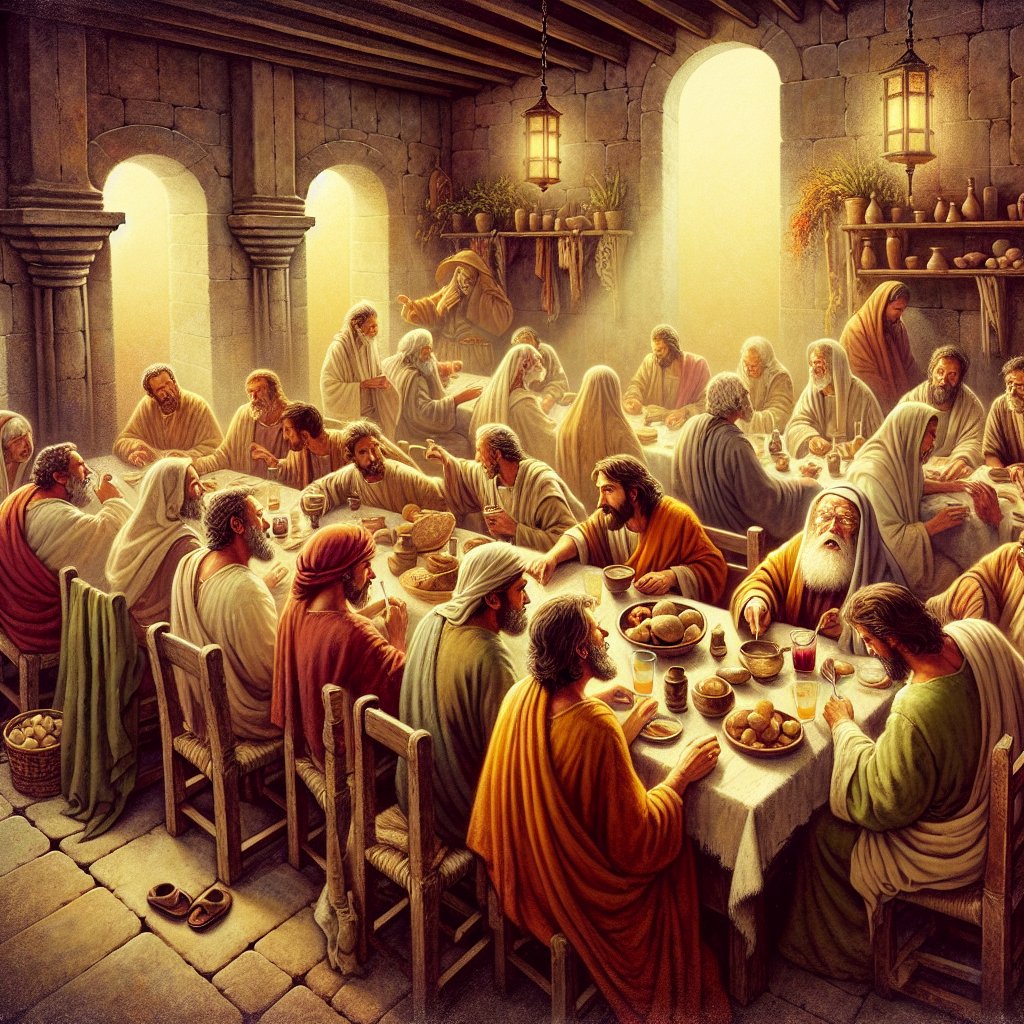
Choose your seat carefully. In Jesus’ day, there was a definite seating order to a wedding feast. It wasn’t first come, first served. There was a strict protocol, where one’s importance mattered. Honored people got honorable seats–close to the front as possible. Average people got average spots; but no one wanted be at the bottom, having to sit at the “kids table.”
Jesus was watching, and what he saw was a spiritual principle of His Kingdom.
Jesus often teaches out of the things we encounter–real life events. Spiritual truth often hits us from those things we actually see. If you want to know what God is doing in your life, all you need to do is look around at the “practical” things, and start to see the spiritual lessons inside them. We learn from real-life. That’s how he often teaches us, he combines the Word with what we’re experiencing.
Our natural inclination is to move higher up.
We often think that we’re deserving, and so we take our “rightful” positions. That’s the way humans think. We all want to sit in the best possible place, and so we end up wheedling our way up front. We can fall into the subtle trap of self-promotion. But that’s not how discipleship works.
Jesus corrects, advising us to take the lowest place. I think verse 11 is the key to figuring out this seating arrangement. We’re starting to see a physical situation become a spiritual lesson. There’s much to learn. Here’s verse 11 in the Amplified version:
“For everyone who exalts himself will be humbled [before others], and he who habitually humbles himself (keeps a realistic self-view) will be exalted.”
Verse 14, Amplified Bible
This translation injects some realism into our lives, especially in how we see ourselves. It’s something quite foundational. It lays down a principle that is always true in his Kingdom (1 Peter 5:6). If we don’t accept and implement this, we’ll suffer a definite deficiency in our discipleship. It stunts the growth of many believers. And that is tragic.
The whole scene lays out how life in the spirit really works, and it seems terribly paradoxical.
Our human logic asserts that deliberately choosing the lesser is foolish, things really don’t work that way. We think (falsely), that we’ll only advance by asserting ourselves. But Jesus, quite aptly, clarifies the ways of the Kingdom–true maturity will only come if we decide to take the lowest place.
“Humble yourselves before the Lord, and he will exalt you.”
7 Now he told a parable to those who were invited, when he noticed how they chose the places of honor, saying to them, 8 “When you are invited by someone to a wedding feast, do not sit down in a place of honor, lest someone more distinguished than you be invited by him, 9 and he who invited you both will come and say to you, ‘Give your place to this person,’ and then you will begin with shame to take the lowest place.
10 But when you are invited, go and sit in the lowest place, so that when your host comes he may say to you, ‘Friend, move up higher.’ Then you will be honored in the presence of all who sit at table with you. 11 For everyone who exalts himself will be humbled, and he who humbles himself will be exalted.”
Luke 14:7-11, ESV
Choose your seat carefully. In Jesus’ day, there was a definite seating order to a wedding feast. It wasn’t first come, first served. There was a strict protocol, where one’s importance mattered.
Honored people got honorable seats–close to the front as possible. Average people got average spots; but no one wanted be at the bottom, having to sit at the “kids table.”
Jesus was watching, and he what he saw was a spiritual principle of his Kingdom.
Jesus often teaches us out of the things we encounter.
Truth often hits us from those things we actually see. If you want to know what God is doing in your life, all you need to do is look around at the practical things, and start to see the spiritual lessons inside them. We learn from real-life. That’s how he often teaches us, he combines the Word with what we’re experiencing.
Our natural inclination is to move higher up.
We think that we’re deserving, and so we take our rightful positions. That’s the way humans think. We all want to sit in the best possible place, and so we end up wheedling our way up front. We can fall into the subtle trap of self-promotion. But that’s not how discipleship works.
Jesuscorrects, advisingustotakethelowestplace.
I think verse 11 is the key to figuring out this seating arrangement. We’re starting to see a physical situation become a spiritual lesson. There’s much to learn. Here’s verse 11 in the Amplified version:
“For everyone who exalts himself will be humbled [before others], and he who habitually humbles himself (keeps a realistic self-view) will be exalted.”
Luke 14:11
This particular translation injects some realism into our lives, especially in how we see ourselves. It’s quite foundational. It lays down a principle that is always true in his Kingdom (1 Peter 5:6). If we don’t accept and implement this, we’ll suffer a definite weakness in our discipleship. It stunts the growth of many believers. And that is tragic.
The whole scene lays out how life in the spirit really works, and it seems paradoxical.
Our human logic asserts that deliberately choosing the lesser is foolish, things really don’t work that way. We think, (falsely,) that we’ll only advance by asserting ourselves. But Jesus, quite aptly, clarifies the ways of the Kingdom.
True maturity will only come if we decide to take the lowest place.
“Humble yourselves before the Lord, and he will exalt you.”
“He also told this parable to some who trusted in themselves that they were righteous and looked down on everyone else: 10 “Two men went up to the temple to pray, one a Pharisee and the other a tax collector. 11 The Pharisee was standing and praying like this about himself: ‘God, I thank you that I’m not like other people—greedy, unrighteous, adulterers, or even like this tax collector. 12 I fast twice a week; I give a tenth of everything I get.’”
13 “But the tax collector, standing far off, would not even raise his eyes to heaven but kept striking his chest and saying, ‘God, have mercy on me, a sinner!’ , 14 I tell you, this one went down to his house justified rather than the other, because everyone who exalts himself will be humbled, but the one who humbles himself will be exalted.”
He despised others. As a Pharisee he prided himself as a holy person; he stood before God and congratulated himself. I believe that self-righteousness has many levels. You can be blatant and obvious about it, or it can be subtle and hidden. But we must understand that the Father sees and knows. Notice the “all” here in Isaiah 64:6:
“We are all like one who is unclean, all our so-called righteous acts are like a menstrual rag in your sight. We all wither like a leaf; our sins carry us away like the wind.”
(Hmm. A menstrual rag? You got to be kidding!)
We often advance ourselves by demeaning those who struggle hard with their sin–there are those who see them and somehow suspect that they’re more superior. We don’t come out and say so; but we’ve arrived— but guess what— God (and scripture) knows better than this.
But we’re not dealing here with a hidden self-righteousness. The Pharisee truly believes that he is different from the tax-collector. He stands and doesn’t kneel. He feels comfortable and confident in the holy presence of God Almighty. He’s not like the others. He is sure that he’s holy.
But the tax-collector was brutally honest about himself.
He didn’t need anyone to tell him how sinful he was—he understood his own wickedness. This parable reveals God’s love for those who know that they’re twisted inside. Notice the heart of the tax-collector:
“He stood afar off” which showed his awareness of his separation from God.
“He wouldn’t even raise his eyes to heaven,” which declared his humility in the presence of God.
He kept “striking his chest,” which tells us of a deep pain over his sin against God.
He prayed, ‘God, have mercy on me, a sinner!’ This describes his desperate heart.
Both came to pray, but really, that’s all they had in common.
The Pharisee came to the temple to show off his righteousness, the tax-collector out of a terrible despair. It strikes me that the text in verse 11 says the Pharisee “began praying to himself.“ It seems that his prayer never really met God—he was proud and showy, and ended up doing the things God detests, (Prov. 29:23).
Things really heat up in verse 14. That’s the critical point of the entire story—“one went down to his house justified rather than the other.” Wow! What a statement. One professionally religious man, sure of his holiness, and the other a sinful sinner, who came humble and broken. One showed off his faith–boasting with a legalistic swagger. The other desperate and desolate, completely undone.
But it was the tax-man who became righteous in the eyes of God.
Humility is the foundation of the kingdom of Jesus. In Matthew 5:3-4 makes a lot of sense—to be “poor in spirit” and to “mourn” are the bedrock of a Christian’s discipleship. To be justified (made right) was a gift. He didn’t try to earn it, and there wasn’t a probationary period. The tax-collector now became righteous; the Pharisee carried his sin still inside him.
God wants us to have a broken-heart. He rejects everything else. I suppose that the question is this:
Do you truly mourn over your sin?
“The Lord is near the brokenhearted; he saves those crushed in spirit.”
O Lord, my heart is not lifted up; my eyes are not raised too high; I do not occupy myself with things too great and too marvelous for me. 2 But I have calmed and quieted my soul, like a weaned child with its mother; like a weaned child is my soul within me.
3 O Israel, hope in the Lord from this time forth and forevermore.
Psalm 131
The Christian who is struggling should become a reader of the Psalms. We must remind ourself of this need to study through them, repeatedly. For believers, Psalm 131 is mandatory, and this is a great place to start.
This particular psalm is unique, and incredibly insightful. It begins its work in us right at the start; the superscription. “A song for going up to worship,” and it strikes me that a work must happen inside of my heart. It is a preparation that will take me higher, and it helps me see God more clearly from a new vantage point.
Verse 1 states the certain issue we have; it is called ‘pride.’ What David says seems to be a very arrogant and audacious thing to say. There is a truism that you think you’re humble, you’re not. To claim you are suddenly liberated from pride, knowing ears perk up. It is almost always a sign of danger.
😁
A church once decided to give an elder a medal for his remarkable humility. But then they had to take it away, because he wore it everywhere!
Take it at face value, David states that he has a real contentment with his limitations and weaknesses. It appears that he has been freed from the vicious cycle of needing to be the center of everything. He sings of his ignorance, and weakness. David goes public with his self-flattery. He knows that if he really wants to ascend he must descend.
And it must happen continuously.
Are you content to be the simple servant now, and delay the accolades and praise until you get to heaven?
Some make themselves spiritually sick by the deep dark quest to be important. In verse 2, we connect with some astonishing imagery. A baby! I am like a little child being held by my mom. It’s not an issue of sophistication, but simplicity. You must choose to do this.
The word for weaned isn’t a newborn here. Rather in Hebrew it denotes a small toddler.
A weaned child no longer needs his mom’s milk. He doesn’t fuss, or nuzzle his mother’s breast, demanding his food. The child no longer receives his nourishment this way.
This is a significant step into maturity. To me, verse 2 is the centerpiece of Psalm 131. OK, let’s apply this spiritually. There was a time when it was necessary for me to have my mother’s milk. I screamed and would throw a terrible tantrum if she didn’t feed me from her breast. I would starve if she didn’t give me her milk.
For all practical purposes, it seems we use God to get what we need. But we grow, and become mature. David is saying that we need to emulate his example.
Now we can come into God’s presence– just to be with Him.
That’s all. So simple. As a child, we just want to be where He is at. We have no ulterior motives, there is no manipulation. We seek His face, not what is in His hands. If we rightly connect the dots, we find that we land right back to that opening superscription.
This is an amazing concept of true adoration– the real kind. As a struggler, more a rascal than Christlike, I must start at the beginning– again, and again, and again. I can only do this if I become a little boy again.
I finally start to realize that I must renounce my selfish ambition and silly pride. Polished people won’t understand, they never will.
“At that time Jesus declared, “I thank you, Father, Lord of heaven and earth, that you have hidden these things from the wise and understanding and revealed them to little children.”
“But it is not this way among you, but whoever wishes to become great among you shall be your servant.”
Mark 10:44
I’m processing something right now.
I suppose its implications could turn everything upside down,’ at least for me anyway. Some scientists have postulated that our planet is due for a complete magnetic switchover. This is when the north becomes south and vice versa. My issues at this moment are not quite that cosmic.
At this moment there are over 7,000,000,000 people living on planet earth.
(That’s seven billion.)
Sometimes I wonder if many of my issues come from not seeing this. I’m merely one drop in a vast sea of people. It also seems that there’s an intoxication of success when we become increasingly confused over ‘who’ we really are.
We think it’s about our efforts, maybe our giftedness. Perhaps it’s pride that drives us, even among mature Christian believers. But this is not the way of our Master. It’s unbecoming of a disciple.
3 “Don’t be selfish; don’t try to impress others. Be humble, thinking of others as better than yourselves. 4 Don’t look out only for your own interests, but take an interest in others, too. 5 You must have the same attitude that Christ Jesus had.”
Philippians 2:3-5
Jesus wasn’t driven like we seem to be.
We think we need to be more assertive, at least the Christian version of it, and push our way to the front. However, Jesus’ message and teaching were all about emptying Himself of being God and becoming a servant of servants. This is the arresting fact we fail to consider–
Jesus did all of this while wearing a towel, not a crown.
“Jesus, knowing that the Father had given all things into His hands, and that He had come from God and was going to God, 4 rose from supper and laid aside His garments, took a towel and girded Himself. 5 After that, He poured water into a basin and began to wash the disciples’ feet.”
John 13:3-5
He could have just done a ‘teaching’ on servanthood and I’m reasonably certain it would have been more than sufficient. But instead, Jesus put ‘skin on His words’ and actually got down on His knees to wash dirty feet. His disciples freaked out when they saw him do this.
It was something they could never forget.
“You must have the same attitude that Christ Jesus had.
6 Though he was God, he did not think of equality with God as something to cling to. 7 Instead, he gave up his divine privileges; he took the humble position of a slave and was born as a human being. When he appeared in human form, 8 he humbled himself in obedience to God and died a criminal’s death on a cross.“
Philippians 2:5-8, ESV
How can we not do this? This is a hard question to ask, but to be perfectly honest, does our discipleship include emptying ourselves daily? Can we find peace and fulfillment by becoming an unknown believer? An unknown, but only to God? Is this what we’re missing in becoming Christlike? These are very hard questions.
“Humility is perfect quietness of heart, It is to expect nothing, to wonder at nothing that is done to me, to feel nothing done against me. It is to be at rest when nobody praises me, and when I am blamed or despised.”
“It is to have a blessed home in the Lord, where I can go in and shut the door, and kneel to my Father in secret, and am at peace as in a deep sea of calmness, when all around and above is trouble.”
“He also told this parable to some who trusted in themselves that they were righteous and looked down on everyone else:
“Two men went up to the temple to pray, one a Pharisee and the other a tax collector. 11 The Pharisee was standing and praying like this about himself: ‘God, I thank you that I’m not like other people—greedy, unrighteous, adulterers, or even like this tax collector. 12 I fast twice a week; I give a tenth of everything I get.’”
13 “But the tax collector, standing far off, would not even raise his eyes to heaven but kept striking his chest and saying, ‘God, have mercy on me, a sinner!’”
Luke 18:9-13
He despised others. As a Pharisee, he prided himself as a holy person; he thought he stood before God accepted and pure. He congratulated himself over this. I’m starting to see that self-righteousness has many levels. You can be blatant and obvious about it, or perhaps it might be more subtle and hidden. (Many believers like it hidden.)
We have to understand that God sees all and our hearts and minds are continuously inspected by the Holy Spirit. God sees our hearts as we see the faces of our friends. Any presence of pride or the absence of humility is automatically rejected by our heavenly Father.
In the Bible, it’s quite clear that being humble and admitting our sins and flaws are the best way to counteract any kind of puffed up pride. But for some reason, we often don’t realize when our selfishness and ego is getting in the way. It often comes very, very subtle. Tricky maybe.
Humility is a quality that cannot be acquired or maintained permanently.
Humility is not an accomplishment. There are no spiritual medals given for humility and brokenness. It’s not once you’re done. We must find humility every single day. Every morning, when my feet hit the floor, it’s something that requires my daily effort and practice. But it’s scary, because I’m starting to see that God’s precious grace is ultimately nullified by my pride.
The right kind of heart is broken and humble every single morning.
The Pharisee believes he is better than the tax-collector, and he now stands confidently before God. He thinks he is holy and superior to others. He really believes he has spiritually arrived.
But the tax-collector was brutally honest about himself. He understood the presence of God.
He didn’t need anyone to tell him how sinful he was–he knew his own wickedness. Jesus’ story reveals God’s love for those who know that they’re twisted up inside and lost. But let’s look closer at the heart of the tax-collector:
“He stood afar off,” which showed his awareness of his separation from God.
“He wouldn’t even raise his eyes to heaven,” which declared his humility in the presence of a holy God.
He kept “striking his chest,” which tells us of a deep pain over his sin against God.
He prayed, ‘God, have mercy on me, a sinner!’ This describes his desperate heart.
Both men came to pray, but to be really honest, that’s all they had in common.
The Pharisee came to the temple to declare his righteousness, the tax-collector came out of a terrible despair. It strikes me that the text in verse 11 says the Pharisee, “began praying to himself.” It seems that his prayer never really met God–all he was proud and showy, and he was only doing those things God hates (Prov. 29:23).
But it was the tax-man who became righteous in the eyes of God.
Humility is the foundation of the kingdom of Jesus. Matthew 5:3-4, makes a lot of sense to me. To be “poor in spirit” and to “mourn” has now become the solid bedrock of a Christian’s discipleship. To be justified (made right) is a gift. No one can earn salvation. The tax-man could only hold out his empty cup and hoped that God would fill it. Maybe that’s our beginning point.
But suddenly the tax collector is now considered righteous, while the Pharisee left the temple unchanged, and unforgiven.
“We had long known the Lord without realizing that meekness and lowliness of heart should be the distinguishing feature of the disciple.”
When I crawl out of bed in the morning I start all over again. I realize I am nothing, I deserve nothing. I can only cling to the grace of my Father.
God wants us to have a broken heart and it’s apparent He rejects everything else. I suppose that there are questions I must ask myself: Am I really poor in spirit? Do I really mourn over my sin? Am I broken or am I subtly proud of myself? I must ask myself these questions.
“This is the Lord’s declaration. I will look favorably on this kind of person: one who is humble, submissive in spirit, and trembles at my word.”





















 Alaska Bible Teacher