I have to admit, I never really appreciated the depth of Psalm 23:5. I supposed that “He anoints my head with oil” was simply just figurative language for something nice. Poetic. I never knew this definite parallel until recently. But David completely understood and was able to understand the full ministry of the Shepherd.
“You prepare a table before me in the presence of my enemies; you anoint my head with oil; my cup overflows.”
Psalm 23:5, ESV
I recently read this and suddenly I understood.
“Sheep can get their head caught in briers and die trying to get untangled. There are horrid little flies that like to torment sheep by laying eggs in their nostrils which turn into worms and drive the sheep to beat their head against a rock, sometimes to death. Their ears and eyes are also susceptible to tormenting insects.”
So the shepherd anoints their whole head with oil.
“Then there is peace. That oil forms a barrier of protection against the evil that tries to destroy the sheep. Do you have times of mental torment? Do the worrisome thoughts invade your mind over and over? Do you beat your head against a wall trying to stop them? Have you ever asked God to anoint your head with oil?”
He has an endless supply!
His oil protects and makes it possible for you to fix your heart, mind, and eyes on Him today and always! There is peace in the valley! May our good good Father anoint your head with oil today so that your cup overflows with blessings! God is good and He is faithful!!”
“And Jesus said to him, “Go your way; your faith has made you well.” And immediately he recovered his sight and followed him on the way.”
Mark 10:53, ESV
God has touched you in a profound way, (at least I hope so.) Only He could’ve done this. You’re not the same person now. Just like Jesus healed blind Bartimaeus, you too can really see. The beggar becomes a follower. (Mark 10:46-53.)
So what’s next?
There is always another step to take as we follow Jesus. Everyday there is something new. Our salvation is given freely, but we discover that it’s something active–more like a flowing stream and less like a stagnant pool. If we truly have been “healed,” we’ll want to follow. And now each day is a joyous adventure.
After all, we’ve been terribly blind for a long, long time.
Bartimaeus would never be able to truly explain what had happened to him, at least not in a perfect or complete way to the others–but no matter, it really wasn’t necessary. (But I must believe he tried.) He could see!
Notice the sequence of events in verse 53—
Jesus: “Go your own way.”
Bartimaeus: “..followed Him on the way.”
He was now a true follower. No longer a blind beggar, but he was now a true companion of Jesus and the “church.” He now walked with other believers in the Master’s band of disciples. (Having been blind and instantaneously given sight changed him forever.)
So what happened next?
I suspect Bartimaeus followed the Lord all the way. Although scripture doesn’t say what happened, I believe this ‘ex-blind’ man was now a visible witness to any with eyes to see. Bartimaeus became an authentic witness–God’s megaphone to the power and mercy of Jesus Christ.
To follow the One who saved us is the most wonderful adventure. Each of us comes with awful “sicknesses” and sins. Some of us were physically or mentally ill. We might have been thieves, liars and murderers–but no more. Some of us were adulterers, gay, child molesters, “perverts”–twisted and caught in our own sin. Proud, angry, selfish. Drunks and addicts. Sinners, and rebels.
(I could keep it going, after all I don’t want to miss you.) 😁
But we are now forgiven and healed; and now Jesus calls us to follow Him, every day. I believe that there is always another step. So, what happens next? I believe that there is always something.
I can’t say exactly. Each believer has a different story.
But I do know tomorrow’s life episode is going to be something fantastic, and a challenge. The fruit of the Holy Spirit is given to each who are truly being discipled to follow. The road in front of you just might be excruciatingly hard, but truly there is joy in our journey with Jesus.
“You called, You cried, You shattered my deafness, You sparkled, You blazed, You drove away my blindness, You shed Your fragrance, and I drew in my breath, and I pant for You.”
36 As they were talking about these things, Jesus himself stood among them, and said to them, “Peace to you!” 37 But they were startled and frightened and thought they saw a spirit.
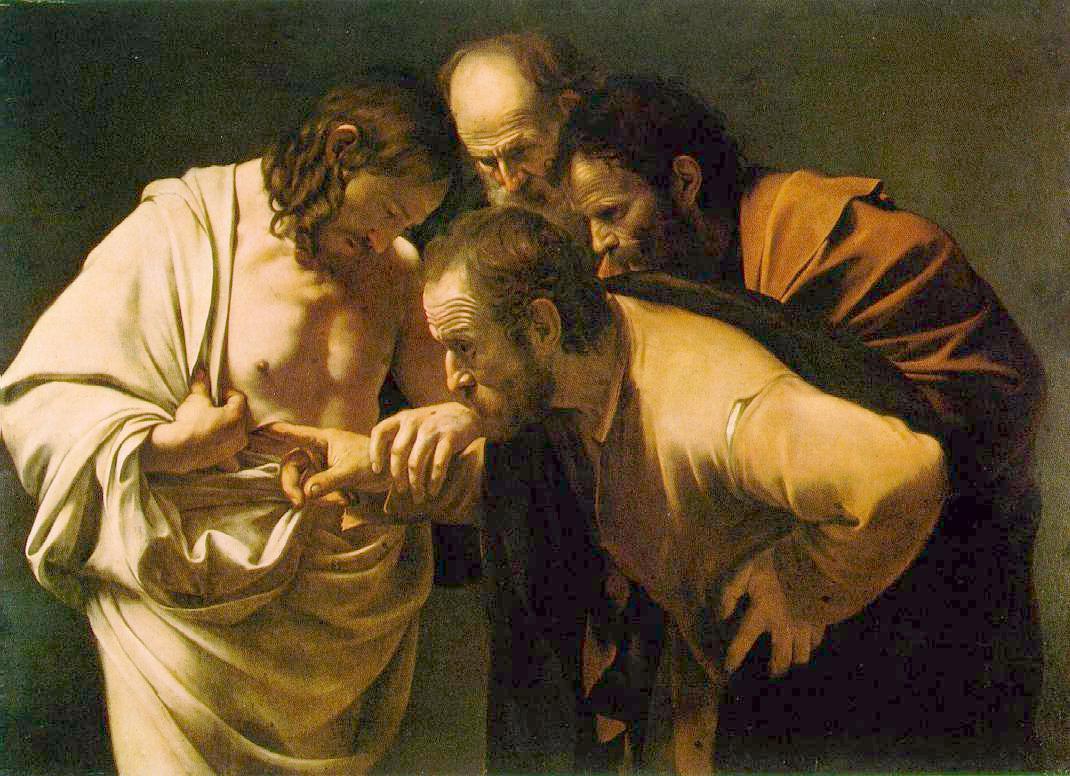
38 And he said to them, “Why are you troubled, and why do doubts arise in your hearts? 39 See my hands and my feet, that it is I myself. Touch me, and see. For a spirit does not have flesh and bones as you see that I have.”
40 And when he had said this, he showed them his hands and his feet. 41 And while they still disbelieved for joy and were marveling, he said to them, “Have you anything here to eat?” 42 They gave him a piece of broiled fish, 43 and he took it and ate before them.
Luke 24:36-43, ESV
In the most thrilling moments of a story, there are instances when the true essence of the events becomes crystal clear. Luke’s narrative brilliantly captures that exhilarating sensation. Picture this: Jesus, triumphantly risen from the depths of death, enters the room with a burst of energy that electrifies everyone present. It must have been one of those extraordinary instances where words simply fall short, and experiencing it firsthand is the only way to truly grasp its profound impact.
“Frightened” and “terrified”–it seems it takes two words to describe this spooky experience.
Everyone was terrified; they were convinced that Jesus must be a ghost. They all panicked and tried to run to the nearest exit, but then realized that the door was still locked!
Oh boy, Jesus must have had a good chuckle over this one! I mean, imagine being a human and seeing your disciples, all stooped and scared, trying to approach you like a bunch of timid puppies. It’s like trying to get a dog to come to you when it’s so terrified it’s peeing on the floor! I bet Jesus couldn’t help but smile and think, “What a hilarious sight!”
They slowly encircle Jesus and as they come, I have to believe He’s amused. He has survived a very brutal cross, and walked through hell. And, He has risen from the dead.
He is laughing from the pure joy of one who has endured the worst of a very real hell.
Jesus emerged unscathed on the opposite end, a testament to his invincibility. His arrival has undoubtedly filled him with undeniable joy, surrounded by beloved companions. In his triumphant resurrection, he defied all odds and accomplished the unimaginable, evoking a cascade of profound emotions, a mingling of laughter and tears.
I believe each of us has walls.
Walls can provide a sense of security and protection, both physically and emotionally. People often feel the need for boundaries and walls to feel safe. This is similar to how disciples found safety in numbers and the walls around them. They were afraid, and so they hid themselves.
Jesus insists on penetrating our walls. He’s overcoming much resistance and delusions. And then suddenly we come ‘face-to-face’ with the dead person who’s now alive. He is “The King of Kings and the Lord of Lords.
Behold, behold! Witness the magnificent display of unadulterated resurrection power—a force unparalleled in the vast expanse of the universe. Its brilliance eclipses the sun, its might surpasses that of the mightiest atomic bomb. Prepare to be astounded, for this power knows no bounds!
It’s funny, when Moses prostrated himself before the Lord’s glory, he changed. Not only that, but he had to take precautions to cover his face when he returned to camp. These disciples however have just seen the glory of God first-hand.
As His disciples, we must be prepared for any eventuality. Jesus can and will burst into our homes, and into our very lives. Can you hear him laugh? When he comes, nothing really is the same again. He loves his disciples too much to leave them in a dark stuffy room. They have work to do.
The resurrected Jesus is coming for you!
“Here I am! I stand at the door and knock. If you hear my voice and open the door, I will come in and eat with you, and you will eat with me.”
In the book of Genesis we find the story of Leah and her sister Rachel. Let’s start by saying two daughters of Laban have become Jacob’s wives. We must step into Genesis 29 to see more.
Jacob longs for Rachel. She is his “soul mate” and because he’s in love, but the customs and technicalities of the day somehow get by him. Because of this, he will have to deal with Laban’s subtle trickery, where his daughters get swapped, and we must sort out the customs of that day to really understand.
Let’s just say that Laban’s deception creates a huge crisis for everyone.
Throughout his life deception has been Jacob’s besetting sin. But now he’s the recipient. When we see a deceiver like Jacob gets deceived, that can’t be all bad. Call it karma, kismet, fate; he deals with it. “As you sow, so will you reap.”
Jacob is so in love with Rachel that he works for seven years for the right to marry her. This may be a bit outrageous. But we really must weigh these issues. I believe Jacob really is a monogamist at heart and he has no real love for Leah.
He can only see that one girl that he is crazy about, his true love, Rachel.
But you know, it’s Leah that I tend to think about. Her own issues are unique. Genesis 29 explains it a bit cryptically,
“Leah’s eyes were weak, but Rachel was beautiful in form and appearance.”
Genesis 29:17
You need to know that there is some confusion by commentators about the “weak eyes.” Others who look at the original Hebrew find the words to be vague. Some take it as she is very near-sighted, or even cross-eyed. Others think that this is a polite way of saying she really wasn’t pretty. I think I can gain from these different interpretations.
But to be honest, I think I might understand Leah.
She is wounded, and life requires that she live as unwanted. She is a woman of tragedy and broken hopes and dreams. She will always live as a reject. At best, she will always be a distant second, and perhaps scorned and neglected for this.
I conclude that Leah is the champion for the second best, those challenged by weakness.
Her life seems a long tragedy and very full of sadness. For the next 30-40 years she will always be a cast-off, someone who has been broken by life’s bitter vagaries. She’s a fellow struggler and a survivor.
Her sad life is similar to us who have to fight so hard over our own illness or handicaps. For some, addiction is an issue. We never choose this path. I believe darkness has many forms.
ButI have no idea what her problem was.
I do know but she must’ve been challenged by this weakness. I understand this. My own life has been topsy turvy and a hard struggle at times. I survived a massive brain tumor and I have a paralyzed right arm. I have no balance and must use a cane. I can no longer drive.
For those who are confined to a wheelchair, or must use a cane, or who deal with a physical or mental illness, Leah should be our hero. For those who have been betrayed by addiction, or who have felt rejected through a bitter divorce, Leah speaks to us.
She is for every loser and for failures of all stripes. But through all of our setbacks and messes, we must realize that God does love us– even as we weep.
Our pain always has a purpose in God’s kingdom. Always.
“One of the main ways we move from abstract knowledge about God to a personal encounter with him as a living reality is through the furnace of affliction.”
On a dirt road in the middle of a wide field stood a beautiful carriage, something on the order of a stagecoach but all edged in gold and with beautiful carvings. It was pulled by six large chestnut horses: two in the lead, two in the middle and two in the rear. But they were not moving, they were not pulling the carriage, and I wondered why. Then I saw the driver underneath the carriage on the ground on his back just behind the last two horses’ heels working on something between the front wheels on the carriage. I thought, “My, he is in a dangerous place; for if one of those horses kicked or stepped back, they could kill him, or if they decided to go forward, or got frightened somehow, they would pull the carriage right over him.”
But he didn’t seem afraid for he knew that those horses were disciplined and would not move till he told them to move. The horses were not stamping their feet nor acting restless, and though there were bells on their feet, the bells were not tinkling. There were pom-poms on their harness over their heads but the pom-poms were not moving. They were simply standing still and quiet waiting for the voice of the Master.
THERE WERE TWO YOUNG COLTS IN THE FIELD
As I watched the harnessed horses I noticed two young colts coming out of the open field and they approached the carriage and seemed to say to the horses: “Come and play with us, we have many fine games, we will race with you, come catch us.” And with that the colts kicked up their heels flicked their tails and raced across the open field. But when they looked back and saw the horses were not following they were puzzled. They knew nothing of the harnesses and could not understand why the horses did not want to play. So they called to them: “Why do you not race with us? Are you tired? Are you too weak? Do you not have strength to run? You are much too solemn, you need more joy in life.” But the horses answered not a word nor did they stamp their feet or toss their heads.
But they stood, quiet and still, waiting for the voice of the Master.
Again the colts called to them: “Why do you stand so in the hot sun? Come over here in the shade of this nice tree. See how green the grass is? You must be hungry, come and feed with us, it is so green and so good. You look thirsty, come drink of one of our many streams of cool clear water.” But the horses answered them not so much as a glance but stood still waiting for the command to go forward with the King.
COLTS IN THE MASTER’S CORRAL
And then the scene changed and I saw lariat nooses fall around the necks of the two colts and they were led off to the Master’s corral for training and discipline. How sad they were as the lovely green fields disappeared and they were put into the confinement of the corral with its brown dirt and high fence. The colts ran from fence to fence seeking freedom but found that they were confined to this place of training. And then the Trainer began to work on them with His whip and His bridle. What a death for those who had been all their lives accustomed to such a freedom!
They could not understand the reason for this torture, this terrible discipline. What crime had they done to deserve this? Little did they know of the responsibility that was to be theirs when they had submitted to the discipline, learned to perfectly obey the Master and finished their training. All they knew was that this processing was the most horrible thing they had ever known.
SUBMISSION AND REBELLION
One of the colts rebelled under the training and said, “This is not for me. I like my freedom, my green hills, my flowing streams of fresh water. I will not take any more of this confinement, this terrible training.” So he found a way out jumped the fence and ran happily back to the meadows of grass. I was astonished that the Master let him go and went not after him. But He devoted His attention to the remaining colt. This colt though he had the same opportunity to escape decided to submit his own will and learn the ways of the Master. The training got harder than ever but he was rapidly learning more and more how to obey the slightest wish of the Master and to respond to even the quietness of His voice. And I saw that had there been no training, no testing, there would have been neither submission nor rebellion from either of the colts. For in the field they did not have the choice to rebel or submit, they were sinless in their innocence. But when brought to the place of testing and training and discipline, then was made manifest the obedience of one and the rebellion of the other. And though it seemed safer not to come to the place of discipline because of the risk of being found rebellious, yet I saw that without this there could be no sharing of His glory, no Sonship.
INTO THE HARNESS
Finally this period of training was over. Was he now rewarded with his freedom and sent back to the fields? Oh no. But a greater confinement than ever now took place as a harness dropped about his shoulders. Now he found there was not even the freedom to run about the small corral for in the harness he could only move where and when his Master spoke. And unless the Master spoke he stood still.
The scene changed and I saw the other colt standing on the side of a hill nibbling at some grass. Then across the fields, down the road came the King’s carriage drawn by six horses. With amazement he saw that in the lead, on the right side, was his brother colt now made strong and mature on the good corn in the Master’s stable. He saw the lovely pom-poms shaking in the wind, noticed the glittering gold bordered harness about his brother, heard the beautiful tinkling of the bells on his feet — and envy came into his heart. Thus he complained to himself: “Why has my brother been so honored, and I am neglected? They have not put bells on MY feet nor pom-poms on MY head. The Master has not given ME the wonderful responsibility of pulling His carriage, has not put about ME the gold harness. Why have they chosen my brother instead of me?” And by the Spirit the answer came back to me as I watched: “Because one submitted to the will and discipline of the Master and one rebelled, thus has one been chosen and the other set aside.”
A FAMINE IN THE LAND
Then I saw a great drought sweep across the countryside and the green grass became dead, dry, brown and brittle. The little streams of water dried up, stopped flowing, and there was only a small muddy puddle here and there. I saw the little colt (I was amazed that it never seemed to grow or mature) as he ran here and there across the fields looking for fresh streams and green pastures finding none. Still he ran, seemingly in circles, always looking for something to feed his famished spirit. But there was a famine in the land and the rich green pastures and flowing streams of yesterday were not to be had. And one day the colt stood on the hillside on weak and wobbly legs wondering where to go next to find food and how to get strength to go. It seemed like there was no use, for good food and flowing streams were a thing of the past and all the efforts to find more only taxed his waning strength.
Suddenly he saw the King’s carriage coming down the road pulled by six great horses. And he saw his brother, fat and strong, muscles rippling, sleek and beautiful with much grooming. His heart was amazed and perplexed, and he cried out: “My brother where do you find the food to keep you strong and fat in these days of famine? I have run everywhere in my freedom, searching for food, and I find none. Where do you in your awful confinement find food in this time of drought? Tell me, please, for I must know!” And then the answer came back from a voice filled with victory and praise: “In my Master’s House there is a secret place in the confining limitations of His stables where He feeds me by His own hand and His granaries never run empty and His well never runs dry.” And with this the Lord made me to know that in the day when people are weak and famished in their spirits in the time of spiritual famine that those who have lost their own wills and have come into the secret place of the most High into the utter confinement of His perfect will shall have plenty of the corn of Heaven and a never ending flow of fresh streams of revelation by His Spirit. Thus the vision ended.
INTERPRETATION OF THE VISION
“Write the vision, and make it plain upon tables, that he may run that readeth it,” (Habakkuk 2:2). “Harness the horses; and get up, ye horseman,” (Jeremiah 46:4). I am sure that many of you who can hear what the Spirit saith to the Church have already seen what God was showing in the vision. But let me make it plain. Being born into the Family of God feeding in the green pastures and drinking of the many streams of the unfolding revelation of His purposes is fine and wonderful. But it is not enough. While we were children, young and undisciplined, limited only by the outer fence of the Law that ran around the limits of the pastures (that kept us from getting into the dark pastures of poison weeds) He was content to watch us develop and grow into young manhood, spiritually speaking.
But the time came to those who fed in His pastures and drank at His streams, when they were to be brought into discipline or “child-training” for the purpose of making them mature Sons. Many of the children today cannot understand why some of those who have put on the harness of God cannot get excited by the many religious games and the playful antics of the immature. They wonder why the disciplined ones run not after every new revelation or feed on every opportunity to engage in seemingly “good and profitable” religious activities. They wonder why some will not race with them in their frantic efforts to build great works and great and notable ministries. They cannot understand the simple fact that this Company of saints is waiting for the voice of the Master and they do not hear God in all this outward activity.
They will move in their time when the Master speaks. But not before, though many temptations come from the playful colts. And the colts cannot understand why those who seemingly appear to have great abilities and strength are not putting it to good use. “Get the carriage on the road,” they say, but the disciplined ones, those in God’s harness, know better than to move before they hear the voice of the Master. They will move in their time with purpose and great responsibility.
And the Lord made me to know that there were many whom He had brought into training who had rebelled against the discipline, the chastising of the Father. They could not be trusted with the great responsibility of mature Sonship so He let them go back to their freedom, back to their religious activities and revelations and gifts. They are still His people, still feeding in His pastures, but He has set them aside from the great purposes for this end of the age. So they revel in their freedom feeling that they were the Chosen Ones with the many streams of living water not knowing that they have been set aside as unfit for His great work in this end of the age.
He showed me that though the chastising seemeth grievous for the time and the discipline hard to endure yet the result with all the glory of Sonship is worth it all and the glory to follow far exceeds the suffering we endure. And though some lose even their lives in this training yet they will share alike in the glory of His eternal purposes. So faint not saints of God for it is the Lord that doth bring thee into confinement and not thine enemy. It is for thy good and for His glory so endure all things with praises and thanksgiving that He hath counted thee worthy to share His glory!
Fear thou not the whip in His hand for it is not to punish thee but to correct and train thee that thou mightest come into submission to His will and be found in His likeness in that hour. Rejoice thou in thy trials in all thy tribulations and glory thou in His cross and in the confining limitations of His harness for He hath chosen thee and He hath taken upon Himself the responsibility of keeping thee strong and well fed. So lean thou upon Him and trust not in thine own ability and thine own understanding. So shalt thou be fed and His hand shall be upon thee and His glory shall overshadow thee and shall flow through thee as it goes forth to cover the earth. Glory to God! Bless the Lord! He’s wonderful! Let Him be Lord of your life, friends, and complain not at that which He bringeth to pass in your life.
Bill Britton served as Vice President of Pinecrest Bible Training Center for the first three years of its existence and was a great blessing in helping to establish the work at Pinecrest.
A comment–
I first connected with this message in 1984, by a man named, Bob Mumford. As a young Christian, the allegory “nailed” me. What did I want for my life? I had to make some decisions. I sincerely wanted to follow the Father through this process. And this hasn’t changed in almost 40 years.
For more of these and other messages: Bill Britton P.O. Box 707 Springfield, Missouri 65801-0707. This is a faith ministry, made possible by members of the Body of Christ. Not copyrighted, may be translated or reprinted without further permission. All messages are free as the Lord provides.
“When a servant comes in from plowing or taking care of sheep, does his master say, ‘Come in and eat with me’? 8 No, he says, ‘Prepare my meal, put on your apron, and serve me while I eat. Then you can eat later.’”
“And does the master thank the servant for doing what he was told to do? Of course not. 10 In the same way, when you obey me you should say, ‘We are unworthy servants who have simply done our duty.’”
Luke 17:7-10
After years of ministry— this particular passage has slowly become one of my favorites. The path I’ve walked has been challenging, and it seems to me that I haven’t done it very well at all. I’ve been a fool much of the time, and yet, if anything, God has held me firmly in place. I haven’t always been faithful. But He has.
I used to kill rattlesnakes when I lived in Mexico. (You might say it was my hobby.) But it demanded a certain cautiousness, and lesson #1 was this–you never, ever take your eyes off of the snake–no matter what. We must approach ourselves that carefully.Our hearts are desperately wicked. We must understand this.
“I am more afraid of my own heart than of the pope and all his cardinals. I have within me the great pope, self.
The Lord Jesus tells us one of those stories of his. This parable is one of his best. It makes a lot of sense, and it resonates within me. It tells me that I must watch myself, lest I forget the idea behind this passage. I’m His slave and not deserving some kind of special treatment.
Jesus’ parable explains our duty as His servant.
It seems that after a hard day’s work, a slave still needed to prepare his master’s dinner. No matter how much he toiled out in the fields, he had a duty to serve his master in this way; and it does seem unfair–we live in a land “where all men are created equal.”
But this is how the God’s Kingdom works.
We get dirty, we toil hard, and we sweat under the hot sun. We dream of a glass of cold lemonade (with ice), and a cool shower when we quit the fields. But that isn’t the way it works. Yes, Jesus gives his laborers rest–but the work continues.
The work goes on, even when God buries his workers. Hopefully, the next generation will continue my almost humble efforts, and his work in his fields will continue. But, in the meantime I must “watch” myself carefully, and do his will out in his fields.
Just as a servant knows that he must first obey his master in all things, so the surrender to an implicit and unquestionable obedience must become the essential characteristic of our lives.
Yes, it’s a foreign concept, and we can’t really relate–we either skip its message, or apply it to others. Jesus uses it quite adroitly, the servant works for his master; completely, exclusively. A slave who has no rights of his own. We serve and obey our Master.
Any desire for promotion, pleasure, riches, or fame will quickly make one a servant of the Beast. And, I’m afraid, that is exactly what many of today’s pastors and preachers have become.
“And going on from there he saw two other brothers, James the son of Zebedee, and John his brother, in the boat with Zebedee their father, mending their nets, and he called them.”
Matthew 4:21, ESV
“And immediately they left theirnets and followed him.”
Mark 1:18
To mend nets was tedious but necessary. You would take your net and spread it on the ground in an open space. Every knot would be carefully examined. All holes would be repaired. Nothing was overlooked. Fishing nets were painstakingly maintained. Every day, without fail.
Fish would school, and if your gear was right, and you were in a prime place, you could catch a lot. But simultaneously, you could let hundreds of fish escape through a hole in your net. Each fish that escaped meant money lost.
Jesus walking along the beach surveyed the boats and crews. Since most of these guys had worked through the night, they were tired and maybe a bit “punchy.” Some had gotten lucky, while others had little to show for working so hard. I suppose the different crews teased each other as they unloaded.
Jesus walked through the bunches of fishermen. He looked at their hauls to see what they had caught. But it wasn’t the catch He was looking at, it was the men. It was from these laboring fishermen that He would choose. These men were rough-and-tumble rednecks. If they had chewing tobacco back then, they would use it.
He looks, sees, and commands.
Now if you are looking for disciples– future apostles and leaders, the seashore is not the best place to recruit. They really have a rudimentary education. No theology, and just a meager understanding of Jewish ritual and religion. Essentially there was no time for them to think outside their occupation. Sure there just might be one, or two that possessed more, but that would be the exception.
But Jesus had no desire to interview them, and take the best of the lot. He didn’t have a Human Resources Department, and there were no tests and no forms that had to list references. He simply commanded, and those who understood followed. Only after they left it all did He get their names and addresses. I think that it is the same today.
Will we leave our boat, with your nets?
Really, you can keep mending or follow Him– it’s your choice. Most of the time though, decisions have a tendency to be irrevocable. Perhaps you have a moment, an instant of time to decide.
Sometimes mending nets can be back-breaking and tedious. But following the Lord Jesus is an unknown; too many choose to keep fixing their nets. Others though are launched into something new, and eternally significant.
The glaring truth is the necessity of obedience to Jesus’ command. There is no other voice we must hear. As a matter of fact, hearing (and really apprehending) is the only foundation we can trust to make our obedience true.
You can keep mending your nets and preparing for another night on the water. That is always your prerogative. But if you decide to follow you will need to leave what you know behind.
That is authentic discipleship.
“Rest in this – it is His business to lead, command, impel, send, call or whatever you want to call it. It is your business to obey, follow, move, respond, or what have you.”
4 “You are as beautiful as Tirzah, my darling, as lovely as Jerusalem, as majestic as troops with banners. 5 Turn your eyes from me; they overwhelm me. Your hair is like a flock of goats descending from Gilead. 6 Your teeth are like a flock of sheep coming up from the washing. Each has its twin, not one of them is missing.
Song of Solomon 6:4-6. NIV
Her beauty stuns him.
He’s completely overwhelmed and totally undone, he’s looking for words to describe her. He chooses metaphors that we really don’t get and descriptions that seem a little odd. But the emotions of the human heart haven’t changed.
Love is still love, and beauty is still beautiful.Even if our words have changed.
He chooses concepts that we understand–words like beautiful, darling, lovely and majestic. But we really don’t understand the nouns–Tirzah, Jerusalem, and troops carrying banners (and that’s just verse 4!) And yet that’s how he communicates his love to her.
But we do get verse 5, at least in the first half.
“Turn your eyes on me; they overwhelm me.” Love still does funny things to each one of us–but “eyes” still convey love. When we’re really in love we obviously see the outward, but true love sees the inward too.
I think that love can pierce the heart like nothing else.
Again, the descriptions are funny, and believe me–they get stranger–goats, smelly sheep, and having a mouthful of teeth!? And yet he carefully weaves these ideas that still have concepts that are vaguely relatable, but still, I have to admit, they are hysterical. If I tell my wife that her hair is like a “flock of goats” she is liable to punch me.
The metaphors may be outdated, but the ideas behind them are not. We still understand real-life concepts like beauty, love, and true sight. These are concrete–they still ring true today. Time has not diminished them. They are bedrock solid.
But notice, it’s the eyes that get him.
He sees her eyes, and that’s all it takes–they overwhelm him. A person’s eyes can often reveal the person that’s really inside, which is something we can’t really hide.
Can Jesus see your loving gaze?
The Song of Solomon lover sees her love, and I really believe that Jesus does see the love that a believer has for him. Often we make love a one-way deal. God loves me (John 3:16). That is true–I know that God loves me, that is indisputable. But, do we really ever return his love?! maybe, he’s overcome by my gaze at him? Is that heretical?
His descriptions are funny, and believe me–they do get stranger–goats, sheep, and a mouthful of teeth!? And yet he carefully weaves these ideas that still have concepts that are vaguely relatable, but still, I have to admit, they are hysterical. (If I tell my wife that her hair is like a “flock of goats” she is liable to punch me).
But notice, it’s the eyes that get him.
He sees her eyes, and that’s all it takes–they overwhelm him. A person’s eyes still reveal love and kindness, they can reveal the person that’s really inside, which is something we can’t really hide.
Can Jesus see your loving gaze?
(I want to change. Help me Lord Jesus!)
He sees her love, and I really believe that Jesus does see the love that a believer has for him. Often preachers make love a one-way deal. God loves me (John 3:16). That is true–I know that God loves me, that is indisputable. But, do we really ever return his love? Just maybe, he’s overcome by my gaze at him? Is that heretical?







 Alaska Bible Teacher