Leaving Your Boat Behind

27 “But immediately Jesus spoke to them, saying, 

“Take heart; it is I. Do not be afraid.”

28 And Peter answered him, “Lord, if it is you, command me to come to you on the water.” 29 He said, “Come.” So Peter got out of the boat and walked on the water and came to Jesus.”

Matthew 14:27-29, (context, vv. 22-33)


Jesus is full of surprises! You can never guess the things He will do next. He is Lord after all. To walk on water is totally impossible. But Jesus does it. He walks on it as if it were a concrete sidewalk. When they see Him they freak out. They couldn’t believe their eyes.

Jesus wants to reveal to His disciples His true nature.

They had just seen Him multiply fish and loaves, He fed five thousand plus just a few hours ago. Wasn’t that a miracle enough? It seems that Jesus doesn’t think so.

For some inexplicable reason, Peter wants to insert himself into Jesus’ miracle. Oddly, he has decided he’ll join Jesus, and leave behind the security of the boat–for the insecurity of the impossible! He truly believes that Jesus can hold him up somehow. Perhaps this alone is the most amazing part of this passage. Can a man duplicate the walk of Jesus? Can we walk like Him?

Peter really wants to leave the security of the boat, for the insecurity of the impossible.

It seems to me that we’re constantly doing the “Peter thing.” It’s true our walk of faith really is intensely supernatural, and yet we somehow forget this. And face it, we’ll never generate the “fruits of the Holy Spirit” on our own. Our most sincere efforts will never turn water into something solid.

We will never walk the disciple’s path without faith in the Master who calls us to come to Him.

I think Jesus wants us to join Him. Our faith in Him is the key. We believe that we can walk with Him, we believe we will see the impossible. Without question it’s Jesus’ power that holds us up. Our faith in Him is the ignition point in all of this. Our mustard seed faith, combined with Jesus’ power. becomes the true walk of the disciple.

We must bravely launch ourselves into the purposes of God. Jump when God puts opportunity in your path.

To merely sit in the boat is hardly faith. When Peter steps over the gunwales, he steps into the world of the amazing. The water holds him, and his trust in Jesus solidifies like the water he walks on. He is now doing the impossible. He’s now becoming very much like Jesus.

Our walk seems terribly weak at times, we can easily list our sin and weaknesses. We’re not quite convinced that the blood of Jesus covers all our sin–and therefore we can’t step out of the boat. I think it’s Peter’s faith in Jesus’ power that holds him up.

When his faith falters, he does the “rock thing,” There is something about his circumstances–the wind, and the waves that begin to frighten him. (But I must believe Jesus was pleased.)

To really understand, to obey Jesus is to step out of our boat in faith; when we do we’ll start to see miracles happen.

“Christ will always accept the faith the puts its trust in Him.”

-Andrew Murray


alaskabibleteacher.com

Under the Knife

John 15:2, ESV

 “Dead wood is worse than fruitlessness, for dead wood can harbor disease and decay…God removes the dead wood from his church and disciplines the life of the believer so that it is directed into fruitful activity.”

Merrill C. Tenney

It takes a sharp eye and a sharper knife to do the Father’s work of cutting.  He slices to the quick, and all that is not useful falls to the ground.  The vine must produce grapes, and every bit of “grape-energy” needs to be used productively. Fruitlessness will be cursed, sterility is condemned. This is a hard choice to make.

I want to encourage you though–fruitless believers can possibly become fruitful ones. 

Understand, the vine dresser isn’t attacking the vine with his knife.  He is not malicious or vengeful.  All that He does is for the good of the vine.  He is motivated to produce fruit.  That is what He thinks about as he cuts away the dead branches.

Pruning and fruit are concepts that we vacillate over, some days we understand and other days we don’t.  After over 40 years, I’ve heard every “John 15 sermon” known to man.  And most of the time I turn down my spiritual hearing aid. That is tragic–I listen, but I don’t listen.

I need to grapple with this imagery.  If I don’t, bad things are bound to happen.

For years I have asked God to “show me His ways.” I’d like to believe that this understanding of pruning has changed me.  I would like to think that I have attained a clearer view of wisdom.  This pruning business is all well and good.  But being sanctified by the knife is decidedly unattractive and uncomfortable.

I grew up in the northwoods of Wisconsin and wondered if the trees that were designated with a ‘red X’ understood that they were the ones to be cut down by the lumbermen. I wondered if these trees that were marked with spray paint understood what was up? (Maybe they felt special with their new found prestige?)

You will be pruned!

I completely and absolutely declare this to you. (It’s one of those “thus says the Lord” moments.) Pieces of your life are earmarked to be lopped off. You will probably not understand why and you will chafe at what is coming.

The Christian life is as much about subtraction as it’s about addition.

He will cut you and you’ll think you’re dying. But I assure you, Jesus loves you, and all that He does is for your good. He trims you to bring you true life.

There is simply no other way He can work.

“And if it be painful to bleed, it is worse to wither. Better be pruned to grow than cut up to burn.”

John Trapp

It Gets Even Better

I just saw a t-shirt. “It gets better,” and inside me something connected, it resonated. If there is something like spiritual mirth and laughter, I could barely contain myself. I wanted to shout and dance, but being an old man I knew I had to take extra Advil if I did. (Besides I was in Safeway.)

Romans 8:18

 The last 20 years are something I’d rather forget and erase. It seems I’ve been hit with just about everything awful you can imagine. After each incident I find myself thinking, “finally, it’s done,” but no, it’s not really done, there’s more coming. I’m smiling as I write these words. “But no, it’s not.” Ha!

Being slammed over and over has created within me a special longing for my real home. When I ponder the eternity of heaven the knots of this life begin to unravel, and I see life as it really is. You see present day life is quite temporary, and these many issues will be forgotten.

The Apostle is remarkably clear about this.

“Neither count my life dear unto myself, so that I might finish my course with joy,” is Paul’s take on his life’s issues. To finally complete all of the moments–and do it with joy, is his goal. Crossing the tape triumphantly is the hope of the staggering believer. And it is mine.

My pain is just for a simple singular moment, but eternity is time on steroids.

It is forever and ever and ever and ever.

On my end, the exchange I make is hardly perfect. I turn in my “sawdust” and get gold in return, and who can turn this trade down? My ugliness becomes eternal beauty and who can resist such a deal? These terrible things that hurt me so badly carry an everlasting weight of glory.

Brother, please believe this. Yes, I know, it hurts.

The Greek word “worthy” in verse 18 can be translated “having weight” which suggests a heaviness or burden that must be carried. But even so, it’s temporary. It enters but passes, even though at the moment it seems forever. You carry it for a moment–but that is all. and it’s done.

I look, and gaze into eternity, and laugh in joy.

The Absolute Danger in Exalting Yourself

Now he told a parable to those who were invited, when he noticed how they chose the places of honor, saying to them, “When you are invited by someone to a wedding feast, do not sit down in a place of honor, lest someone more distinguished than you be invited by him, and he who invited you both will come and say to you, ‘Give your place to this person,’ and then you will begin with shame to take the lowest place. 

10 But when you are invited, go and sit in the lowest place, so that when your host comes he may say to you, ‘Friend, move up higher.’ Then you will be honored in the presence of all who sit at table with you. 11 For everyone who exalts himself will be humbled, and he who humbles himself will be exalted.”

Luke 14:7-11, ESV

Choose your seat carefully. In Jesus’ day, there was a definite seating order to a wedding feast. It wasn’t first come, first served. There was a strict protocol, where one’s importance mattered.

Honored people got honorable seats–close to the front as possible. Average people got average spots; but no one wanted be at the bottom, having to sit at the “kids table.”

Jesus was watching, and he what he saw was a spiritual principle of his Kingdom.

Jesus often teaches us out of the things we encounter.

Truth often hits us from those things we actually see. If you want to know what God is doing in your life, all you need to do is look around at the practical things, and start to see the spiritual lessons inside them. We learn from real-life. That’s how he often teaches us, he combines the Word with what we’re experiencing.

Our natural inclination is to move higher up.

We think that we’re deserving, and so we take our rightful positions. That’s the way humans think. We all want to sit in the best possible place, and so we end up wheedling our way up front. We can fall into the subtle trap of self-promotion. But that’s not how discipleship works.

Jesus corrects, advising us to take the lowest place.

I think verse 11 is the key to figuring out this seating arrangement. We’re starting to see a physical situation become a spiritual lesson. There’s much to learn. Here’s verse 11 in the Amplified version:

For everyone who exalts himself will be humbled [before others], and he who habitually humbles himself (keeps a realistic self-view) will be exalted.”

Luke 14:11

This particular translation injects some realism into our lives, especially in how we see ourselves. It’s quite foundational. It lays down a principle that is always true in his Kingdom (1 Peter 5:6). If we don’t accept and implement this, we’ll suffer a definite weakness in our discipleship. It stunts the growth of many believers. And that is tragic.

The whole scene lays out how life in the spirit really works, and it seems paradoxical.

Our human logic asserts that deliberately choosing the lesser is foolish, things really don’t work that way. We think, (falsely,) that we’ll only advance by asserting ourselves. But Jesus, quite aptly, clarifies the ways of the Kingdom.

True maturity will only come if we decide to take the lowest place.

James 4:10

alaskabibleteacher.com

The Children Are Our Examples

 Now they were bringing even infants to him that he might touch them. And when the disciples saw it, they rebuked them. 16 But Jesus called them to him, saying, “Let the children come to me, and do not hinder them, for to such belongs the kingdom of God. 17 

Truly, I say to you, whoever does not receive the kingdom of God like a child shall not enter it.”

Luke 18:15-17

Again we were wrong (like usual it seems). I guess that we were trying to maximize Jesus’ ministry. We meant well, but He needed organization. So that was now our “ministry.” We simply felt that Jesus’ time was our concern, and as His disciples we wanted Him to connect with those who really mattered.

The parents were bringing their children to be blessed by Jesus.

“It was the custom for mothers to bring their children to some distinguished Rabbi on the first birthday that he might bless them.”

William Barclay

Jesus made it clear that these children needed to be the focus of our ministry. Our efforts were not to be centered on adults, rather it was misguided thinking that we direct Jesus’ work to be focused and redirected. These little ones were in the way.

Up to now, Jesus’ work was for adults. Or so we thought.

There were lepers, demon-possessed, paralyzed, tax-collectors all waiting for His ministry. Somehow we overlooked the needs of little children. Again, we were wrong, misguided, and ignorant of the walk we were called to.

Trust me on this–we believed otherwise. Up to now, we assumed that maturity meant sophistication. It was all about right thinking and good theology–it was these things God was looking for. We assumed that being simple wasn’t quite what Jesus wanted from us. Rather we believed the opposite.

And sure enough, Jesus explained what we were missing.

Children were to become our focus. They were the ones who we were to emulate and esteem. The radical thing to us was understanding that these ‘little ones’ were that significant.

“Let these children alone. Don’t get between them and me. These children are the kingdom’s pride and joy. Mark this: Unless you accept God’s kingdom in the simplicity of a child, you’ll never get in.”

Luke 18:16-17, The Message

This was like a 2×4 across the head! It was nothing less than another radical thought from our Teacher. And trust me, this wasn’t easy, but Jesus was crystal clear. We dare not think otherwise, but believing this was against all we thought the Kingdom was.

Jesus explained that childlikeness was the only way we could enter His Kingdom.

Children were now to be our examples. Their simplicity was to be our guide. Their simple innocence was how we were to see ourselves. You have no idea how extreme this was to us.

This was the Kingdom of God’s doorway into true discipleship. We carried this lesson for the rest of our lives. It was something we passed on to our disciples.

“Part of the exquisite beauty of salvation is its simplicity. Any man, woman, or child can come to Christ with absolutely nothing to offer Him but simple faith-just as they are. Salvation requires nothing more than childlike faith–believing that Jesus Christ died for my sins and accepting His gift of Salvation.”

Beth Moore

alaskabibleteacher.com

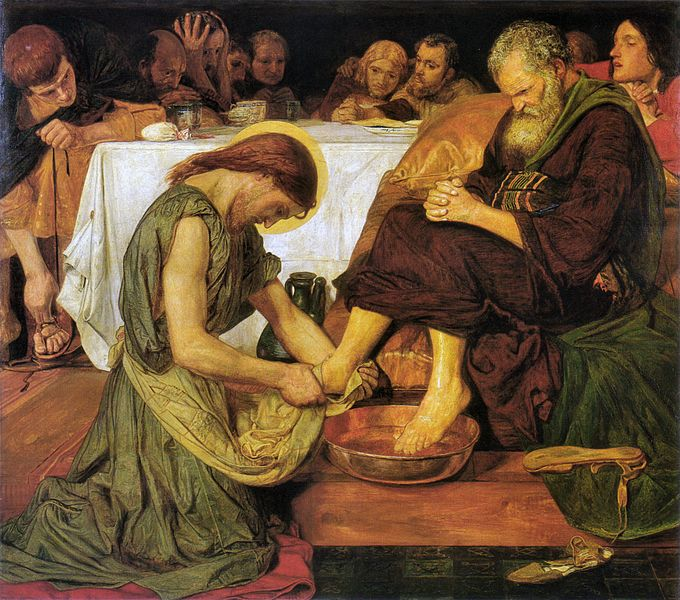
Maximum Servanthood

“He came to Simon Peter, who said to him, “Lord, do you wash my feet?” Jesus answered him, “What I am doing you do not understand now, but afterward you will understand.” Peter said to him, “You shall never wash my feet.” Jesus answered him, “If I do not wash you, you have no share with me.”

John 13:6-8 (context vv. 3-17)

Chapter 13 always rocks my world. I visualize this, like a fly on-the-wall, watching it happen–and then I replay it over, and over in my mind. It always unravels me. Why does this have to happen? What does this passage tell me about Jesus, and his kingdom? (John 13).

Why can’t I just walk away from it, and leave it be?

Jesus made himself a slave, (or perhaps he was always a slave all along, and we just didn’t realize it?) Foot-washers were pretty much regarded as sub-human, mindless drones who mechanically performed a necessary duty. The lowest of the low, the very least of the least.

But Jesus took that role on himself, he laid aside his garments, and his Godhood. (They landed in a pile in the corner of the room). When he knelt down to scrub feet (making sure he got between the toes), it was deity serving man. This God/rabbi intentionally did this, not reluctantly or halfheartedly–but carefully.

He was their teacher.

Custom demanded he enjoy the prerogatives of that position. But he wouldn’t, and didn’t. He mustn’t. As I stress over this, I must conclude he really was their “teacher,” but not in the way I expect. What he was doing on his knees, was instructing them in the art of loving each other. He showed us a leader in action.

Real disciples function best when they wash between the toes.

There was a point in Jewish history when the people actually demanded that God would give them a king, instead of a judge (1 Samuel 8:5-9). God warned them that this wasn’t in his plans–but they insisted. They had to have one, everyone else did. We still must have celebrities, and then we wonder why they short circuit on us. Who can resist the privilege, and the limelight?

Peter of course was classic Peter.

It seems that whenever he resists, he gets rebuked. He makes it quite clear that Jesus will never wash feet–that Jesus will never use a basin or towel and serve him like this. It was outrageous. It didn’t fit in Peter’s personal theology. He had no room for Jesus the slave. Perhaps Peter knew that to follow meant he would have to do the same thing?

Jesus still washes feet.

He sits us down and takes off our shoes and socks, and scrubs us clean. And we hate it. But to be washed by him is a condition of our discipleship. Every follower must be clean, and he continues his work to this day. We sin daily, even as his own, and he cleans us up–and yet somehow that really bothers us.

“Does God ask us to do what is beneath us? This question will never trouble us again if we consider the Lord of heaven taking a towel and washing feet.

 Elisabeth Elliot

alaskabibleteacher.com

How Much Do You Love Him?

How much do you love Jesus? This parable looks at the heart of the believer, the person who has been incredibly forgiven of everything–past, present and future. And it’s here we see a woman whose heart is broken by her sin, and she discovers Jesus’ grace, and tremendous mercy.

“A certain moneylender had two debtors. One owed five hundred denarii, and the other fifty. 42 When they could not pay, he cancelled the debt of both. Now which of them will love him more?” 43 Simon answered, “The one, I suppose, for whom he cancelled the larger debt.” And he said to him, “You have judged rightly.” 

44 “Then turning toward the woman he said to Simon, “Do you see this woman? I entered your house; you gave me no water for my feet, but she has wet my feet with her tears and wiped them with her hair. 45 You gave me no kiss, but from the time I came in she has not ceased to kiss my feet. 46 You did not anoint my head with oil, but she has anointed my feet with ointment.” 

47 “Therefore I tell you, her sins, which are many, are forgiven—for she loved much. But he who is forgiven little, loves little.”

Luke 7:40-47

Jesus has been invited to Simon’s home. He’s a Pharisee, and at this point they haven’t quite banded together to attack Jesus, it seems that there were still some Pharisees who were true seekers.

The text jumps right in and we see Jesus reclining at a table (the Jewish people didn’t use chairs–pillows were used instead.) At a feast like this people who weren’t officially invited could come in to stand in the back and listen in on the conversation. (That seems awkward.)

Suddenly a woman enters the room.

She’s described as “a woman of the city,” which is a code word for “a sinner, or a harlot.” (Let your imagination roll that one around.) She comes with a definite purpose, for she brings a jar of quite expensive perfume with her.

The passage reveals that she’s on her knees, weeping on Jesus’ feet, and rubbing her tears with her hair, and pouring out the perfume. She’s kissing his feet. She’s obviously a broken person—someone who knows who Jesus is, and who understands who she is, and how deep sin has destroyed her.

At this point Simon is deeply offended, and probably embarrassed by what’s happening. But he also assumes that Jesus isn’t who he’s saying he is. “How dare does this man let an unclean person even touch Him!” But Jesus understands everything. His parable is short (just two verses) and it’s directed at Simon; and it’s a no-brainer.

The interpretation is obvious: the man who owes the most will love the most.

Jesus accentuates Simon’s breach of protocol. The Lord deftly explains the entire situation and Simon is busted. He’s put on the spot and Jesus has made his point. It’s all so obvious. The essence of the story is clear. How much do you love the Master?

(Or maybe you’re a Simonite?)

Perhaps you’re someone who doesn’t quite accept what’s real? The Bible tells us repeatedly that no one is righteous. No one. Scripture has a very low opinion of the righteousness of men. (That should shatter your thinking.)

“But we are all as an unclean thing, and all our righteousnesses are as filthy rags; and we all do fade as a leaf; and our iniquities, like the wind, have taken us away.”

Isaiah 64:6, KJV

The Hebrew word for “filthy rags” is extremely graphic–literally it means “a menstruating cloth.” It was something that a woman used before Tampax came along. How very descriptive. Do we even have the slightest idea what that means? Are our good deeds that bad?

Yes they are. Isaiah announces that’s exactly how God sees our best attempts to find acceptance apart from grace. It often seems we try to please Him by doing the best we can, but that isn’t sufficient. We always fall short and mess up.

How does understanding this change our discipleship? I’ll let you be the judge on this on this one.

“He loved us not because we are lovable, but because He is love.”

C.S. Lewis

Jesus, My Lord and Master


“A Christian is a person who has died with Christ, whose stiff neck has been broken, whose brazen forehead has been shattered, whose stony heart has been crushed, whose pride has been slain.”

His life is now mastered by Jesus Christ.”

–John Piper

No longer do I call you servants, for a servant does not know what his master is doing; but I have called you friends, for all things that I heard from My Father I have made known to you.”

John 15:15

It seems that the purpose of life is not to find our freedom. It’s really meant for us to find our Master.

Yes, the idea of being a slave to anyone is repugnant. We chafe at this, and yet man was never meant to be separated from the Lordship of Jesus. We’re instructed repeatedly with the New Testament idea that “our life is not our own”  Over and over God proclaims Himself as the King.

That seems to troubles us somewhat.

Not so much when life is fairly good, granted, but in those hard moments when a decision must be made between enjoying the titillating “lusts of the flesh,” or accepting the fruits of the Spirit. This is one of those “lordship moments.” They come and go, and they show us exactly who we are.

If you’re really going to be authentic–a legitimate and real disciple, then you must determine who is going to be in charge, and this isn’t one of those casual decisions. Your decision must become a settled issue.

You must securely fix it in your heart.

The thief on the cross knew salvation, he was promised an eternity with God simply by faith. But I submit to you that he had put himself under the Lordship of Jesus, simply by recognizing the sign, “the King of the Jews.” I believe he saw and understood its implications. Jesus was King! He knew and understood.

This is a very hard word for some, but so many of our personal issues hinge on this.

I know this first-hand. It is a monumental struggle. You must admit to not only having Jesus as your Savior, but you also must put your life under His total Lordship.  You need to pick up your cross daily in order to follow.  You need to learn how to kneel.

“Revelation is the first step to holiness, and consecration is the second. A day must come in our lives, as definite as the day of our conversion, when we give up all right to ourselves.”

“We must submit to the absolute Lordship of Jesus Christ.”

    Watchman Nee

alaskabibleteacher.com

Jonah Measures God’s Love

(“The LORD is gracious and merciful, slow to anger and abounding in steadfast love.”)

Psalm 145:8

This understanding of God’s character is used 13x in the Old Testament. It was first discerned by Moses, and was passed on to other men. It was stamped into the hearts of those who followed him. It was a description of who God was, and it became the strong foundation of their ministry.

Jonah understood who God really was.

And that was the reason Jonah refused to give the Ninevites a break. He didn’t want them to repent. He wanted no part of their salvation, which is rather disturbing. How can a prophet act this way? What was it that angered Jonah that he would resist God?

The book of Jonah contains question marks, especially chapter 4. Of the 14 questions that are asked, 11 are directed at Jonah.

When we read it we can focus on the secondary ideas. We see Jonah and the whale. Maybe we think about his disobedience. Or maybe the storm or the plant that helped Jonah endure the heat of the sun. These are all good things to consider, but they are not the main theme.

God’s heart for even the Ninevites is the main purpose of the book of Jonah.

God is not the exclusive ‘property’ of the Hebrew nation! He very much cares for others outside of our own group. In John 3:16 we’re made aware of His passion for the whole earth.

The Great Commission has always been in effect. In the OT Israel was called to be a light to the Gentiles, Acts 13:46-48. The covenant given to Abraham was that Israel would be a blessing to every nation. This was God’s plan and His intention. (Genesis 17:1-8.)

Jonah’s anger and apparent prejudice is definitely a cause for concern.

But could the message of Jonah describe the reluctance of the Church today? Is God’s love for everyone? Does God even care?

alaskabibleteacher.com

The Real Glory of the Real Jesus

Mark 9:2-8, ESV

“And after six days Jesus took with him Peter and James and John, and led them up a high mountain by themselves. And he was transfigured before them, and his clothes became radiant, intensely white, as no one on earth could bleach them. And there appeared to them Elijah with Moses, and they were talking with Jesus. 

“And Peter said to Jesus, “Rabbi, it is good that we are here. Let us make three tents, one for you and one for Moses and one for Elijah.” For he did not know what to say, for they were terrified.” 

And a cloud overshadowed them, and a voice came out of the cloud, “This is my beloved Son; listen to him.” And suddenly, looking around, they no longer saw anyone with them but Jesus only.”

I could go a hundred different ways with this passage. After much thought (disorganized most of the time) I’ve decided to go with the following. I know deep down how deficient it is, and I know you have much to add to it, which is very good.

But what I do understand I give to you.

The more I try to process Mark 9 the more I see things that are wildly significant. What happened there was radical, and I realize that I still don’t have a solid grip on it, and if I did I know deep down it’d change my life.

  • James, John, and Peter. Why these three? Some have suggested that these particular disciples were the ones who desperately needed to see what was going to happen. That’s very possible. Perhaps they were the weakest, and maybe they needed to see the real Jesus in His glory. My personal view is that these three wrote books, epistles. Maybe Jesus understood this, and gave them this earth-shaking experience?
  • The impact on Peter was profound. “”For we did not follow cleverly devised stories when we told you about the coming of our Lord Jesus Christ in power, but we were eyewitnesses of his majesty. 17 He received honor and glory from God the Father when the voice came to him from the Majestic Glory, saying, “This is my Son, whom I love; with Him, I am well pleased.”  We ourselves heard this voice that came from heaven when we were with him on the sacred mountain.” (2 Peter 1:16-18).
  • Toward the end of Peter’s life he couldn’t shake the Transfiguration and what he witnessed there. He recalled the “glory” but it seems it was the voice that was the most profound. It was that voice that completely altered his life and ministry. (Notice that he mentions it twice in verse 18.)
  • The Greek word for “transfigured” is metamorphosis. (Like a butterfly coming out of a cocoon.) Jesus wasn’t put in some spiritual “spotlight,” rather the glory that was seen was coming from inside Him. We see that He was God and Jesus revealed Himself clearly as God. The three disciples who were witnesses seem to struggle with exactly what took place. They use human analogies and images to try to explain to us what they saw.
  • The word “terrified” is the word phobia. Could it be that our encounter with God could go to that extreme? Could we be that we could be terrified in His presence? Does that fit into our theology? You need to decide if it’s significant or not.
  • And what about Moses and Elijah? Most feel that each represented the Law and the Prophets. I must point out that both had ministered from the top of mountains before? But notice, even though Jesus emanated extreme glory, these two did not. Also, the arrival of these two reinforces the real world of life after death. Both Moses and Elijah were very much alive!
  • The “human” part of Jesus was temporarily set aside. We know that Jesus was fully man, but here we see Him as He really is–fully and completely God. What a revelation! The three disciples were profoundly touched. Seeing the power and glory of the Creator of the universe on the top of the mountain altered their lives and changed their ministry.
  • John would write his Gospel and three letters. James wrote the first book in the NT. Peter is credited with the Gospel of Mark and his two books. They “knew” exactly who Jesus was! They had become fully convinced and needed no theological explanation. They finally understood!

So much more should be considered.

What I’ve written today is so incomplete–I feel a little foolish putting this down in this post. But yet I’m actively praying for you that this might add to your understanding. The Transfiguration is profound. It certainly needs to be internally processed by every real believer. And for those who don’t know Jesus yet, I hope you can understand exactly who He is to us who believe.

“In the beginning was the Word, and the Word was with God, and the Word was God.  He was with God in the beginning.  Through him all things were made; without him, nothing was made that has been made.  In him was life, and that life was the light of all mankind.  The light shines in the darkness, and the darkness has not overcome it.”

John 1:1-4, NIV

alaskabibleteacher.com