Thinking Out Loud About Dying

A dear Christian friend has built his own coffin. He now uses it as a coffee table in his living room until the day he dies. I’m told that Trappist monks next to their monastery an open grave, a constant reminder of the certainty of death. When they file past it, they understand that everyone must die.

Do you see death-smiling as a type of leer or as an evil grin upon the face of an enemy that is about to bring you pain? Or is the smile a gentle one that offers solace at a time when fear may be raging?  

Psalm 90:4-6

In ancient Israel, Psalm 39 served as a “memento mori”—a reminder of human mortality. “Oh LORD, make me know my end and what is the measure of my days; let me know how fleeting I am!” (v. 4). David understood that life is somewhat insignificant in the light of eternity.

Remember that you must die someday. 

Ecclesiastes 8:7-8

Memento mori is a reminder of the inevitability of death. Jesus’s words, “Very truly I tell you, unless a kernel of wheat falls to the ground and dies, it remains only a single seed. But if it dies, it produces many seeds” (John 12:24).

As we adopt the reality of dying we must refuse the worldly ideas of death:

  • Our fear
  • Our doubts
  • Our frustration and cynicism
  • The loneliness
  • Satanic attack

    William Gurnall

In the New Testament, Jesus exhorts his disciples to pick up their crosses daily and to remember their death as they follow him to the Place of the Skull: “If any want to become my followers, let them deny themselves and take up their cross daily and follow me” (Lk 9:23).

As you integrate memento mori into your life, you will find more fruit in the practice if you are able to connect within the community of the Church who are on the same journey. Talk with family and close friends about your journey.

Knowing you’re going to die and face a certain judgement is a bit unnerving. It’s also a definite way of defeating sinful habits. When we understand this, much evil is now avoided and renounced. Yes, you’re barreling into a real encounter with God. That you can be sure.

Our judgement is very much real. But we have a perfect plea. Jesus has paid the price for us. It’s His blood that delivers us and fully redeems us. Standing (or kneeling) we realize the love and mercy He has for us. When we stand before God, we stand complete.

  Helen Keller

There should be no fear of dying.

We’re fully and irrevocably forgiven. You can be sure of that. We can smile at death, knowing that it leads us into a perfect connection. Are you afraid? Yes, I understand. But know, if you’ve accepted Jesus as your Savior and Lord, the payment for all your sins, you’re forgiven.
alaskabibleteacher.com

The ‘Scum’ and the Heart of Jesus

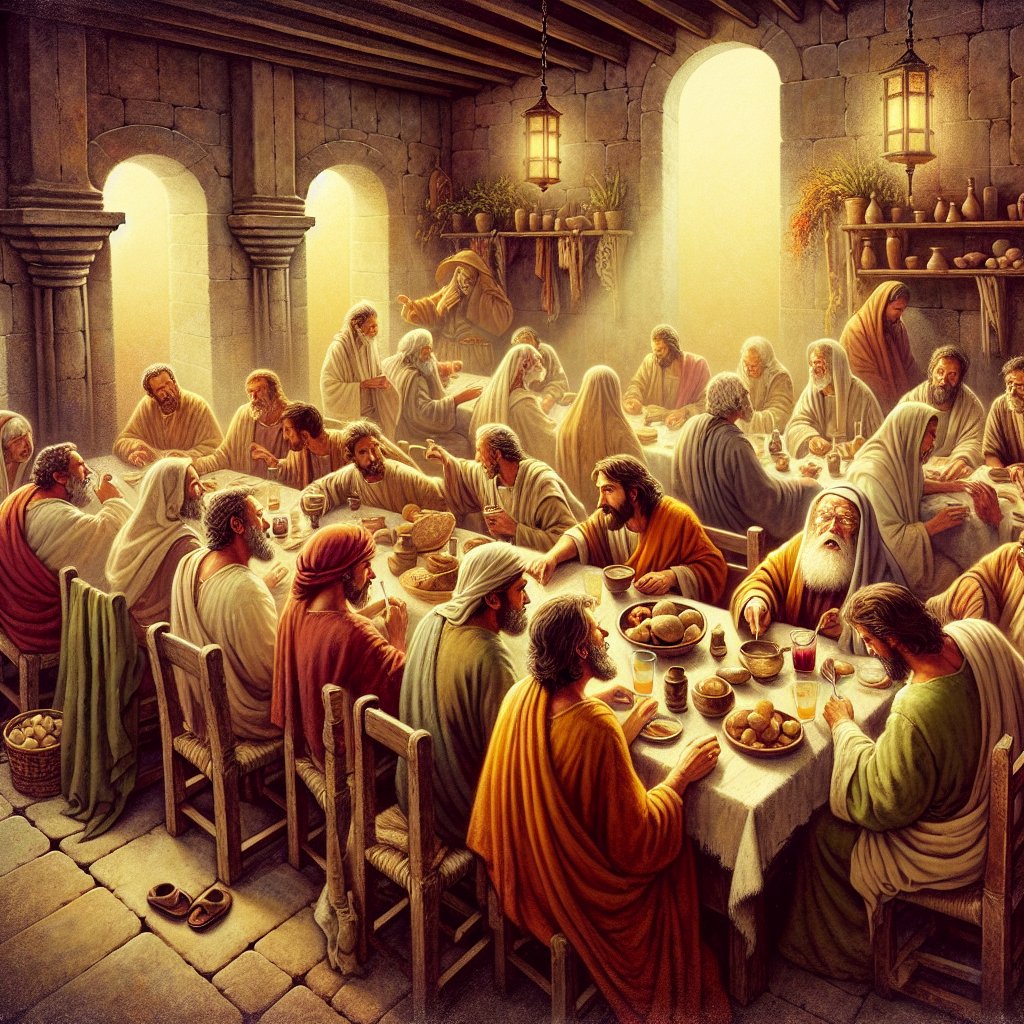
“But when some of the Jewish religious leaders saw him eating with these men of ill repute, they said to his disciples, “How can he stand it, to eat with such scum?”

Mark 2:16

There are four different types of people listed in Mark 2. This is an amazing passage that really does need a closer look. We really do must understand what Jesus did, and what He insisted we do as followers. Is there room for that? There’s something here in verse 16 which we must think about:

  • Jesus, (He’s happily eating and listening)
  • the Pharisees, (the bad guys with religious issues)
  • the disciples, (a mixed bunch of nobodies)
  • the scum, (tax-collectors, harlots, and all-around rascals)

A question is asked by the Pharisees to the disciples–perhaps these religious leaders want Jesus’ followers to see the awful ramifications of the Lord’s conduct. Perhaps the Pharisees wanted to confuse these followers. A divide and conquer strategy?

Jesus has chosen to be with outcasts.

And I believe this was a deliberate decision. Jesus wanted to fellowship, but the religious leaders were not invited. Too bad.

He is eating with these “men of ill repute.” The old KJV brings out a different take, “How is it that he eateth and drinketh with publicans and sinners?” Now, this is fascinating.

I’m encouraged by His decision. It tells me that I still have hope.

“The cumulative testimony of the four Gospels is that when Jesus Christ sees the fallenness of the world all about him, his deepest impulse, his most natural instinct, is to move toward that sin and suffering, not away from it.”


― Dane C. Ortlund, Gentle and Lowly: The Heart of Christ for Sinners and Sufferers

Do You Belong in the Fellowship of Pain?

The hands of a leper

“In one of the villages, Jesus met a man with an advanced case of leprosy. When the man saw Jesus, he bowed with his face to the ground, begging to be healed. “Lord,” he said, “if you are willing, you can heal me and make me clean.”

Luke 5:12, NLT

The Bible text reveals a man who is desperate.  His leprosy has advanced; he is covered with it from ‘head-to-toe.’ He’s an outcast now, completely infected by something he never asked for; he is ‘unclean’ and completely without hope. There is no treatment, the doctors can do nothing.

The leper knows that without the touch of Jesus, he’ll never be healed. 

He knows it; he doesn’t need to be convinced by anyone over the complete hopelessness of his condition. He is lost. And yet he has heard that Jesus can do incredible miracles. Could it be that Jesus can heal his sickness? The leper comes and falls on his knees before the Lord, with his face in the dirt. This man is completely broken; he has no hope, except for Jesus. What else can he do?

Our diseases differ, but our lives have been completely changed by our pain. We all have this in common. 

Our pain and darkness vary. Some hurt more, some less. But we’ve all come to the place where we no longer have illusions of somehow being made whole. Whenever we meet, I think there should be a secret handshake or a password. We all share a comradeship— we’re all part of the same community.  We’re a broken club of tired and decidedly unclean misfits.

We belong to the fellowship of pain.

Lying in the dirt, we start to believe the unbelievable.  Our faith doesn’t activate our healing, as much as it simply guides us to Jesus. We can kneel, and perhaps that’s all we need to do. His presence drives away the fear, the doubt, and the pain. He’s come, and somehow we begin to hope for mercy. Only he can carry us through this.

In times past I’ve struggled with deep dark depression. I’ve had to take meds.  But when I come into Jesus’ presence, all my melancholy is driven out. He comes and I start to hope again.  Am I a stellar example of perfect discipleship?  I think not. But isn’t about us becoming “angels,” perhaps it’s more about us learning how to kneel, and to allow Jesus to touch our hearts.

You must do this, repeatedly.

“The power of the Church is not a parade of flawless people, but of a flawless Christ who embraces our flaws.”

“The Church is not made up of whole people, rather of the broken people who find wholeness in a Christ who was broken for us.”   

–Mike Yaconelli

alaskabibleteacher.com

Trusting in Yourself: A Parable

Luke 18:9-14

“He also told this parable to some who trusted in themselves that they were righteous and looked down on everyone else: 10 “Two men went up to the temple to pray, one a Pharisee and the other a tax collector. 11 The Pharisee was standing and praying like this about himself: ‘God, I thank you that I’m not like other people—greedy, unrighteous, adulterers, or even like this tax collector. 12 I fast twice a week; I give a tenth of everything I get.’”

13 “But the tax collector, standing far off, would not even raise his eyes to heaven but kept striking his chest and saying, ‘God, have mercy on me, a sinner!’ , 14 I tell you, this one went down to his house justified rather than the other, because everyone who exalts himself will be humbled, but the one who humbles himself will be exalted.”

He despised others. As a Pharisee he prided himself as a holy person; he stood before God and congratulated himself. I believe that self-righteousness has many levels. You can be blatant and obvious about it, or it can be subtle and hidden. But we must understand that the Father sees and knows. Notice the “all” here in Isaiah 64:6:

(Hmm. A menstrual rag? You got to be kidding!)

We often advance ourselves by demeaning those who struggle hard with their sin–there are those who see them and somehow suspect that they’re more superior. We don’t come out and say so; but we’ve arrived— but guess what— God (and scripture) knows better than this.

But we’re not dealing here with a hidden self-righteousness. The Pharisee truly believes that he is different from the tax-collector. He stands and doesn’t kneel. He feels comfortable and confident in the holy presence of God Almighty. He’s not like the others. He is sure that he’s holy.

But the tax-collector was brutally honest about himself.

He didn’t need anyone to tell him how sinful he was—he understood his own wickedness. This parable reveals God’s love for those who know that they’re twisted inside. Notice the heart of the tax-collector:

  • “He stood afar off” which showed his awareness of his separation from God.
  • “He wouldn’t even raise his eyes to heaven,” which declared his humility in the presence of God.
  • He kept “striking his chest,” which tells us of a deep pain over his sin against God.
  • He prayed, ‘God, have mercy on me, a sinner!’ This describes his desperate heart.

Both came to pray, but really, that’s all they had in common.

The Pharisee came to the temple to show off his righteousness, the tax-collector out of a terrible despair. It strikes me that the text in verse 11 says the Pharisee “began praying to himself. It seems that his prayer never really met God—he was proud and showy, and ended up doing the things God detests, (Prov. 29:23).

Things really heat up in verse 14. That’s the critical point of the entire story—“one went down to his house justified rather than the other.” Wow! What a statement. One professionally religious man, sure of his holiness, and the other a sinful sinner, who came humble and broken. One showed off his faith–boasting with a legalistic swagger. The other desperate and desolate, completely undone.

But it was the tax-man who became righteous in the eyes of God.

Humility is the foundation of the kingdom of Jesus. In Matthew 5:3-4 makes a lot of sense—to be “poor in spirit” and to “mourn” are the bedrock of a Christian’s discipleship. To be justified (made right) was a gift. He didn’t try to earn it, and there wasn’t a probationary period. The tax-collector now became righteous; the Pharisee carried his sin still inside him.

God wants us to have a broken-heart. He rejects everything else. I suppose that the question is this:

Do you truly mourn over your sin?

Psalm 34:18

Art by Eugène Burnand

Listen Closely to Matthew

“He went out again beside the sea, and all the crowd was coming to him, and he was teaching them. 14 And as he passed by, he saw Levi the son of Alphaeus sitting at the tax booth, and he said to him, “Follow me.” And he rose and followed him.

“And Levi jumped to his feet and went along.”

Mark 2:13-14, ESV

My name is Levi, and I once collected taxes for Rome. It was a very good living–it’s funny, but my parents chose my name– “Gift of God.” They were pious Jews who dreamed I would be more than I was. I sometimes wonder. Did they understand what Jesus was calling me to become?

As a tax collector, I was considered unclean. A very small step above a leper I guess. The Temple was off-limits for me; so I never had any sacrifice for my many sins. I carried my guilt like a heavy jacket on a hot day–some would say that God turned His back on me. I was seen as a collaborator, a betrayer of my people. I had been excommunicated forever.

Do you know what it’s like to be one of the damned?

My friends were sinners like me. In some dark way we understood each other, for we were all outcasts. Some of us were thieves, drunkards, and whores. Some of us were blind or disabled–all were undesirables. We became the community of those damned to hell.

My tax booth was situated at a crossroads, the ideal spot for collecting taxes. No one carrying goods could get by–they had to pay me first. I soon became wealthy, and unfortunately, very recognizable (which was dangerous). I had Roman guards that protected me.

There were times I wondered if that was all my life was good for, collecting coins for Rome.

Jesus was teaching near my booth one day.

I listened to Him closely. I prided myself as a good judge of character, I knew when someone was lying–my business taught me that. I immediately knew that I had never seen or heard anyone quite like Him.

Jesus quickly turned and stared directly at me. My heart stopped. I felt His eyes searching and I realized that He looked through me. He knew exactly who and what I was all about, and that unnerved me. I wasn’t seeing Him, rather it was He that saw me.

“Come, follow me.”

Suddenly I knew that all I attained in my business was a big pile of nothingness. I can never get over the shock of those words– Jesus, the Messiah wanted me. He had put His call on me, someone who was very much lost.

Why me? Who am I?

To follow wasn’t negotiable. I looked down at the silver and gold and realized they were nothing but piles of dirt. I left the coins on the table and walked away. If anything, I was sickened by my world of money.

I have never questioned that moment. What would you have done in my place but follow Him?

We had a grand going-away party that night. I of course invited all my disreputable friends. The rooms quickly filled up with whores, drunks, and the outcasts. Jesus shared many wonderful things with us. Never had anyone love us like Him.

We had never experienced this before!

Mark 2:15-17, ESV

The Pharisees were absolutely livid. They began to verbally rebuke Jesus and His disciples for setting down to eat and fellowship with us. In their minds we were the damned. My home was unclean, my family unclean–we were all filthy.

But that was not the way Jesus saw us. He loved us when nobody else would.

alaskabibleteacher.com

Photo: “Matthew, the Chosen”

Those Strange Christians

I was thinking about this today.

Do you have any idea how ridiculous unbelievers must see us? Just imagine for a minute that you’re on the outside of faith looking in.

———————

They get very solemn as they slowly take the bread and wine. They say that when they sing it’s to God Himself. Some get loud raising hands in surrender to Him. Some will even dance in the worship of someone who’s invisible. How bizarre is that?

They call a man who died a long time ago, they declare that He was their Lord and Master.

They’re gathering to read from a special and “magical” book, and they say that it speaks to them. They talk about living a life separated from Him. They truly think that others need to join them in this silly group. They regard each other as brothers and sisters and they serve each other.

They tell us that Jesus is God in human flesh, who was put to death on a cross and is now alive. They also believe that His blood saves them from their “sin.” These very odd ones think this man is going to return and rule the world, physically bring the Kingdom of God to this planet.

How very odd of them. How very strange these Christians are.

—————————

There exists a letter written to Diogenes, who is known as the Cynic. It was written around 130 AD. This letter itself is fairly extensive. I suggest that you read it in its entirety. It describes the faith and beliefs of the Christian to a man who really has no idea about them but wants to understand–here is a small portion of this epistle. Remember that this is one of the very first observations of our Faith:

“They live in the flesh, but they are not governed by the desires of the flesh. They pass their days upon earth, but they are citizens of heaven. Obedient to the laws, they yet live on a level that transcends the law. Christians love all men, but all men persecute them. Condemned because they are not understood, they are put to death, but raised to life again. They live in poverty, but enrich many; they are totally destitute, but possess an abundance of everything. They suffer dishonor, but that is their glory.”