Jesus Restores Peter (and Me)

15 “When they had finished breakfast, Jesus said to Simon Peter, “Simon, son of John, do you love me more than these?” He said to him, “Yes, Lord; you know that I love you.” He said to him, “Feed my lambs.” 

16 He said to him a second time, “Simon, son of John, do you love me?” He said to him, “Yes, Lord; you know that I love you.” He said to him, “Tend my sheep.” 17 He said to him the third time,” 

“Simon, son of John, do you love me?” Peter was grieved because he said to him the third time, “Do you love me?” and he said to him, “Lord, you know everything; you know that I love you.” Jesus said to him, “Feed my sheep.'”

John 21:15-17, (context vv. 15-19)

Peter’s denial was a public one, and it was important that his restoration be public as well. It may come as a shock, but Peter needed to do this–even though it was a grief to him (verse 17.) It was necessary for him to heal. It was also a clear testimony to the others that Peter was completely restored.

Repeatedly in this passage, love gets linked to service. (Can you see this, it’s important that you do.) The Lord asks Peter if he really loves him, and most likely it was a solemn affair, not something trivial or casual. The word used is ἀγαπάω, agape–this is the type of love that God has for people. It’s a love that gives 110%.

The third time the word for love is different though, the word used is φιλέω, philo–this is a type of love that a man has for others, a brotherly kind of love. Something good, but less than agape.

And each time Peter responds, he uses the brotherly type of love. I don’t mean to be confusing here, but every time Jesus uses agape to Peter, Peter responds with philo. It’s as if Peter is struggling with loving Jesus wholeheartedly. Perhaps Peter was ashamed of his denial.

We must saturate our work with love. We must serve, but love is to fill our efforts. Always.

Love can’t be seen unless it has a physical aspect. Love can’t be abstract, a vague feeling, or a hazy concept–it has to be seen by others. Jesus’ sheep (and lambs) must be fed, and watched. This is now Peter’s call to ministry.

This is Jesus’ ministry as well.

Apparently, there is plenty of this kind of work to go around! Isaiah prophesied about Jesus’ work in Isa. 40:11. This now becomes Peter’s work as well.

“He will tend his flock like a shepherd;
he will gather the lambs in his arms;
he will carry them in his bosom,
and gently lead those that are with young.”

Whether or not Peter was the first “pope” is debatable. But it’s clear that Jesus focused on Peter. And isn’t it just like him to turn our failings into victories? Peter’s denial was now his ministry to others. It dealt with the pride issue, which often disrupts true ministry to his flock.

“And I will give you shepherds after my own heart, who will feed you with knowledge and understanding.”

Jeremiah 3:15

Calibrating Your Heart to His

scalingchart1080tf3
A chart used to calibrate video

“May the patience and encouragement that come from God allow you to live in harmony with each other the way Christ Jesus wants.”

Romans 15:5

“Now make me completely happy! Live in harmony by showing love for each other. Be united in what you think, as if you were only one person.”

Philippians 2:2

The science and method of calibration provide us with a way to bring two, or more things into harmony.  It’s done frequently on diverse things such as scientific instruments, avionics, or music.  Without this need for ‘blending’ things degrade into a symphony of confusion.

A piano is tuned, and the worship leader then tunes into that piano.   

The worship team is blending simultaneous sounds of different pitch or qualities, making chords. This takes practice and a gift. This principle is enhanced when we think of several gears that mesh and turn together.  There is a certain congruity or symmetry that makes it successful. Beautiful music can happen only if the musicians have been calibrated with each other.

We need a calibration of our spirit with God’s Holy Spirit.  We tune in to Him.  His Word is a little bit like a tech manual, showing us, and helping us.  He helps us adjust so that we are harmoniously flowing with Him and with others. Sometimes this takes time.

Have you ever met a believer and they were no longer in harmony? 

I bet you have. They may have a belief that is out of balance.  It may be health or sickness.  That is quite common today.  A common issue is the area of politics. Lately, it’s become a danger for many believers. Be very careful.

I served in San Francisco in the 1980s with SOS Ministries.  There was a small church down in Pacifica that would drive up to ‘worship on the street’ with us.  They were incredible.  They had a sensitivity and anointing that other groups didn’t have.  They loved Jesus very much and loved each other, and it showed.

Within six months they disbanded and went their own ways.  I was told that their meetings were essentially gutted out.  They became fanatical about the ‘anti-abortion’ message to such an extreme they didn’t even have a church service anymore.  It was now nothing more than a political rally, and they were not even reading the Word or worshiping together. 

They were no longer calibrated to the Spirit or the Church. They were no longer aligned with the truth.

I have to be regularly adjusted to harmony with the promises of God.  I need my gauges to be consistent with the Word.  Not to be ‘heavy’ on certain things or ‘light’ on others. I can easily err on emphasis. That’s a real possibility. If I’m not calibrated, I become a spiritual danger to others, my family, and to myself.

“Finally, all of you, have unity of mind, sympathy, brotherly love, a tender heart, and a humble mind.”

1 Peter 3:8

alaskabibleteacher.com

You’re a Steward of Your Pain

Some time ago I came across a story that connected. A visiting speaker stood in front of a congregation and shared a painful incident from his childhood. He wanted to bring healing. After he spoke, an elder came and spoke to him–

“You have learned how to become a proper steward of your pain.”

The visiting speaker was profoundly touched by this. Finally, something came together in his heart and soul. Yes, he did learn how to deal scripturally with those ugly things from his past. He was becoming a proper steward of his pain.

The word for steward in the original Greek is oikonomos. It literally means “a keeper of a home.” It describes a manager, a superintendent to whom the head of the house or proprietor has entrusted the management of his affairs, the diligent care of receipts and expenditures.

The issue seems to be of management, how can God use these awful things for building His Kingdom?

No question about it, we live in a world of darkness. Each of us has been touched by hard things. Scars are part of our lives. When we come to Christ they come with us. All of these grim things are a real piece of us, we have been hurt (or maybe we’ve wounded others?)

Are you a good steward of who you are? Whether you’ve experienced trauma–something physical, sexual, or perhaps a mental illness. It could be any scar you carry from your past, and no one is immune from them it seems. You’ll find freedom if you can use these things for Him and his Kingdom.

We must see and understand that Jesus has taken everything and redeems it all for His glory.

He understands us fully–our past, present, and future. He ‘knows’ us–the real and hidden us. The challenge I suppose is to take these sad events to the throne. He alone can heal and then use that which has devastated us. What was intended to destroy is now meant to build.

Satan has afflicted you in his dark attempt to destroy you.

Jesus intervenes to save. As we grow to accept this, the Holy Spirit comes as our comforter and guide. He starts to teach us true redemption, and the incredible healing that he brings with him. It really is his work, not ours. We finally understand. It’s then we become broken healers that God can use.

The light has truly overcome the dark.

We’re being taught (sometimes very slowly) to carry all of these things and plead the blood of Jesus over our past. He covers us completely. He has redeemed us. Luke 1:68 explains much clearer than I can:

“Blessed is the Lord, the God of Israel because he has visited and provided redemption for his people.”

Becoming a steward of our pain is his doing. We’re able to touch others with these things that would cripple and destroy others. He has made us “managers” of these things, and we are taught to teach others, declaring that God has completely saved us. He works miracles!

“Therefore, if anyone is in Christ, he is a new creation; the old has passed away, and see, the new has come!”

2 Corinthians 5:17

We’ll sovereignly meet those who need to hear our story. We’re being transformed into authentic witnesses. Yes, at times these awful things still hurt, and I suppose that’s to be expected. But we’re learning to manage them. We’ve become real-life stewards of our pain.

That’s why we can be so sure that every detail in our lives of love for God is worked into something good.”

Romans 8:28, Message

alaskabibleteacher.com

He Just Showed Up!

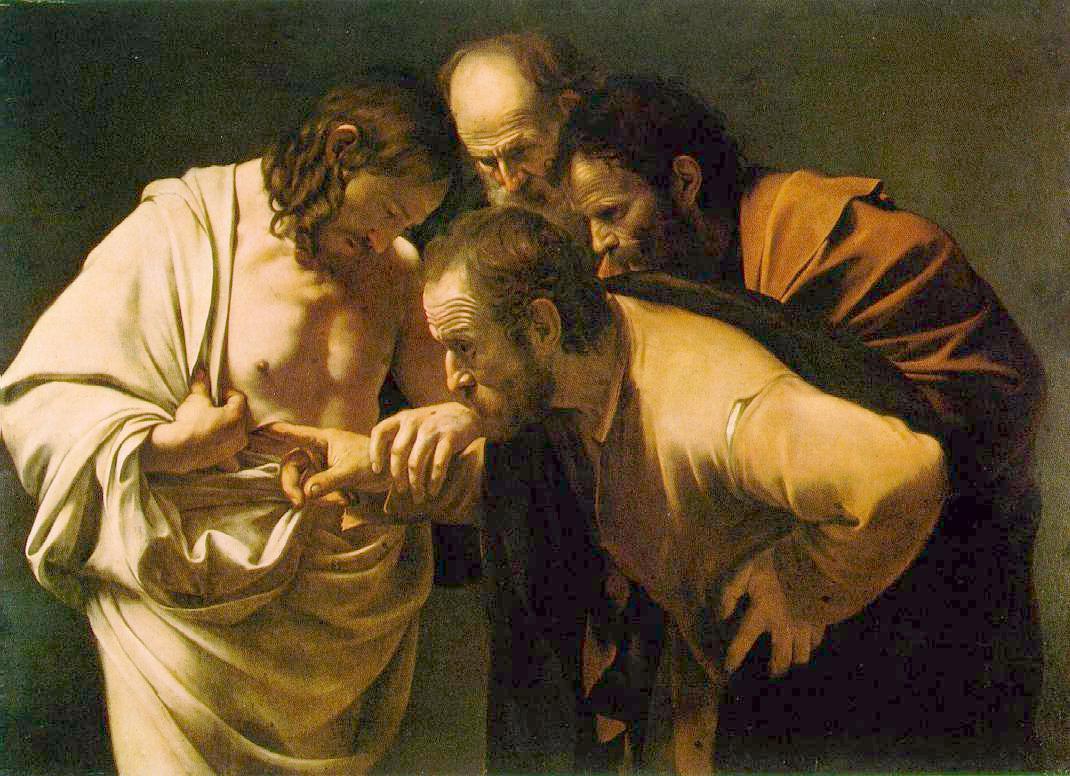
36 “As they were saying these things, he himself stood in their midst. He said to them, “Peace to you!” 37 But they were startled and terrified and thought they were seeing a ghost. 38 “Why are you troubled?” he asked them. “And why do doubts arise in your hearts? 39 Look at my hands and my feet, that it is I myself! Touch me and see, because a ghost does not have flesh and bones as you can see I have.” 

40 “Having said this, he showed them his hands and feet. 41 But while they still were amazed and in disbelief because of their joy, he asked them, “Do you have anything here to eat?” 42 So they gave him a piece of a broiled fish,43 and he took it and ate in their presence.”

Luke 24:36-43

Sometimes in a story, everything gets really vivid.  Luke’s account ignites that in me.  With the flair of the dramatic– Jesus, freshly resurrected from the dead, bursts into the room and he scares the bejeezus out of everyone.  I guess it was one of those times when you just had to be there in order to really get it.

“Frightened” and “terrified”–(it takes two words to describe this spooky experience.) 

Not only that, but they got really freaky, after all, He had to be a ghost!  I can only imagine their fear at that moment.  I think everyone present bolted to the door.  But wait for a second!  “The door is still locked?! OMG, what can we do?”

We see Jesus [I think he was lovingly amused] point out that he was still a human being–look at me!  Think for a second, have you ever tried to get a pet dog, who is so scared he’s peeing on the floor, to come to you?  I see the disciples kind of half crawling, stooped, and very unsure about this. 

They slowly encircle Jesus and as they come, I have to believe He’s laughing. He has returned from the dead.

He is laughing from the pure joy of one who has endured the worst of very real hell.

Jesus has come out on the other side, intact.  I believe Jesus is reveling at the moment, and he is among friends whom he loves and vice versa.  He is alive, he has done the impossible, and I can only imagine everyone is laughing and crying at the same time!

I believe each one of us has walls. 

Yes, you and I.  Walls. These borders give us security and protection.  We feel we have to have them or else.  The disciples feel like there’s security in numbers and safety in their walls that protect them.  I can so relate.

But Jesus insists on penetrating our walls.  

And suddenly we come ‘face-to-face’ with the dead one who’s now alive. 

Look closely now, it is resurrection power–and it’s the most powerful force in the universe, more intense than the sun.  A nuclear bomb can’t match this intensity of light and power. It’s funny, when Moses prostrated himself before the Lord’s glory, he changed.  Not only that, but he had to take precautions to cover his face when he returned to camp. These disciples however have just seen the glory of God first-hand.

And they weren’t even wearing protective goggles!

As broken believers, we must be prepared for any eventuality.  Jesus can and will burst into our homes, and into our very lives.  Can you hear him laugh? 

When he comes, nothing really is the same again.  He loves his disciples too much to leave them in a dark stuffy room. 

The resurrected Jesus is coming for you!

**********

“Here I am! I stand at the door and knock. If you hear my voice and open the door, I will come in and eat with you, and you will eat with me.”

Revelation 3:20, NCV

alaskabibleteacher.com

Are You Carrying a Heavy Burden?

“Come to me, all who labor and are heavy laden, and I will give you rest. 29 Take my yoke upon you, and learn from me, for I am gentle and lowly in heart, and you will find rest for your souls. 30 For my yoke is easy, and my burden is light.”

Matthew 11:28-30, ESV

To be honest, this passage has yet to be fully processed by me. Sometimes I understand, but then I forget. Because of this, this post is preaching to me, and if you decide to bail on reading this that’s ok. I write because I truly believe that these things are possible. I don’t always put this passage in action. I ask for your forgiveness.

Jesus issues an invitation to His listeners that’s earth-shaking. He sets Himself is far above the rule of the Pharisees; these declarations can’t be explained away. Jesus puts Himself as the only one that brings true peace. That’s pretty arrogant, especially if it’s wrong.

But it’s really a false statement. Jesus bursts though this confusion, and life eternal is what He carries to each believer.

The Pharaeses have long ago decided the Law was the the Mosaic yoke that kept the people in line. Jesus taught otherwise.

“Come to Me.”

I suppose the operative word here is “Me.” Jesus Christ is the exclusive giver of peace and strength. He must be acknowledged as the believer’s complete focus–He is a man, not a religious set of rules and regulations. When we decide to follow Jesus it puts us at odds with legalism.

“All who labor and are heavy laden, and I will give you rest.

Interesting, the Greek word for labor means “exhausted or toiling.” The word for heavy laden has the idea of someone who is fully loaded, carrying a pile, it also has the implication of having spiritual anxiety.

All means everyone–not a select few, nor those who think that they’re doing all right on their own. “Labor and heavy laden”. Both words describe those who carry burdens, and who have backs that are bending because of a difficult load. I believe that they’re those who struggle with defeat and failure.

The rest He gives is profound. And notice the word “give.” His desire is to free us, and that dear one is a gift, it’s not earned or achieved. The word “rest” means to refresh or to make calm.

Take my yoke upon you, and learn from me,

We lay down our cares, concern, and all spiritual anxiety and to receive another kind of weight–His yoke. Jesus also calls us to another burden. We are called to “learn” from Him.

In training oxen, a wise farmer has the new, weaker one to be yoked with the one who is older. They are to be trained properly pull the plow. The older one teaches the younger.

Two things I ask that you consider:

  • We are learners. A student discovers that his teacher’s lessons can be challenging. I remember trying to grasp Geometry. I went around and around trying to understand. The teacher was patient, and she made an effort to communicate. In the same way the Holy Spirit works to share heavenly truths to me. One of His titles is “Teacher.”
  • The Lord deeply desires to release me from my “spiritual anxiety.” Perhaps I offend Him everytime I pick my sinful burden up. I do this fairly often. But He promises us we’ll have we’ll have a spiritual victory if we choose to follow Him.

“For I am gentle and lowly in heart, and you will find rest for your souls.”

“Gentle.” and “Lowly in heart.” This is how He explains Himself to us, which is pretty much opposite of what we think Jesus is. Somehow when we forget the yoke, sin and Satan muddles our thinking, and we often walk out our spiritual anxiety. This is incredibly exhausting, and our fear grows and we try hide it.

I suppose to be yoke-less opens us up to everything religious effort has to offer.

The Greek for “rest” is defined as an intermission or cessation of any activity, rest or recreation. It’s good word rhat when we become quiet; outward and inward. That seems to be opposite of what we think we must do. Often we ratchet up our activity to somehow show the Father that we deserve His love.

For my yoke is easy, and my burden is light.”

What Jesus offers us is His own yoke of unconditional love. He replaces out heavy burden with His gentle weight. The yoke of Jesus replaces the burden of legalism. What He gives is of no comparison to what we think we might understand.

The yoke of Jesus is fairly easy. It’s meaning in the original is wonderful. It means something that’s mild or pleasant. Jesus’ gift of a yoke replaces our spiritual anxiety. We don’t walk in the constant fear of our failure to measure up.

“Easy” and “light” is the very nature of His yoke of discipleship.

Following Him shouldn’t be grueling or hard, and yet we stilldon’t grasp this .What Jesus offers is our chance to become real. He wants us to share His yoke, but it’s not hard. Yes, we must forsake everything to be one of His followers, but Jesus offers us far more than we ever dreamed.

alskabibleteacher.com


Jumpstarting a Prayer Life

We must (MUST!) pray as believers in Jesus.

Prayer is the oxygen of our spiritual life. We must breathe, or else. When I go to my doctor she puts an oximeter on my finger so she can assess how my lungs are using oxygen.

I suppose if we would put it on our “spiritual finger,” might it reveal something?

We don’t know exactly know how to pray, and I don’t think communicating with God isn’t easy for us. We must be taught. The desperate disciples wanted to learn how to pray–they didn’t know how, (Luke 11:1-2). We also need to have Jesus teach us.

We can only learn how if the Spirit teaches us.

Also, we must practice praying. We may do it terribly rotten, but we shouldn’t give up–it’s not natural–I suppose it’s supernatural. We will learn by doing. We may get discouraged but we must keep at it. Even if you’re a pro, the Holy Spirit will make sure you keep learning new things. Our walk should always grow deeper. If you’re a good student He is happy to teach you.

For me praying the Psalms is good practice, and there are 150 of them. The Jewish people have a 4000-year start on us–they’ve used the Psalms as their prayer/praise book. My sense is that this covers every human need–the entirety of our spiritual walk!

I think that Psalms 103 might be a great place to get started.

I’ve been told by some that the “Lord’s Prayer” is quite useful as well. I guess if you honestly take it phrase by phrase, something good will happen. I’m still learning (and I suspect I still will).

Below we find a way to jumpstart our prayer life. I hope you can use it.

One more thought.Conversational Prayer” has been a good thing for me lately. Talk with Jesus as if He was in the same room with you (He is) and just converse. I once heard of a man who put an empty chair in his prayer closet, it helped him understand that Jesus was right there with him. He said it really helped.

Share with Him your ups and downs, and it’s okay if you feel like you’re screwing it up. Relax. He’s your Father. He loves you.

He wants to be with you so much. He has many things to show you.

alaskabibleteacher.com

Becoming Hidden

servant-king

“But it is not this way among you, but whoever wishes to become great among you shall be your servant.”

Mark 10:44

I must admit that I’m processing something right now.

I suppose its implications could turn everything upside down,’ at least for me anyway. Some scientists have postulated that our planet is due for a complete magnetic switchover. This is when the north becomes south and vice versa. My issues at this moment are not quite that cosmic.

There are 7,000,000,000+ people now alive on this planet.

Sometimes I wonder if many of my issues come from not seeing this. It seems that there’s an intoxication of success when we become increasingly confused over ‘who’ we are. We think it’s about our efforts and our giftedness. Pride drives us, even among mature Christian believers. This demands another look.

3 “Don’t be selfish; don’t try to impress others. Be humble, thinking of others as better than yourselves. Don’t look out only for your own interests, but take an interest in others, too. You must have the same attitude that Christ Jesus had.”

Philippians 2

Jesus was not driven like we seem to be.

We, on the other hand, think we need to be assertive, (or at least the Christian version of it.) and push our way forward. However, Jesus’ message and teaching were all about emptying Himself into being God and becoming a servant of servants. This is the arresting fact we fail to consider–

Jesus did all of this while wearing a towel, not a crown!

“Jesus, knowing that the Father had given all things into His hands and that He had come from God and was going to God, rose from supper and laid aside His garments, took a towel and girded Himself. After that, He poured water into a basin and began to wash the disciples’ feet.”  

John 13:3-5

He could have just done a ‘teaching’ on servanthood and I’m reasonably certain it would have been enough. But instead, Jesus put ‘skin on His words’ and actually got down on His knees to wash dirty feet. His disciples freaked out when they saw him do this.

It was something that the disciples would never forget.

6 “Though he was God,
    he did not think of equality with God
    as something to cling to.

Instead, he gave up his divine privileges;
    he took the humble position of a slave
    and was born as a human being.
When he appeared in human form,

 he humbled himself in obedience to God
   and died a criminal’s death on a cross.”

How can we not do this? Isn’t this the Father’s will for us?

These are hard questions to ask, but to be perfectly honest, isn’t our discipleship mean that we empty ourselves daily? Can we find peace and fulfillment by becoming unknown? Is this what we’re missing in becoming Christlike?

These are very hard questions.

“Humility is perfect quietness of heart, It is to expect nothing, to wonder at nothing that is done to me, to feel nothing done against me. It is to be at rest when nobody praises me, and when I am blamed or despised. It is to have a blessed home in the Lord, where I can go in and shut the door, and kneel to my Father in secret, and am at peace as in a deep sea of calmness, when all around and above is trouble.”   

Andrew Murray


(All verses are from Philippians 2, NLT, unless noted.)


alaskabibleteacher.com