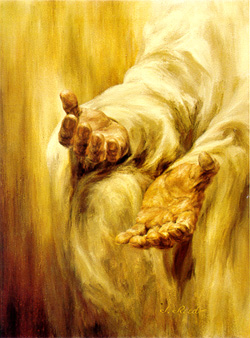
The Authority of the Lord Jesus Christ

“My teaching is not mine, but his who sent me. 17 If anyone’s will is to do God’s will, he will know whether the teaching is from God or whether I am speaking on my own authority.”

John 7:16 (context, Vv. 14-24)

Spiritually, Jesus is superior to everything and everyone. All that he did in the Gospels revealed that salient fact–whether he was healing the sick, walking on water, or teaching the Sermon on the Mount, he had total command. An authority soaked all that he did, just like water saturates a sponge. (See Matthew 28:18.)

The Greek word most often translated as “authority” (exousia) in the New Testament basically means: “right, permission, freedom.” Jesus was completely free to do whatever he knew was the Father’s will–he had full and total authorization to do whatever he wanted. (That seems to be what his baptism was all about. See Luke 3:21-22.)

Kittel’s Theological Dictionary of the New Testament

The Greek word “teach” (didaskō) in the NT means “give instruction, impart doctrine, to explain.” Jesus’ teaching was a marvel, he explained God’s kingdom to us crisply, succinctly, and precisely. All we need to understand was freely given to us in red letters. Everything necessary to us was taught with confidence and freedom. (See Matthew 7:29.)

Since Jesus perfectly combined the two words, both teaching, and authority, He could dictate to us everything we need, everything we must have, in straightforward terms. This can’t be stressed enough, the scripture we read–when ignited with the Holy Spirit, seems to be the only thing that can change the human heart.

The preceding verses in this passage reveal the setting for this statement.

  • Jesus stays out of Jerusalem because of the murderous hatred of the Pharisees.
  • There was a deep concern in his family who doubted Jesus’ timing and direction.
  • The origin of his teaching was questioned. He was speaking with the authority of the Messiah. Jesus completely understood the trustworthy source of his teaching.
  • There was a general consensus among the people of Jesus’ authority. Many were finally arriving at a decision in favor of him. Many would reject him.

We have never seen anyone of his impressive caliber, and we can only imagine the impact he was having on everyone he met. Under the Spirit’s direction, his disciples would retain all that Jesus did and taught. (The author of this passage was the Apostle John, and when you read his letters to us, we see that his memories were quite vivid.)

The Lord’s authority soaked all that he did, just like water saturates a sponge.

So what do we do now? What kind of “lordship” does he have over us? First of all, we learn (slowly) that we MUST teach ourselves to submit to our lord, constantly. He carries the authority we need, the authority human beings require. The Holy Spirit knows exactly how to pierce our pride and independence. Our teacher, comforter (and coach) understands us perfectly.

“His authority on earth allows us to dare to go to all the nations. His authority in heaven gives us our only hope of success. And His presence with us leaves us no other choice.”

-John Stott

To Leave Your Nets

Tools used to mend nets

“And going on from there he saw two other brothers, James the son of Zebedee, and John his brother, in the boat with Zebedee their father, mending their nets, and he called them.”

Matthew 4:21, ESV

“And immediately they left their nets and followed him.”

Mark 1:18

To mend nets was tedious but necessary. You would take your net and spread it on the ground in an open space. Every knot would be carefully examined. All holes would be repaired. Nothing was overlooked. Fishing nets were painstakingly maintained. Every day, without fail.

Fish would school, and if your gear was right, and you were in a prime place, you could catch a lot. But simultaneously, you could let hundreds of fish escape through a hole in your net. Each fish that escaped meant money lost.

Jesus walking along the beach surveyed the boats and crews. Since most of these guys had worked through the night, they were tired and maybe a bit “punchy.” Some had gotten lucky, while others had little to show for working so hard. I suppose the different crews teased each other as they unloaded.

Jesus walked through the bunches of fishermen. He looked at their hauls to see what they had caught. But it wasn’t the catch He was looking at, it was the men. It was from these laboring fishermen that He would choose. These men were rough-and-tumble rednecks. If they had chewing tobacco back then, they would use it.

He looks, sees, and commands.

Now if you are looking for disciples– future apostles and leaders, the seashore is not the best place to recruit. They really have a rudimentary education. No theology, and just a meager understanding of Jewish ritual and religion. Essentially there was no time for them to think outside their occupation. Sure there just might be one, or two that possessed more, but that would be the exception.

But Jesus had no desire to interview them, and take the best of the lot. He didn’t have a Human Resources Department, and there were no tests and no forms that had to list references. He simply commanded, and those who understood followed. Only after they left it all did He get their names and addresses. I think that it is the same today.

Will we leave our boat, with your nets?

Really, you can keep mending or follow Him– it’s your choice. Most of the time though, decisions have a tendency to be irrevocable. Perhaps you have a moment, an instant of time to decide.

Sometimes mending nets can be back-breaking and tedious. But following the Lord Jesus is an unknown; too many choose to keep fixing their nets. Others though are launched into something new, and eternally significant.

The glaring truth is the necessity of obedience to Jesus’ command. There is no other voice we must hear. As a matter of fact, hearing (and really apprehending) is the only foundation we can trust to make our obedience true.

You can keep mending your nets and preparing for another night on the water. That is always your prerogative. But if you decide to follow you will need to leave what you know behind.

That is authentic discipleship.

“Rest in this – it is His business to lead, command, impel, send, call or whatever you want to call it. It is your business to obey, follow, move, respond, or what have you.”

-Jim Elliot, missionary to the Auca Indians

Her Gorgeous Eyes

“You are as beautiful as Tirzah, my darling,
    as lovely as Jerusalem,
    as majestic as troops with banners.
Turn your eyes from me;
    they overwhelm me.

Your hair is like a flock of goats
    descending from Gilead.
Your teeth are like a flock of sheep
    coming up from the washing.
Each has its twin,
    not one of them is missing.

Song of Solomon 6:4-6. NIV

Her beauty stuns him.

He’s completely overwhelmed and totally undone, he’s looking for words to describe her. He chooses metaphors that we really don’t get and descriptions that seem a little odd. But the emotions of the human heart haven’t changed.

Love is still love, and beauty is still beautiful. Even if our words have changed.

He chooses concepts that we understand–words like beautiful, darling, lovely and majestic. But we really don’t understand the nouns–Tirzah, Jerusalem, and troops carrying banners (and that’s just verse 4!) And yet that’s how he communicates his love to her.

But we do get verse 5, at least in the first half.

“Turn your eyes on me; they overwhelm me.” Love still does funny things to each one of us–but “eyes” still convey love. When we’re really in love we obviously see the outward, but true love sees the inward too.

I think that love can pierce the heart like nothing else.

Again, the descriptions are funny, and believe me–they get stranger–goats, smelly sheep, and having a mouthful of teeth!? And yet he carefully weaves these ideas that still have concepts that are vaguely relatable, but still, I have to admit, they are hysterical. If I tell my wife that her hair is like a “flock of goats” she is liable to punch me.

The metaphors may be outdated, but the ideas behind them are not. We still understand real-life concepts like beauty, love, and true sight. These are concrete–they still ring true today. Time has not diminished them. They are bedrock solid.

But notice, it’s the eyes that get him.

He sees her eyes, and that’s all it takes–they overwhelm him. A person’s eyes can often reveal the person that’s really inside, which is something we can’t really hide.

Can Jesus see your loving gaze?

The Song of Solomon lover sees her love, and I really believe that Jesus does see the love that a believer has for him. Often we make love a one-way deal. God loves me (John 3:16). That is true–I know that God loves me, that is indisputable. But, do we really ever return his love?! maybe, he’s overcome by my gaze at him? Is that heretical?

His descriptions are funny, and believe me–they do get stranger–goats, sheep, and a mouthful of teeth!? And yet he carefully weaves these ideas that still have concepts that are vaguely relatable, but still, I have to admit, they are hysterical. (If I tell my wife that her hair is like a “flock of goats” she is liable to punch me).

But notice, it’s the eyes that get him.

He sees her eyes, and that’s all it takes–they overwhelm him. A person’s eyes still reveal love and kindness, they can reveal the person that’s really inside, which is something we can’t really hide.

Can Jesus see your loving gaze?

(I want to change. Help me Lord Jesus!)

He sees her love, and I really believe that Jesus does see the love that a believer has for him. Often preachers make love a one-way deal. God loves me (John 3:16). That is true–I know that God loves me, that is indisputable. But, do we really ever return his love? Just maybe, he’s overcome by my gaze at him? Is that heretical?

Being Tethered to the Cross

We live in this place.

St. Francis of  Assisi once wrote, “The devil never rejoices more than when he robs a servant of God of the peace of God.” 

Sometimes I think I’ve made the devil dance far too many times.

I confess that peace has never been really high on my list. Love, joy, kindness, and even goodness are clear priorities. Peace… not so much. Until it’s not there. And then I get frantic by its absence and look for it with manic bewilderment.

I’m panting for some sign that God still loves me. Anxiety eats at me. I beat myself up by my last failure. The guilt of my latest sin grows until it looms larger than the blood that saved me. Sometimes religious people have the most neurosis.

I’m afraid that we are taking “the present tense’ out of the Gospel. The past tense is far preferable to us as we manage the Christian life. We like to make check marks on our list. Repentance– check. Baptism– check. Bible study– check. I think it gives me a definite feeling of ‘maturity.’

But these matter little without intimacy with Jesus.

I read Luther 30 years ago. (And Bonhoeffer would say something similar.)

“When our Lord and Master Jesus Christ said, ‘Repent,’ he willed the entire life of believers to be one of repentance.”

Martin Luther

This is the first of his 95 Theses nailed to the door of Wittenburg. There is a present tense here we can’t ignore. I don’t just repent over smoking, beer drinking, fornication, or hypocrisy, once and done. But my entire way of living is to be one of repenting.

Repentance is a ‘moment-by-moment’ grace.

“All of the Christian life is repentance. Turning from sin and trusting in the good news that Jesus saves sinners aren’t merely a one-time inaugural experience but the daily substance of Christianity. The gospel is for every day and every moment. Repentance is to be the Christian’s continual posture.”

John Piper

Luther’s last words, on his deathbed, wrote on a scrap of paper these words, “We are beggars! This is true.” Thirty years before, he was only echoing his first thesis. It seems dear ones, we are to live at the foot of the cross. Everyday. Because we desperately need to.

“Be quiet!” many of the people yelled at him. But he only shouted louder, “Son of David, have mercy on me!”

Mark 10:48

Enjoy Your Pig Slop

“After he had spent everything, a severe famine struck that country, and he had nothing.”

“So he got a job with one of the citizens there who sent the son into the fields to feed pigs. 16 The son was so hungry that he wanted to eat the pods the pigs were eating, but no one gave him anything.”

“The Prodigal Son,” Luke 15:14-16

God has a definite way of arranging things to get our undivided attention. The prodigal had blown through his inheritance money and now had nothing. And then there was this famine–a really bad one. (The word can be translated, as “violent.”) I think the Father was working.

Flat broke and having a need to eat, he started looking through the want ads for work. All he found was an ad for a “pig feeder.” That was it, there was nothing else to be had. So now began his new career in porcine agriculture! He was desperate and he was hungry.

A Jewish boy feeding pigs. Oh boy, how the mighty have fallen!

Verse 18 in this passage takes it a step further. As he poured out the slop the things he was feeding the pigs looked mighty tasty. His mouth began to water. He thought seriously about reaching into the trough and grabbing some of the good pods for himself. (Several days without food does funny things to a man.)

God does some interesting things to bring this prodigal home. Not all of them are pleasant and self-affirming. His circumstances got pretty brutal. He still allows hard circumstances to bring back the stupid. It’s very likely his soul was so valuable that this kind of intervention was necessary.

“When he realized what he was doing, he thought, ‘All of my father’s servants have plenty of food. But I am here, almost dying of hunger.”

(v. 17)

What happened at that precise moment of real repentance can be seen in the following translations of verse 17:

  • “he came to himself,”(King James Version and ESV)
  • “he came to his senses,” (Christian Standard Bible)
  • “he realized what he was doing,” (New Century Version)
  • “he turned again to himself,” (Wycliffe Translation)

That I suppose is the power of the trough. It’s a hard place to live.

The prodigal son is jolted by a very real revelation of home. And even though he grossly underestimates the love of the father, he leaves the pigs and returns. No longer does he have any desire to eat pig food.

Often the side effects of our own stubborn rebellion debase and shame us. It reduces a man or woman to a place of ruin and failure. We feel worthless and very much defeated. We know we’re a dirty rotten mess and we believe Satan’s infamous lies about our ‘impossible-to-forgive” sin.

The spiritual danger in self-degrading thoughts and feelings is that we will start to believe things such as, “God’s Holy Spirit can’t help someone like me” or “I’m helplessly addicted to sin” or even “I’m damned without any hope.”

These are some of the vicious lies Satan tells people to keep them in their sin and rebellion. (It has worked well for him over many millennia.) The enemy tells us that we’ll always live with the pigs, and eventually, over time, we will come to enjoy eating the pig slop. Sadly many accept that lie as the truth.

It is not.

God’s Holy Spirit is transformative and powerful; therefore, if we continue to think we are failures and worthless after receiving Spirit, what are we really saying? Do we doubt His power, or question His love? I hope not.

It’s time to come home.

“Because you have been down there Neo, you know that road, you know exactly where it ends. And I know that’s not where you want to be.”

(“The Matrix”)

Ten Thoughts You Need to Understand

How do you handle the pain as a believer–the physical kind especially? What do you do when you want to curl up in a ball and just want to disappear? Please understand that pain isn’t in God’s original plan, it’s entered our world through human rebellion and sin. We who hurt must be aware of this.

Pain isn’t normal, but yet–it’s very much real. Too much. There are 10 things you really must consider right now.

First, before my list, I need to tell you this. There is pain that at times you can’t even imagine how you are going to handle another day. And the doctors have the audacity to tell you point blank, that you need to get used to it because it’s never going to get better. So now you must sort things out–as outside of a miracle, it’s only going to get worse.

Often there will be little help or counsel from other Christians. What do you do as a believer in Jesus? What will your discipleship look like now?

Here are ten thoughts that come to my mind. They’re not in any order, so don’t look for one.

One–Treat false humility as a worse disease than you’re facing physically. You’ll be very tempted to milk out your pain for all its worth. You’ll try to take advantage of others, and you’ll want to complain, and put yourself in the best possible light. But pain and ego were never meant to mix–especially as a disciple of Jesus. Renounce it now. Turn from it constantly. It will always be an issue, to one degree or another.

Two–Never find fault with God. He’s not to blame no matter what the evil one tells you. The Father loves you, and he will carry you all the way through this. Satan always tells lies. You must take a stand against him. Put on your armor! Super-glue Ephesians 6:19-18 into your thought life–and never let go!

Three–You can never lose track of eternity. My special verse is Revelation 21:4, “And God shall wipe away all tears from their eyes; and there shall be no more death, neither sorrow, nor crying, neither shall there be any more pain: for the former things are passed away.” Please keep this front and center. It will help!

Four–You’ll start to learn to see others differently. There’ll always be another believer who has it worse. Think about them, and all that they must deal with. It helps a lot. Also, you’ll discover that your pain will be like new glasses for spiritual astigmatism. You’ll see things much clearer now.

Five–Your walk will deepen. You will learn to be joyful when all you want to do is cry. The littlest things become a cause of great joy. God values your singing more now, especially when you’re singing out of excruciating pain. Your songs are now more precious to him. The Word, and worship music, seem to be more meaningful. Surround yourself with music (and preaching too) that builds you up.

Six–You will discover the art of blending pain into your discipleship. Sleepless nights become diving boards for prayer, reading, and worship. You’ll change and deepen, and that’s always good. There’s something that can only be burned into you by pain. Also, be open to brand new ways of ministry now. Look for doors to open up. They are maybe different than you think.

Seven–You’ll discover that there can be solace in medications and treatments. I know that this is something really practical, but a handful of Motrin or other pain meds will become a special delight and something to look forward to. Also, listen closely to your doctor and therapist. Pray for them, pray they’ll have special wisdom for your situation. (And let them know you are praying for them. They need your encouragement too.)

Eight–You start to see that you’ll never be able to do this alone (and man, do you know it). God is giving you a gift. He’s designed to connect this way with others. You’ll also start to see people less in terms of their giftedness or ‘rank’ and more in the light of what they’ve had to endure. As you begin to see pain and sorrow as special friends, they’ll often show you who your true brothers and sisters are. They may come from unexpected places.

Nine–You’ll understand the Father’s love in a new way. Like an old-style pharmacist, God carefully measures out exactly what we need. He never gives you a single ounce of medicine more than is necessary. He’s exceedingly careful and very conscientious. Trust him. All that happens to you has come through nail-pierced hands. He understands pain. He understands you.

Ten–You must learn to laugh again. Little things become a source of real joy. The smallest things will make you laugh again. (Weird, I know.) Get a joke book, that may help, especially when you get sour and withdrawn, and maybe even mean. “A cheerful disposition is good for your health; gloom and doom will leave you bone-tired” (Proverbs 17:22, MSG).

Definitely, this list is not complete.

I apologize, there are many others that really should be added, but maybe this is a start. If I’m missing something fairly critical, let me know.

We must be aware that our pain allows us access to His ‘careful’ grace. Our trials, properly received, endow us with special abilities. I’m serious. They are now our new ‘superpowers.’

(So, move over Batman!)

You must learn to embrace your pain and your sorrows. They come to us at too high of a personal cost. Don’t waste these. They’re precious and far too valuable to neglect. Squeeze them and extract all that they can give.

Also–just one more (number 11?) Be easy on yourself. You’ll find that you’ve much to learn. And that’s ok. That’s very much ok.

Here’s a quote that has always sustained me. It’s really good to remember–

“Some Christians are called to endure a disproportionate amount of suffering. Such Christians are a spectacle of grace to the church, like flaming bushes unconsumed, and cause us to ask, like Moses: ‘Why is this bush not burned up?'”

–John Newton

A good site is Joni Eareckson Tadas. She’s a believer who has suffered a great deal and has a ministry to the afflicted, Joniandfriends.org.

Also, brokenbelievers.com has an older teaching post that may help, check it out if you want to go deeper into this–“Suffering Intelligently.”

Opting Out of Cynicism

Cynical

sinikəl/adjective

1.  believing that people are motivated by self-interest; distrustful of human sincerity or integrity. Contemptuous; mocking; derisive; sarcastic.

Dictionary.com

I want to speak from my heart. I woke up this morning intensely cynical about the world. I hate to think I’m becoming critical or judgmental, but whatever it is I must take it in prayer to Jesus. I feel like I’ve been bit by a snake– a venomous one at that.

When I think of our Lord’s example, it helps a great deal. He knows every man’s heart and motives and that didn’t discourage him. He knew when he came what each of us had done, and was capable of doing.

There was this incident at the Temple:

23 Because of the miraculous signs Jesus did in Jerusalem at the Passover celebration, many began to trust in him. 24 But Jesus didn’t trust them, because he knew all about people. 25 No one needed to tell him about human nature, for he knew what was in each person’s heart.

John 2:23-25, NIV

People can’t be trusted. Our motives and our desires, although hidden from men, are clear to God. And yet He loves us deeply. And love, “keeps no record of wrongs” (1 Cor. 13:5.) In his humanity, Jesus was tempted in every way. Discouragement and despair over the sin of men were resisted.

We can become cynical and jaded over the repeated wrongs we see or hear– it’s easy to do. There can become a ‘coarsening’ and hardness of our hearts. That is dangerous. It requires a touch from Jesus. It means it’s time we get on our knees.

When Jesus sent out his disciples he encouraged them, ““Behold, I send you out as sheep in the midst of wolves. Therefore be wise as serpents and harmless as doves.” (Matt. 10:16.) He knew the hostile human heart had its own agendas– people would be like wolves. But though they would see first-hand the deceitfulness of many, they were to be wise and be completely harmless.

The Holy Spirit will keep us close as we seek his victory in this matter. We will be transformed into the likeness of Christ. Exchange your attitude with His. He will strengthen you. We can renounce the spirit of judgmentalism that is so pervasive. We will love the way he loves.

I know there is much more to say about this. But now the Spirit is prompting me to pray through this issue myself.

Cynicism and skepticism are the crudest form of quasi-intellectualism… Let the cynic become cynical of his cynicism and the skeptic skeptical of his skepticism and join the battle.

     R.C. Sproul

The Believer’s Pain

How do you handle the pain as a believer–the physical kind especially?

What do you do when you want to curl up in a ball, and to disappear? Pain isn’t in God’s original plan, it’s entered our world through human rebellion and sin. We who hurt must be aware of this. Pain isn’t normal, but yet–it’s very much real. Too much. There are 10 things you really must consider right now.

First, I need to tell you this. There is pain that at times you can’t even imagine how you are going to handle another day. And the doctors have the audacity to tell you point blank, that you need to get used to it, because it’s never going to get better. So now you must sort things out–as outside of a miracle, it’s only going to get worse. Often there will be little help or counsel from other Christians. What do you do as a believer in Jesus? What will your discipleship look like now?

Here are ten thoughts that come to my mind. They’re not in any order, so don’t look for one (smile.)

One–Treat false humility as a worse disease than you’re facing physically. You’ll be very tempted to milk it for all its worth. You’ll try to take advantage of others, and you’ll want to complain and put yourself in the best possible light. But pain and your ego were never meant to mix–especially as a disciple of Jesus. Renounce it now. Turn from it constantly. It will always be an issue, to one degree or another.

Two–Never find fault with God. He’s not to blame no matter what the evil one tells you. The Father loves you, and he will carry you all the way through this. Satan always tells lies. You must take a stand against him. Put on your armor! Super-glue Ephesians 6:19-18 into your thought life–and never let go!

Three–You can never lose track of eternity. My special verse is Revelation 21:4, “And God shall wipe away all tears from their eyes; and there shall be no more death, neither sorrow, nor crying, neither shall there be any more pain: for the former things are passed away.” Please keep this front and center. It helps!

Four–You’ll learn to see others differently. There will always be another believer who has it worse. Think about them, and all that they must deal with. It helps a lot. Also, you’ll discover that your pain will be like new glasses for spiritual astigmatism. You’ll see things much clearer now.

Five–Your walk may deepen. You will learn to be joyful when all you want to do is cry. The littlest things become a cause of great joy. God values your singing more now, especially when you’re singing out of excruciating pain. Your songs are now more precious to him. The Word, and worship music, seem to be more meaningful. Surround yourself with music (and preaching too) that builds you up.

Six–You will discover the art of blending pain into your discipleship. Sleepless nights become diving boards for prayer, reading and worship. You’ll change and deepen, and that’s always good. There is something that can only be burned into you by pain. Also, be open to brand new ways of ministry now. Look for doors to open up. They’re maybe different than you think.

Seven–You’ll discover that there can be solace in medications and treatments. I know that this is something really practical, but a handful of Motrin or other pain meds will become a special delight and something to look forward to. Also, listen closely to your doctor and therapist. Pray for them, pray they’ll have special wisdom for your situation. (And let them know you’re praying for them. They need your encouragement too.)

Eight–You start to see that you’ll never be able to do this alone (and man, do you know it.) God is giving you a gift. He’s designed to connect this way with others. You’ll also start to see people less in terms of their giftedness or ‘rank’ and more in the light of what they’ve had to endure. As you begin to see pain and sorrow as special friends, they’ll often show you who your true brothers and sisters are. They may come from unexpected places. Surprise!

Nine–You’ll understand the Father’s love in a new way. Like an old-style pharmacist, God carefully measures out exactly what we need. He never gives you a single ounce of medicine more than is necessary. He’s exceedingly careful and very conscientious. Trust him. All that happens to you has come through nail-pierced hands. He understands pain.

Ten–You must learn to laugh again. Little things become a source of real joy. The smallest things will make you laugh again. (Weird, I know.) Get a joke book, that may help, especially when you get sour and withdrawn, and maybe even mean. “A cheerful disposition is good for your health; gloom and doom will leave you bone-tired” (Proverbs 17:22, MSG).

Definitely, this list is not complete. I apologize, there are many others that really should be added, but maybe this is a start. If I’m missing something fairly critical, let me know.

We must be aware that our pain allows us access to His ‘careful’ grace. Our trials, properly received, endow us with special abilities. I’m serious. They are now our new ‘superpowers.’

(So, move over Batman!)

You must, must learn, to embrace your pain and your sorrows. They come us at too high of a personal cost. Don’t waste them! They’re precious and far too valuable to neglect. Squeeze them and extract all that they can give.

Also–just one more (number 11?) Be easy on yourself. You’ll find that you’ve much to learn. And that’s ok.

Below is a quote that has always sustained me. It’s really good to remember–

“Some Christians are called to endure a disproportionate amount of suffering. Such Christians are a spectacle of grace to the church, like flaming bushes unconsumed, and cause us to ask, like Moses: ‘Why is this bush not burned up?'”

–John Newton

A good site is Joni Eareckson Tadas. She’s a believer who has suffered a great deal and has a ministry to the afflicted, Joniandfriends.org. Also, brokenbelievers.com has an older teaching post that may help, check it out if you want to go deeper into this–“Suffering Intelligently.”

Trying to Make Sense of the Incarnation

“The central miracle asserted by Christians is the incarnation. They say that God became man.”

C.S. Lewis

Incarnation, the central Christian doctrine that God became flesh, that God assumed a human nature and became a man in the form of Jesus Christ, the Son of God and the second person of the Trinity.

Now it’s true that Jesus voluntarily set aside all of the prerogatives of being God; He made the choice to lay His deity aside. Please think this verse through–let it sink into your hearts. It should be a mystery to you. It is to me.

“Though he was God,
    he did not think of equality with God
    as something to cling to.
Instead, he gave up his divine privileges;
    he took the humble position of a slave
    and was born as a human being.
When he appeared in human form,
    he humbled himself in obedience to God
    and died a criminal’s death on a cross.”

Philippians 2:6-8

God, Himself decided to make the manger His home. The woman who carried the baby in her womb was created by Him (that should rattle your teeth)!

When we see the implications of all of this–we can only worship, just like the shepherds did. We can only gift Him, just like the wise men. The Christmas story itself becomes our example of acknowledging what He’s done. We are now the worshippers and givers.

All of this is a profound miracle, and can only be accepted by a simple faith, a “Christmas faith.” There is so much I need to learn about all of this, but that’s alright.

Have a blessed Christmas dear one. Know deep down that He has come for you, He holds you and cares for you. He will never ever leave you!

Photo by Pixabay on Pexels.com


Simeon, In His Own Words

Luke 2:25-35

There was a man in Jerusalem whose name was Simeon. This man was righteous and devout, looking forward to Israel’s consolation, and the Holy Spirit was on him. 26 It had been revealed to him by the Holy Spirit that he would not see death before he saw the Lord’s Messiah. 27 Guided by the Spirit, he entered the temple. When the parents brought in the child Jesus to perform for him what was customary under the law, 28 Simeon took him up in his arms, praised God, and said,

29 Now, Master,
you can dismiss your servant in peace,
as you promised.
30 For my eyes have seen your salvation.
31 You have prepared it
in the presence of all peoples—
32 a light for revelation to the Gentiles
and glory to your people Israel.

His father and mother were amazed at what was being said about him. 34 Then Simeon blessed them and told his mother Mary, “Indeed, this child is destined to cause the fall and rise of many in Israel and to be a sign that will be opposed— 35 and a sword will pierce your own soul—that the thoughts of many hearts may be revealed.”

Yes, there were rumors. The priest Zechariah had declared that his son would become the Messiah’s forerunner. And apparently, angels had visited shepherds in their fields. Each encounter had come exactly how it was foretold.

I’m convinced that the Holy Spirit led me there that day.

I have no doubt that He was guiding me to the Temple. God had promised me that I would see with my own eyes the coming Messiah. This One would be salvation and be a light to the Gentiles which would bring glory and honor to the Jewish nation.

If these were of God, there needed to be collaborating witnesses that would foretell His work. One or two might be a mere coincidence, but three were a definite declaration. Plus I knew that my own eyes would see Him face-to-face.

To be perfectly honest, I really didn’t know what I expected to see. But I knew God’s heart, and I wanted to do His will. Some might say I was a devout believer in Israel’s prophetic purpose. I knew and believed that.

I had God’s promise that I would see Him.

Something or someone was prompting me to the Temple. I guess I had a divine appointment to keep. God had given me His promise, and I knew I was where I was supposed to be. It seemed like I was always on the lookout for that fulfillment.

It was then I saw the Child.

His parents stood out like something fluorescent. It seemed as if they were color in a black-and-white world, and they held the baby who was going to change the world. When I saw them I knew that everything had fallen into place. I saw the promise and He had come to save the world.

I took Jesus and held Him in my arms.

I was holding the Savior! This baby was to save the entire world from their sins. The Law required me to dedicate Him to God. Who can say what that means? I was to devote Him to God’s purpose and plan. Who had this honor, and who can say that this was their privilege? I had been chosen to insert Him into the purposes of God.

Who can say that?

When I laid my hands on Him it was like touching lightning. I spoke the blessing, but I understood that there was something more. I looked at His mother and spoke. It was both a blessing and a warning. I understood what God wanted to say, and it was a word that Israel’s hope would also have a sting that His mother needed to understand.

When I left the three of them in the Temple courts I began to grasp the reality of it all. I spoke God’s heart to His mother Mary. She had to know and understand who this Child really was. For me my task was complete.

I had spoken, and now it was time to leave.

“In the last days the mountain of the Lord’s Temple
    will be the highest of all mountains.
It will be raised higher than the hills.
    There will be a steady stream of people from all nations going there.”

Isaiah 2:2

Art: “Simeon holding Jesus,” by Andrey Shishkin, painted in 2012, Oil on canvas © Andrey Shishkin. Verses used: Christian Standard Bible