
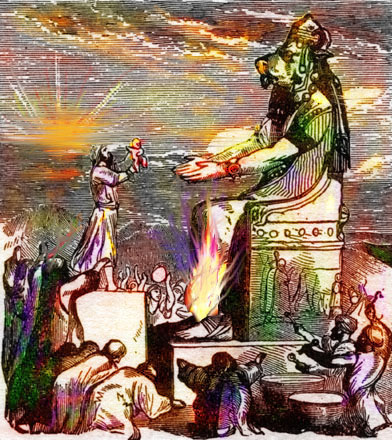
God’s temple was now filled with an evil darkness. King Manasseh made the Lord’s holy place a fountain of sin and filth. Instead of holiness, it was an evil place.
He brought in dark things that were twisted, perverted and clearly forbidden.
“Manasseh led Judah and the inhabitants of Jerusalem astray, to do more evil than the nations whom the Lord destroyed before the people of Israel.”
2 Chronicles 33:9, ESV
His own darkness was now encouraged by others, it became accessible, available and promoted:
- The high places were rebuilt throughout the land.
- Altars to Baal rebuilt, using images of wood.
- In the holy temple, altars to the “starry host,” astrology, plain and simple.
- Human sacrifice of his own sons to Molech, a false god. Murder.
- He practiced soothsaying, used witchcraft and sorcery, and consulted mediums and spiritists.
Evil was being encouraged and something wicked was replacing all that was good and true. The analysis of Manasseh’s policies was way beyond disturbing. Of all the kings of Judah, he was the most sinful and the most corrupt. He was at the bottom of the barrel.
The Hebrew word for “led astray” can be translated seduced.
Manasseh was an incredibly immoral man, a king who ruled for 40 years. “He did all he could to pervert the national character, and totally destroy the worship of the true God; and he succeeded.” (Clarke)
It’s believed that he put Isaiah to death by cutting him in two.
Moreover Manasseh shed very much innocent blood, till he had filled Jerusalem from one end to another, besides his sin by which he made Judah sin, in doing evil in the sight of the LORD.
1 Kings 21:16
But then something happened.
And the LORD spoke to Manasseh and his people, but they would not listen. Therefore the LORD brought upon them the captains of the army of the king of Assyria, who took Manasseh with hooks, bound him with bronze fetters, and carried him off to Babylon.
2 Chronicles 33:10-11
Assyria came knocking on Manasseh’s door. I think there was a certain mercy here, but also discipline. Manasseh had “hooks,” inserted through his jaw and out of his mouth. Like a fish he was led to Babylon, a trophy of the power of the army of Babylon.
It was from a dark dungeon that Manasseh cried out to the Lord and repented.
There’s a Jewish fable that when Manasseh cried out to God the angels boarded up the windows in heaven. They wanted to block out his prayer so God wouldn’t be able to hear. But God, rich in mercy, bored a hole in front of His throne to hear Manasseh’s desperate cry.
The Lord’s intention was to forever show His kindness and grace given to the most awful repentant sinner.
I believe that Manasseh was the “Prodigal Son” of the Old Testament.

God is not at a loss when He moves to bring us back to Himself. He can woo or whip. He can draw or drive. He can work rapidly or slowly, as He pleases. In other words, He is free to be God! And in His own way, at His own pace, He brings us back.
God is wildly in love with you. Yes, the sin you’ve committed is awful, but the Lord wants you to come back. He may discipline you, but He forgives everything if you’ll turn and repent.
No matter how awful your sin, He forgives and restores. Manasseh is proof of that.
Sources:


 Alaska Bible Teacher