Are You Carrying a Heavy Burden?

“Come to me, all who labor and are heavy laden, and I will give you rest. 29 Take my yoke upon you, and learn from me, for I am gentle and lowly in heart, and you will find rest for your souls. 30 For my yoke is easy, and my burden is light.”

Matthew 11:28-30, ESV

To be honest, this passage has yet to be fully processed by me. Sometimes I understand, but then I forget. Because of this, this post is preaching to me, and if you decide to bail on reading this that’s ok. I write because I truly believe that these things are possible. I don’t always put this passage in action. I ask for your forgiveness.

Jesus issues an invitation to His listeners that’s earth-shaking. He sets Himself is far above the rule of the Pharisees; these declarations can’t be explained away. Jesus puts Himself as the only one that brings true peace. That’s pretty arrogant, especially if it’s wrong.

But it’s really a false statement. Jesus bursts though this confusion, and life eternal is what He carries to each believer.

The Pharaeses have long ago decided the Law was the the Mosaic yoke that kept the people in line. Jesus taught otherwise.

“Come to Me.”

I suppose the operative word here is “Me.” Jesus Christ is the exclusive giver of peace and strength. He must be acknowledged as the believer’s complete focus–He is a man, not a religious set of rules and regulations. When we decide to follow Jesus it puts us at odds with legalism.

“All who labor and are heavy laden, and I will give you rest.

Interesting, the Greek word for labor means “exhausted or toiling.” The word for heavy laden has the idea of someone who is fully loaded, carrying a pile, it also has the implication of having spiritual anxiety.

All means everyone–not a select few, nor those who think that they’re doing all right on their own. “Labor and heavy laden”. Both words describe those who carry burdens, and who have backs that are bending because of a difficult load. I believe that they’re those who struggle with defeat and failure.

The rest He gives is profound. And notice the word “give.” His desire is to free us, and that dear one is a gift, it’s not earned or achieved. The word “rest” means to refresh or to make calm.

Take my yoke upon you, and learn from me,

We lay down our cares, concern, and all spiritual anxiety and to receive another kind of weight–His yoke. Jesus also calls us to another burden. We are called to “learn” from Him.

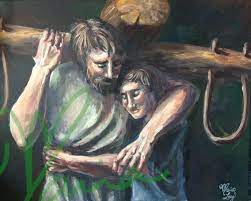
In training oxen, a wise farmer has the new, weaker one to be yoked with the one who is older. They are to be trained properly pull the plow. The older one teaches the younger.
Two things I ask that you consider:

  • We are learners. A student discovers that his teacher’s lessons can be challenging. I remember trying to grasp Geometry. I went around and around trying to understand. The teacher was patient, and she made an effort to communicate. In the same way the Holy Spirit works to share heavenly truths to me. One of His titles is “Teacher.”
  • The Lord deeply desires to release me from my “spiritual anxiety.” Perhaps I offend Him everytime I pick my sinful burden up. I do this fairly often. But He promises us we’ll have we’ll have a spiritual victory if we choose to follow Him.

“For I am gentle and lowly in heart, and you will find rest for your souls.”

“Gentle.” and “Lowly in heart.” This is how He explains Himself to us, which is pretty much opposite of what we think Jesus is. Somehow when we forget the yoke, sin and Satan muddles our thinking, and we often walk out our spiritual anxiety. This is incredibly exhausting, and our fear grows and we try hide it.

I suppose to be yoke-less opens us up to everything religious effort has to offer.

The Greek for “rest” is defined as an intermission or cessation of any activity, rest or recreation. It’s good word rhat when we become quiet; outward and inward. That seems to be opposite of what we think we must do. Often we ratchet up our activity to somehow show the Father that we deserve His love.

For my yoke is easy, and my burden is light.”

What Jesus offers us is His own yoke of unconditional love. He replaces out heavy burden with His gentle weight. The yoke of Jesus replaces the burden of legalism. What He gives is of no comparison to what we think we might understand.

The yoke of Jesus is fairly easy. It’s meaning in the original is wonderful. It means something that’s mild or pleasant. Jesus’ gift of a yoke replaces our spiritual anxiety. We don’t walk in the constant fear of our failure to measure up.

“Easy” and “light” is the very nature of His yoke of discipleship.

Following Him shouldn’t be grueling or hard, and yet we stilldon’t grasp this .What Jesus offers is our chance to become real. He wants us to share His yoke, but it’s not hard. Yes, we must forsake everything to be one of His followers, but Jesus offers us far more than we ever dreamed.

alskabibleteacher.com


Listening to A.W. Tozer

I believe that these quotes by A.W Tozer will really touch your heart. I’ve tremendous respect for him and his ministry. His is a voice that we really don’t hear too often anymore–but we should.

― A.W. Tozer, The Pursuit of God: The Human Thirst for the Divine

“Between the scribe who has read and the prophet who has seen there is a difference as wide as the sea. We are today overrun with orthodox scribes, but the prophets, where are they? The hard voice of the scribe sounds over evangelicalism, but the Church waits for the tender voice of the saint who has penetrated the veil and has gazed with an inward eye upon the Wonder that is God. And yet, thus to penetrate, to push in sensitive living experience into the holy Presence, is a privilege open to every child of God.”

“Complacency is a deadly foe of all spiritual growth. Acute desire must be present or there will be no manifestation of Christ to His people. He waits to be wanted. Too bad that with many of us He waits so long, so very long, in vain.”

“To men and women everywhere Jesus says, “Come unto me, and I will give you rest.” The rest He offers is the rest of meekness, the blessed relief which comes when we accept ourselves for what we are and cease to pretend.”

“Whoever defends himself will have himself for defense, and he will have no other. But let him come defenseless before the Lord and he will have for his defender no less than God Himself.”

“How tragic that we in this dark day have had our seeking done for us by our teachers.”

“Lord, make me childlike. Deliver me from the urge to compete with another for place or prestige or position. I would be simple and artless as a little child. Deliver me from pose and pretense. Forgive me for thinking of myself. Help me to forget myself and find my true peace in beholding Thee. That Thou mayest answer this prayer I humble myself before Thee. Lay upon me Thy easy yoke of self-forgetfulness that through it I may find rest. Amen.”

alaskabibleteacher.com

Our Father is in Control

Tapestry: Front and Back

 “Thus says the Lord, You shall not go up or fight against your relatives the people of Israel. Every man return to his home, for this thing is from me.’ So they listened to the word of the Lord and went home again, according to the word of the Lord.”  

 1 Kings 12:24, KJV

You can never accuse the Lord of being cold and distant and aloof.  He doesn’t detach Himself from the needs of His people.  He doesn’t ever disconnect and isolate Himself from you.  On the contrary, He is constantly thinking and acting on your behalf.  He is a proactive God, and that’s impressive.

The God of the Bible is always intensively involved in the affairs and concerns of His covenant people.

What we see as a muddled-up mess is actually His work. Perhaps in eternity we’ll see and understand. We see the backside of the tapestry now but (I assure you) we’ll know the beauty of His handiwork.

“For this thing is from Me.” 

God directs a confused king who has significant issues.  (Sound familiar?) God decides that the civil war between Judah and Israel is wrong.  In 1 Kings 12, He sends His prophet Shemaiah to stand before the king of Judah, and speak out a word to the nation.  The Lord is involved, and it is He who is actively enmeshed in this issue.

“For this thing is from Me.” 

There is something here that can mystify and perplex the best of us.  He begins to weave and guide His active presence into the confusing issues of that time.  He is not a “landlord God,”  but He is intensely involved in our affairs.  He initiates and directs the very things that concern us.

“For this thing is from Me.” 

The text clearly opens up this ugly situation.  In the midst of this bizarre issue, God has assumed control.  His prophet Shemaiah carries this a Word of power into a room of possibly explosive personalities.  Now the arrogance of the king can be a strong and strange thing.  But God decides and moves wherever He wills. Kings are never an issue when God enters in. They must serve now, like anyone else.

Dear one, He is incredibly involved in your affairs. 

He draws you and He has engaged to be intricately focused on your situation.  “For this thing is from Me.”  and that truth opens up His purposes to our desperate poverty.  We may try very hard to try to maintain control and direction.  But God directs and superintends. 

He is big enough to touch and direct my small heart.  We will come into confusion if we try to sidestep His lordship.

 “The Lord can control a king’s mind as he controls a river;  he can direct it as he pleases.” 

Proverbs 21:1

bry-signat (1)

Braided Up With Him, Isaiah 40:31

wait_bench_ocean

Yet those who wait for the Lord
Will gain new strength;
They will mount up with wings like eagles,
They will run and not get tired,
They will walk and not become weary.

Isaiah 40:31, NASB

The particular word for “wait” is a much more active word than we think.

It’s not a passive word in the original Hebrew.  It does not mean being apathetic or lazy. Sometimes we wait in line at the grocery store, or maybe we’re waiting on a phone call. We regularly wait all the time, and usually, we don’t even realize it.

The Hebrew word for “wait” used in v. 31 is qāvâ which means, ‘to bind together by twisting.’

It literally means to “braid, or twist, using a rope.” It becomes an interesting word picture? Sometimes we only take the English idea of waiting and turn it turns into a frustrating delay. Often, this is why we lose out on what ‘wait’ is really about. I have to believe the Holy Spirit wants to teach this idea of becoming ‘braided up with God.’

All too often we are limited by our definitions, and not God’s Word. 

For those of us who are ill— physically or mentally, just to be told simply, “wait on the Lord” is a real challenge. Often, we will end up resenting this counsel (and the counselor) because we have misunderstood what it means to really ‘wait.’ We come tantalizing close to this critical idea, but we never quite make it through the doorway.

Yet when I truly wait on God, I’m actually braiding myself into Him.

He becomes my strength; He is now the strong cord I am braided into. (Perhaps this is how He imparts strength and might to His people?) We need this, and the Lord is quite eager to lead us into this new kind of intimacy.

The promise in Isaiah 40:31 tells us about new strength–the eagle’s wings, holy stamina. This verse is relevant to us today, and we need this kind of strength now. I only want to encourage you in your own prayer time, to see yourself intertwined with the Lord, and to recognize the good gift of the Holy Spirit freely given.

“Wait for the Lord;
be strong, and let your heart take courage;
wait for the Lord!”

Psalm 27:14

alaskabibleteacher.com

How to Prepare for Water Baptism

water-baptism1

“Those who accepted his message were baptized.” (Acts 2:41)  

 “Repent and be baptized.” (Acts 2:38) 

 “Having been buried with him in baptism and raised with him through your  faith in the power of God.” (Col. 2:12)  

Perhaps one of the most significant decisions we’ll make is to follow Jesus Christ into the waters of baptism.  This is just obedience to the Lord’s command to be baptized. It’s one of the ways that our discipleship becomes public, but it’s intensely private as well. Ideally, it will forever alter your life. At least that is the Father’s intention.

Baptism becomes a public pronouncement or declaration to the physically seen world and to the invisibly unseen world of the Spirit. 

It takes faith to be authentically prepared for baptism.  You will be taking a stand. By faith, you’re making public your allegiance to Christ. It is a step of something living.

“Baptism was to put a line of demarcation between your past sins when you are buried with Him by Baptism–you are burying your past sins–eradicating them–putting a line in the sand saying that old man is dead and he is no longer alive anymore and I rise up to walk in the newness of life.”

T.D. Jakes

I suggest that you prayerfully attend to the steps listed below.  You will find there is a big difference between truly being baptized, and just getting wet!

The interrogative process can be used to solidify the faith before man and in front of His people. In a sense, it’s much like the vows made by a husband and wife in the vows of marriage.

I.  A series of questions are asked, to which the reply is always, “I renounce them.”

  1. Do you renounce Satan and all the spiritual forces of wickedness that rebel against God?
  2. Do you renounce the evil powers of this world that corrupt and destroy the creatures of God?
  3. Do you renounce all sinful desires that draw you from the love of God?

II.  The second half also must be asked, to which the reply is always, “I do.”

  1. Do you turn to Jesus Christ and accept him as your Savior?
  2. Do you put your whole trust in his grace and love?
  3. Do you promise to follow and obey him as your Lord?

III.  The Apostle’s Creed can be recited publicly (or privately in prayer).

This is our faith boiled down to its core essence. This declaration helps set us apart from the World, the flesh, and the devil:

“I believe in God, the Father Almighty, maker of heaven and earth. And in Jesus Christ, his only Son, our Lord,

who was conceived by the Holy Spirit, and born of the Virgin Mary, suffered under Pontius Pilate, who was crucified, died and was buried.

He descended into hell. and on the third day, He rose again from the dead. He ascended into heaven and sits at the right hand of the Father. From thence He will come to judge the living and the dead.

I believe in the Holy Spirit, the holy catholic Church,  the communion of saints, the forgiveness of sins, the resurrection of the body, and the life everlasting. Amen.”

This needs to be understood and accepted. I suppose we will develop these into living discipleship; you’ll that water baptism is analogous to a master key that opens the door to a special joy. Obeying the command to be baptized pleases Jesus. And that is what we long to do.

“Indeed, baptism is a vow, a sacred vow of the believer to follow Christ. Just as a wedding celebrates the fusion of two hearts, baptism celebrates the union of sinner with Savior.”

–Max Lucado

Baptism is an outward expression of inward faith.

–Watchman Nee

Baptism separates the tire kickers from the car buyers.

    –Max Lucado

A special word to “older” believers: There may come a time when you feel that you would want to be baptized again.  I believe that this is not only allowable but commendable.  You may have not had a good understanding of the baptismal process, but now it makes sense.  I would encourage you to follow your heart. God will honor your rededication. Ask your pastor or elder what they think.


1brobry-sig


You may copy and distribute this post in its entirety.


Brokenbelievers.com is a member of Faithful Bloggers

g

The Hidden Power of the Kingdom

Mix it up and watch out!

 “He told them another parable.” 

“The kingdom of heaven is like leaven that a woman took and hid in three measures of flour, till it was all leavened.”

Matthew 13:33

One version says 50 lbs (or 40 liters for your metric fiends) of flour. Crazy, why that much is beyond me–some figured it out and it would be enough bread for 100 people at least. Far more flour and yeast that was close to normal use. The parable that Jesus taught would certainly be humorous to the listeners. I suppose their imaginations were in overdrive.

What Jesus taught in these stories was incredibly practical and it engaged the listeners. They would leave and the stories would stick. Whether they realized it or not, His truth would impact them.

These stories were like bombs that would eventually explode in the hearts of the people.

Sooner or later, maybe when they least expected it, these parables would suddenly make sense. A lightning strike. Very seldom did they connect immediately. We can see this by the disciples’ desire to have them explained. They didn’t get it at first. But when Jesus illuminated them, they understood.

I believe that the Kingdom of God is hidden in us and it has outrageous power.

It works secretly, it’s not visible to anyone. It just does its stuff. The yeast, combined with the flour is a hidden process–something that isn’t observable. Perhaps that’s the way God’s kingdom comes, quietly, secretly but powerfully. Once the flour and yeast combine it’s pretty difficult to stop it.

That kingdom is working in our lives.

And most of the time it’s a hidden work. We can’t understand the process or grasp how it’s happening. We seldom know what God is doing. We may concentrate on being a witness to our neighbor, (which is a good thing, please do) but perhaps the Holy Spirit is working instead on our patience or love.

Usually, what we think is going on isn’t.

I’ve been in ministry for almost 40 years now, and I’ve tried to be faithful and worked on my discernment. But it seems I don’t quite grasp yet what the Father is doing inside of me. And I admit, I’m not really sure what’s going on in the lives of those I teach and counsel. Most of the time, I have no idea what he’s doing.

And that’s alright. I know he loves me very much and I trust him to work in me.

“And I am sure of this, that he who began a good work in you will bring it to completion at the day of Jesus Christ.”

Philippians 1:6

alaskabibleteacher.com

Meeting Judas Iscariot

Matthew 27:3-10

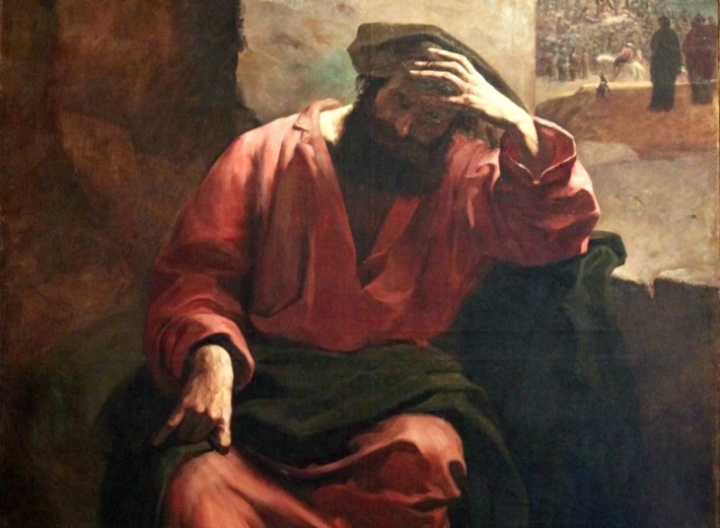
My name is Judas Iscariot, and I betrayed my Lord. It really had nothing to do with avarice or greed. The money was fine, don’t get me wrong, but that isn’t why I turned him into the authorities. I simply did what they couldn’t. I wanted to force Jesus’ hand, so he had to drive the Romans out of our country. I was mistaken, I see that now.

Jesus loved each of us, including me. But I didn’t see it at the time.

When he knelt to wash my feet, it shook me. When he stripped down to his undergarments, I admit I had some serious doubts. Behaving like a common slave wasn’t really in my thinking. It would take extra work to shape him, and to deaden such strange behavior. But it would be worth it in the end, if only Jesus would cooperate.

In my mind, I knew that Jesus only needed the right moment to become the next ruler of Israel. That was his destiny, and I was going to help him bring it to pass. I knew that God had called me–this was my purpose. I’d be the kingmaker, and Jesus would certainly reward me.

Some have said that Satan was inside me.

But I hardly noticed. Instead, I was filled with excitement. Finally, the other disciples would come to my side, and together we could make it happen. Enough kneeling, no more groveling–we’re going to rule Israel and end the wicked Roman occupation. I truly believed this. He was our Messiah, our deliverer.

The tricky part was to convince Jesus, to try to manipulate him if necessary, to get him to take control.

My plan was simplicity itself–after I met with the Pharisees, I’d lead them to the garden where Jesus was staying. They insisted on an armed escort, just in case there was trouble among the disciples. I suppose that was prudent, but my part in all of this was simply to give Jesus a kiss on the cheek, to signify that he was the one to the soldiers.

I assumed he would resist and fight. I was so wrong.

Nothing went as planned. Jesus didn’t take charge, and he certainly didn’t overthrow the government. As a matter of fact, you could say that the opposite happened; he was silent and refused to answer most of their questions. I did hear him say, “My kingdom is not of this world.” I should have listened.

I realized way too late, that I helped shed innocent blood. I went back to the priests who hired me, and I insisted they take back the silver. They refused. I threw the bag at their feet and left the temple. Ugly thoughts now filled my mind, and I knew without a doubt that I was completely lost.

Please excuse me, but I have a date with a rope.