The Absolute Danger in Exalting Yourself

Now he told a parable to those who were invited, when he noticed how they chose the places of honor, saying to them, “When you are invited by someone to a wedding feast, do not sit down in a place of honor, lest someone more distinguished than you be invited by him, and he who invited you both will come and say to you, ‘Give your place to this person,’ and then you will begin with shame to take the lowest place. 

10 But when you are invited, go and sit in the lowest place, so that when your host comes he may say to you, ‘Friend, move up higher.’ Then you will be honored in the presence of all who sit at table with you. 11 For everyone who exalts himself will be humbled, and he who humbles himself will be exalted.”

Luke 14:7-11, ESV

Choose your seat carefully. In Jesus’ day, there was a definite seating order to a wedding feast. It wasn’t first come, first served. There was a strict protocol, where one’s importance mattered.

Honored people got honorable seats–close to the front as possible. Average people got average spots; but no one wanted be at the bottom, having to sit at the “kids table.”

Jesus was watching, and he what he saw was a spiritual principle of his Kingdom.

Jesus often teaches us out of the things we encounter.

Truth often hits us from those things we actually see. If you want to know what God is doing in your life, all you need to do is look around at the practical things, and start to see the spiritual lessons inside them. We learn from real-life. That’s how he often teaches us, he combines the Word with what we’re experiencing.

Our natural inclination is to move higher up.

We think that we’re deserving, and so we take our rightful positions. That’s the way humans think. We all want to sit in the best possible place, and so we end up wheedling our way up front. We can fall into the subtle trap of self-promotion. But that’s not how discipleship works.

Jesus corrects, advising us to take the lowest place.

I think verse 11 is the key to figuring out this seating arrangement. We’re starting to see a physical situation become a spiritual lesson. There’s much to learn. Here’s verse 11 in the Amplified version:

For everyone who exalts himself will be humbled [before others], and he who habitually humbles himself (keeps a realistic self-view) will be exalted.”

Luke 14:11

This particular translation injects some realism into our lives, especially in how we see ourselves. It’s quite foundational. It lays down a principle that is always true in his Kingdom (1 Peter 5:6). If we don’t accept and implement this, we’ll suffer a definite weakness in our discipleship. It stunts the growth of many believers. And that is tragic.

The whole scene lays out how life in the spirit really works, and it seems paradoxical.

Our human logic asserts that deliberately choosing the lesser is foolish, things really don’t work that way. We think, (falsely,) that we’ll only advance by asserting ourselves. But Jesus, quite aptly, clarifies the ways of the Kingdom.

True maturity will only come if we decide to take the lowest place.

James 4:10

alaskabibleteacher.com

A Very Terrible Blindness

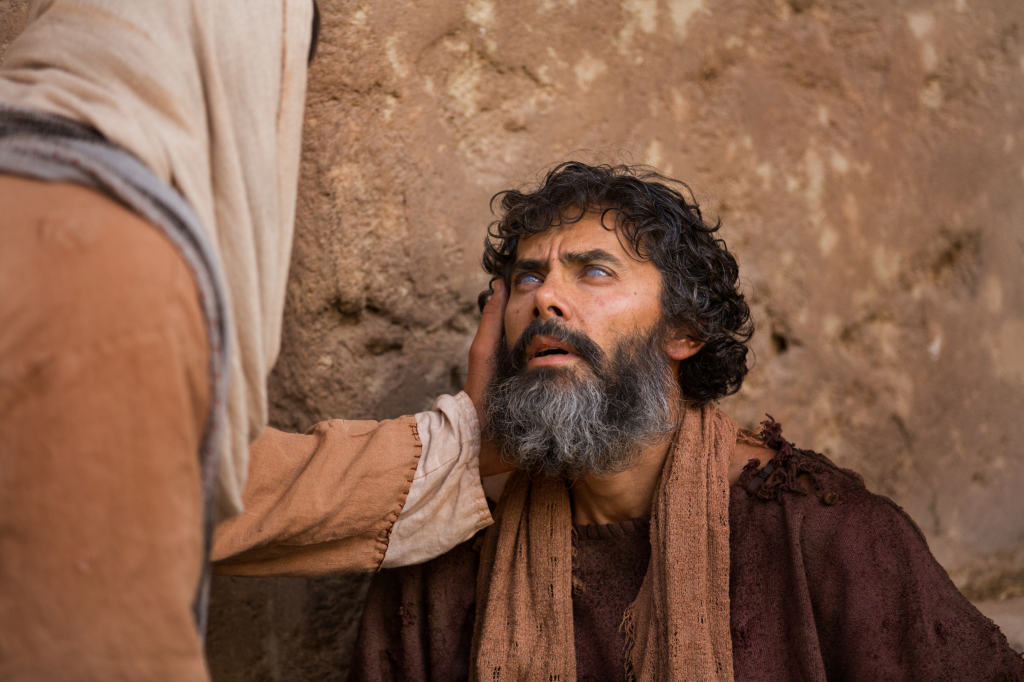
As he was walking along, he saw a man blind from birth.

“Master,” his disciples asked him, “why was this man born blind? Was it a result of his own sins or those of his parents?”

“Neither,” Jesus answered. “But to demonstrate the power of God. All of us must quickly carry out the tasks assigned us by the one who sent me, for there is little time left before the night falls and all work comes to an end. But while I am still here in the world, I give it my light.”

Then he spat on the ground and made mud from the spittle and smoothed the mud over the blind man’s eyes, and told him, “Go and wash in the Pool of Siloam” (the word Siloam means “Sent”). So the man went where he was sent and washed and came back seeing!

John 9:1-7

This man had been blind from birth.

I can’t even imagine what blindness would be like. The blind man probably couldn’t imagine having sight. He probably didn’t have a dream-life either–that requires having seen images (a dog, a tree, a mean person) and this wasn’t available to him. He never saw the color red, or saw a mountain.

I suppose we can only imagine what blindness to this degree would be like.

Somehow I’ve come to an idea that this represents fallen men–we’re spiritually blind to the workings and truths of Jesus’ Kingdom. It seems a pretty good explanation of each of us–“blind from birth.” But when you’re blind spiritually you haven’t the slightest of what is real and taking place around you.

     Andrew Murray

Also notice the response of the disciples who first met this unfortunate man. They don’t see his needs, rather, they want to know the theology behind this. Perhaps that’s how we respond much of the time–we don’t see the needs, we only want to know the reasons. We’re not wise or discerning enough to see what’s really really going on.

Perhaps this is how we operate as immature Christians.

We don’t engage the need, but rather we like having good theology over understanding true passion. It’s easy to philosophize–it’s hard to get down and serve and really love others.

If we really don’t love needy people, we re probably not following Jesus.

It’s funny but Jesus declares Himself to be the light of the world while speaking to the man who is born blind. And it’s also funny that just like there was physical blindness there is a blindness of the Spirit by the disciples–I think it’s even worse.

Third, we discover the gentle mercy that Jesus has when He meets needy people. Now the Lord does accommodate His followers, but not at the expense of engaging the need of the moment. Jesus is full of compassion–most especially when He meets broken people–and as His followers, we must grasp this.

Perhaps good theology isn’t the primary calling of Jesus’ followers.

As I mature in Christ I’m learning (slowly) that people are His real focus. He has come, not to theologise or philosophize, but to meet needs! Sure the reasons why become clearer, but that really isn’t Jesus’ primary goal. I suspect that people will never have impeccable theology.

Classes in systematic theology are really good, but I believe soup kitchens are better.

The blind man is profoundly healed, and Jesus’ love and desire to restore this man is ‘front and center.’ The Lord’s methodology is interesting. Spit and mud, wiped on the blind man’s eyes. In Genesis 1-2 we discover that God made man out of dirt and dust of the ground. Perhaps what He has done here mirrors that work.

And it’s also important to understand that Jesus never performs the exact same healing in the exact same way. For some reason He ‘tailors’ His work to the individuals deepest need. I suppose He doesn’t want us to grab a hold of a formula, as that’s what we want to have.

The story is primarily about a blind man’s healing. It also speaks to the spiritual darkness that afflicts many.

We really must understand this, and we need to understand the tremendous mercy and power of God to both heal and restore. The Lord wants to give you real sight, true spiritual discernment. He really wants this.

There’s a ton more here we can grab, but I suppose there isn’t time. This is merely my take on John 9.

The Spirit of the Lord is upon me; he has appointed me to preach Good News to the poor; he has sent me to heal the brokenhearted and to announce that captives shall be released and the blind shall see, that the downtrodden shall be freed from their oppressors, and that God is ready to give blessings to all who come to him.”

Luke 4:18

alaskabibleteacher.com

Jumpstarting a Prayer Life

We must (MUST!) pray as believers in Jesus.

Prayer is the oxygen of our spiritual life. We must breathe, or else. When I go to my doctor she puts an oximeter on my finger so she can assess how my lungs are using oxygen.

I suppose if we would put it on our “spiritual finger,” might it reveal something?

We don’t know exactly know how to pray, and I don’t think communicating with God isn’t easy for us. We must be taught. The desperate disciples wanted to learn how to pray–they didn’t know how, (Luke 11:1-2). We also need to have Jesus teach us.

We can only learn how if the Spirit teaches us.

Also, we must practice praying. We may do it terribly rotten, but we shouldn’t give up–it’s not natural–I suppose it’s supernatural. We will learn by doing. We may get discouraged but we must keep at it. Even if you’re a pro, the Holy Spirit will make sure you keep learning new things. Our walk should always grow deeper. If you’re a good student He is happy to teach you.

For me praying the Psalms is good practice, and there are 150 of them. The Jewish people have a 4000-year start on us–they’ve used the Psalms as their prayer/praise book. My sense is that this covers every human need–the entirety of our spiritual walk!

I think that Psalms 103 might be a great place to get started.

I’ve been told by some that the “Lord’s Prayer” is quite useful as well. I guess if you honestly take it phrase by phrase, something good will happen. I’m still learning (and I suspect I still will).

Below we find a way to jumpstart our prayer life. I hope you can use it.

One more thought.Conversational Prayer” has been a good thing for me lately. Talk with Jesus as if He was in the same room with you (He is) and just converse. I once heard of a man who put an empty chair in his prayer closet, it helped him understand that Jesus was right there with him. He said it really helped.

Share with Him your ups and downs, and it’s okay if you feel like you’re screwing it up. Relax. He’s your Father. He loves you.

He wants to be with you so much. He has many things to show you.

alaskabibleteacher.com