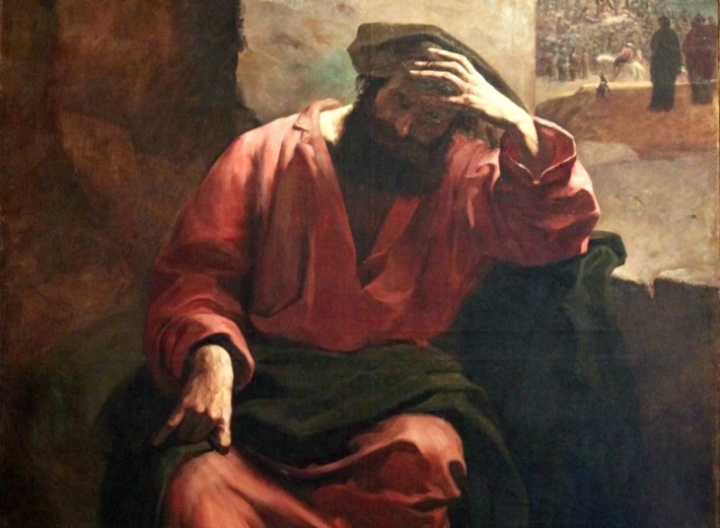
Judas Iscariot Speaks to Us

My name is Judas Iscariot, and I betrayed Jesus. It really had nothing to do with avarice or greed. The money was fine, don’t get me wrong, but that isn’t why I turned him in to the authorities. I simply did what they couldn’t. I wanted to force Jesus’ hand, and then he had to drive the Romans out of our country. I was mistaken, I see that now.

Jesus loved each of us, including me. But I didn’t see it at the time.

When he knelt to wash my feet, I was deeply disturbed. When he stripped down to his underwear, I admit I had some serious doubts. Behaving like a common slave wasn’t really in my thinking. It would take extra work to shape him, and to deaden such strange behavior. But it would be worth it in the end, if only Jesus would cooperate.

In my mind I knew that Jesus only needed the right moment to become the next ruler of Israel. That was his destiny, and I was going to help him bring it to pass. I knew that God had called me–this was my purpose. I would be the kingmaker, and Jesus would certainly reward me.

Some have said that Satan lived inside me. But I hardly noticed.

Instead, I was filled with excitement. Finally, the other disciples would come to my side, and together we could make it happen. Enough kneeling, no more groveling–we were going to rule Israel and end the wicked Roman occupation. I truly believed this. He was our Messiah, our deliverer.

The tricky part was to convince Jesus, even if I had to manipulate him if necessary, in order to take control of the situation.

He had to see the opportunity that was waiting for him. He was already immensely popular among the people. We could quite easily turn all of this enthusiasm into a full-blown insurrection. But we obviously needed him to lead us, and I could help him find his way. I knew we could do it.

I believed that this was God’s will for me.

My plan was simple–after I met with the Pharisees, I’d lead them to the garden where Jesus was staying. They insisted on an armed escort, just in case there was trouble among the disciples. I suppose that was prudent, my part in all of this was simply to give Jesus a kiss on the cheek, to signify that he was the one to the soldiers.

I assumed he would resist and fight. I was very wrong.

Nothing went as planned. Jesus didn’t take charge, and he certainly didn’t overthrow the government. As a matter of fact, you could say that the opposite happened; he was silent and refused to answer most of their questions. I did hear him say, “My kingdom is not of this world.” I should have listened.

I realized way too late, that I had shed innocent blood.

I went back to the priests who hired me, and I insisted they take back the silver. They refused. I threw the bag at their feet and left the temple. Ugly thoughts now filled my mind, and I knew without a doubt that I was completely lost.

alaskabibleteacher.com

Was Judas Forgiven?

And Jesus said, “Father, forgive them, for they know not what they do.”

Luke 23:34

From the cross Jesus spoke this. He was being executed in an extreme way, crucifixion was a terrible way to die. Roman soldiers surrounded the cross, and yet Jesus asked the Father to forgive them. They would not be guilty, but forgiven for what they were doing to Him.

But what about Judas?

How broad was Jesus’ statement? Did Jesus grant Judas absolution from this sin of betrayal when He said this? There’s far too many questions, and it’s good to think these things through. Was there forgiveness for this man of treachery?

“Then Satan entered into Judas called Iscariot, who was of the number of the twelve.” (Luke 22:3, ESV.) Perhaps this verse should become our entry point. It’s apparent that Judas was being controlled by the evil one. Something (or someone) took possession of him at this point. It seems astonishing that this happened at the special moment of the Lord’s Supper.

At this point Judas sought out the chief priests.

Judas offered to turn Jesus in, and it seems that money was given, perhaps to encourage Judas to commit himself to follow through. We read that Jesus was “troubled in His spirit.” It seems that this had to do with the impending betrayal.

So what was the early Judas like? Was he an authentic disciple? It seems he was called like the others. He listened to Jesus’ teaching and saw most of the miracles. Later he was sent out to proclaim the “good news.” Apparently, he teamed up with another disciple, miracles were seen.

“Judas heard all of Christ’s sermons.”

Thomas Goodwin

I can’t verify this yet, but each of the 12 called Jesus “Lord,” but only Judas called Jesus “rabbi.” Perhaps this points to a problem Judas has identifying the ministry of Jesus. There would be a kiss commonly given by a disciple, but was it real?

Judas seemed to have problems with money. Apparently Jesus decided that he was to be the treasurer of His followers. This was a problem for Judas. It’s clear that he stole money from that was entrusted to Jesus’ ministry.

Yet I believe Judas would be forgiven of these things if he only asked.

There are a few other things we really must consider. Did Jesus forgive Judas? The Romans and the Jewish leaders were forgiven by Jesus from the cross. But there was never any indication that Judas was forgiven for his betrayal. It seems that Judas carried his sin which ended up in suicide.

Both Peter and Judas betrayed their Lord.

And yet I have to believe that they were not the same. Somehow Peter’s denial would find a way to be forgiven. And even though it seems very painful, Peter would be restored. But Judas took his own life. It was his choice. Simon Peter felt remorse. Judas was overcome with guilt and chose death instead of seeking forgiveness.

I’m completely convinced that we will not see Judas in heaven.

I say that cautiously. I hardly ever understand the mind and heart of God. His compassion is everlasting. Who am I to decide these things? But it seems to me that when he sold Jesus for 30 pieces of silver, he was really selling himself.

“While I was with them, I kept them in your name, which you have given me. I have guarded them, and not one of them has been lost except the son of destruction, that the Scripture might be fulfilled.”

John 17:12

This verse seems to clarify much about Judas. We understand Jesus’ care and love for each of His disciples; yet we see a pronouncement of judgement against the person who would betray Him. It seems that Judas convinced himself that he could not be forgiven. His awful suicide declared he was beyond grace. Judas decided he would hang himself, committing himself to the rope rather than accepting any kind of forgiveness.

Sobering, isn’t it?

“Judas Iscariot was not a greatly wicked person, just a common money-lover, and like most money-lovers, he did not understand Christ.”

A.W. Tozer

To Leave Your Nets

Tools used to mend nets

“And going on from there he saw two other brothers, James the son of Zebedee, and John his brother, in the boat with Zebedee their father, mending their nets, and he called them.”

Matthew 4:21, ESV

“And immediately they left their nets and followed him.”

Mark 1:18

To mend nets was tedious but necessary. You would take your net and spread it on the ground in an open space. Every knot would be carefully examined. All holes would be repaired. Nothing was overlooked. Fishing nets were painstakingly maintained. Every day, without fail.

Fish would school, and if your gear was right, and you were in a prime place, you could catch a lot. But simultaneously, you could let hundreds of fish escape through a hole in your net. Each fish that escaped meant money lost.

Jesus walking along the beach surveyed the boats and crews. Since most of these guys had worked through the night, they were tired and maybe a bit “punchy.” Some had gotten lucky, while others had little to show for working so hard. I suppose the different crews teased each other as they unloaded.

Jesus walked through the bunches of fishermen. He looked at their hauls to see what they had caught. But it wasn’t the catch He was looking at, it was the men. It was from these laboring fishermen that He would choose. These men were rough-and-tumble rednecks. If they had chewing tobacco back then, they would use it.

He looks, sees, and commands.

Now if you are looking for disciples– future apostles and leaders, the seashore is not the best place to recruit. They really have a rudimentary education. No theology, and just a meager understanding of Jewish ritual and religion. Essentially there was no time for them to think outside their occupation. Sure there just might be one, or two that possessed more, but that would be the exception.

But Jesus had no desire to interview them, and take the best of the lot. He didn’t have a Human Resources Department, and there were no tests and no forms that had to list references. He simply commanded, and those who understood followed. Only after they left it all did He get their names and addresses. I think that it is the same today.

Will we leave our boat, with your nets?

Really, you can keep mending or follow Him– it’s your choice. Most of the time though, decisions have a tendency to be irrevocable. Perhaps you have a moment, an instant of time to decide.

Sometimes mending nets can be back-breaking and tedious. But following the Lord Jesus is an unknown; too many choose to keep fixing their nets. Others though are launched into something new, and eternally significant.

The glaring truth is the necessity of obedience to Jesus’ command. There is no other voice we must hear. As a matter of fact, hearing (and really apprehending) is the only foundation we can trust to make our obedience true.

You can keep mending your nets and preparing for another night on the water. That is always your prerogative. But if you decide to follow you will need to leave what you know behind.

That is authentic discipleship.

“Rest in this – it is His business to lead, command, impel, send, call or whatever you want to call it. It is your business to obey, follow, move, respond, or what have you.”

-Jim Elliot, missionary to the Auca Indians

Meeting Judas Iscariot

Matthew 27:3-10

My name is Judas Iscariot, and I betrayed my Lord. It really had nothing to do with avarice or greed. The money was fine, don’t get me wrong, but that isn’t why I turned him into the authorities. I simply did what they couldn’t. I wanted to force Jesus’ hand, so he had to drive the Romans out of our country. I was mistaken, I see that now.

Jesus loved each of us, including me. But I didn’t see it at the time.

When he knelt to wash my feet, it shook me. When he stripped down to his undergarments, I admit I had some serious doubts. Behaving like a common slave wasn’t really in my thinking. It would take extra work to shape him, and to deaden such strange behavior. But it would be worth it in the end, if only Jesus would cooperate.

In my mind, I knew that Jesus only needed the right moment to become the next ruler of Israel. That was his destiny, and I was going to help him bring it to pass. I knew that God had called me–this was my purpose. I’d be the kingmaker, and Jesus would certainly reward me.

Some have said that Satan was inside me.

But I hardly noticed. Instead, I was filled with excitement. Finally, the other disciples would come to my side, and together we could make it happen. Enough kneeling, no more groveling–we’re going to rule Israel and end the wicked Roman occupation. I truly believed this. He was our Messiah, our deliverer.

The tricky part was to convince Jesus, to try to manipulate him if necessary, to get him to take control.

My plan was simplicity itself–after I met with the Pharisees, I’d lead them to the garden where Jesus was staying. They insisted on an armed escort, just in case there was trouble among the disciples. I suppose that was prudent, but my part in all of this was simply to give Jesus a kiss on the cheek, to signify that he was the one to the soldiers.

I assumed he would resist and fight. I was so wrong.

Nothing went as planned. Jesus didn’t take charge, and he certainly didn’t overthrow the government. As a matter of fact, you could say that the opposite happened; he was silent and refused to answer most of their questions. I did hear him say, “My kingdom is not of this world.” I should have listened.

I realized way too late, that I helped shed innocent blood. I went back to the priests who hired me, and I insisted they take back the silver. They refused. I threw the bag at their feet and left the temple. Ugly thoughts now filled my mind, and I knew without a doubt that I was completely lost.

Please excuse me, but I have a date with a rope.